Beyond the Laughter: German Memes Unpack National Quirks, Economic Realities, and Cultural Contradictions
A deep dive into German internet memes reveals a rich tapestry of cultural observations, economic realities, and shared frustrations. From workplace dynamics and consumer dilemmas like the digital euro debate to universal domestic quirks and distinct national traditions, these memes offer a humorous yet insightful window into contemporary German society, often contrasted with an American perspective.

Beyond the Laughter: German Memes Unpack National Quirks, Economic Realities, and Cultural Contradictions
In an increasingly interconnected world, internet memes have evolved from simple comedic relief into potent cultural barometers, offering a candid, often satirical, glimpse into a nation’s collective psyche. A recent YouTube video, “Reacting to the FUNNIEST GERMAN MEMES,” provides a fascinating lens through which to explore the nuances of German daily life, economic realities, and societal quirks, often highlighted through comparisons with American experiences.
From the frustrations of public transport and the intricacies of workplace dynamics to the debates surrounding a digital euro and the perennial “clothes chair” phenomenon, these memes transcend mere humor, revealing underlying social commentaries and shared frustrations. They paint a vivid picture of a country grappling with modern challenges while holding onto unique cultural values.
The German Workplace: A Mix of Irony and Frustration
The memes frequently touch upon themes of labor, management, and the often-ironic power dynamics within the German workplace. One meme humorously depicts a boss driving a new Mercedes, telling an employee that “if you work really hard this year, next year, I’ll be able to buy myself a new one.” This jest, while universal in its critique of wealth disparity, resonates particularly in cultures with strong labor protections and a historical emphasis on social equality, subtly highlighting perceived corporate greed or the disconnect between executive prosperity and employee remuneration.
Public sector efficiency, or the lack thereof, is another recurring theme. A meme featuring “rail bosses when there’s construction” humorously portrays the frustration associated with finding rail replacement services during infrastructure works, a common complaint in many countries but particularly salient in Germany, known for its otherwise efficient public transport system. The meme “I’ve hidden the S6 stop somewhere and no idea what I just read” encapsulates the confusion and exasperation faced by commuters navigating unexpected disruptions and poorly communicated alternatives.
Conversely, some memes celebrate worker solidarity and achievements. The mention of “Public sector workers win 5.8% pay increase” accompanied by “workers in solidarity” reflects the strong union culture and collective bargaining power often seen in Germany. This highlights a national pride in labor movements and the tangible benefits they can secure for employees.
The concept of sick leave also reveals cultural distinctions. A meme that broadly translates to “Staying home for a day to recover without calling in sick so I feel better tomorrow and can go to work” followed by a contrasting perspective “If I’m supposed to go to the doctor, I’ll just fill up the week with a sick note just like my employer wants” suggests a nuanced approach to illness and work. This could be interpreted as a commentary on the pressure to avoid taking a single sick day versus the bureaucratic incentive to get a longer sick note once a doctor’s visit is necessary, potentially reflecting differences in sick leave policies or employer expectations compared to other nations.
Consumer Quandaries: From Aldi Quirks to Digital Euros
Everyday consumer experiences, from grocery shopping to financial innovation, also provide rich fodder for German memes. A particularly perplexing meme revolves around a “mozzarella drink in a pouch” with a “mozzarella cheese ball in the middle.” The confusion expressed by the YouTuber, questioning “what about the fish sauce? Father’s sauce?” and asking an Aldi staff member “what do you actually do with the white ball after you’ve drunk your mozzarella?” underscores the existence of niche or unusual food products that can baffle outsiders, adding a layer of humorous cultural specificity to the retail experience.
The cost of living and specific product pricing also feature. A McDonald’s self-service screen showing “20 chicken McNuggets, €13.50” elicits a strong reaction from the American commentator, who notes it’s “almost a dollar per McNugget” and “ludicrous.” This highlights differences in purchasing power, fast-food pricing strategies, and perceptions of value across countries, where what might be considered expensive in one market is standard in another.
The discussion around a “digital euro” touches upon a significant contemporary financial debate. The meme states, “A digital euro actually sounds good. It could simplify everyday life. The banks are against it because they fear a loss of revenue. I’m already in favor.” This reflects the ongoing global conversation about Central Bank Digital Currencies (CBDCs), where proponents emphasize efficiency and accessibility, while traditional financial institutions express concerns about disintermediation and revenue impact. The meme captures a segment of public sentiment that is open to innovation, contrasting it with institutional resistance.
Retail etiquette and efficiency are satirized with the “Use the self-checkout. It’s faster. The people at the self-checkout” meme. This universal frustration with slow self-checkout users, humorously suggesting that “If you’re slower than a cashier, go to the cashier,” speaks to the shared desire for efficiency in modern shopping and the occasional exasperation with fellow shoppers.
Even automotive choices reveal cultural and economic distinctions. The YouTuber’s observation that “all the German cars take premium gas” and the subsequent comparison of premium gas costs in Germany versus America (10-15% more expensive in Germany vs. 40% more in America) sheds light on consumer choices influenced by fuel prices and engineering preferences. This implies that while German cars are engineered for performance requiring higher octane fuel, the relative cost difference in Germany makes it a less significant financial burden than in countries like the USA, influencing car ownership decisions and perceptions of practicality.
Navigating the Digital and Domestic Landscape
The memes also delve into the digital realm and relatable domestic annoyances. The frustration with “two unskippable ads” on YouTube, followed by “another ad” after skipping the intro, is a common grievance for online content consumers. The YouTuber, however, offers a counterpoint, stating, “I’ve always felt like it was kind of miraculous that you get to use YouTube for free just by watching some dumbass ads,” highlighting the ongoing debate between user experience and content monetization models.
A seemingly minor detail, “Please select your country. Afghanistan always up there at the top,” and the American commentator’s frustration about “USA as the first option no matter what” no longer being the default, speaks to broader themes of national identity, digital localization, and perceived online deference to different regions. It’s a humorous take on the subtle ways digital interfaces reflect or challenge nationalistic biases.
The “Welcome to the chair, bro” meme, depicting a pile of clothes on a chair “too dirty for the closet, but too clean for the laundry,” is a universally relatable domestic scene. This simple observation transcends cultural boundaries, connecting people through shared experiences of household clutter and indecision.
More substantial domestic concerns, such as home maintenance, are also tackled. A series of memes comparing different roof types – a “flat roof” needing replacement every 20 years for a “modern look,” a “pitched roof” for guaranteed dryness, and the exorbitant cost of a German roof (€40,000-€50,000) compared to an American one ($17,000) – offers a humorous yet insightful commentary on construction standards, longevity expectations, and the significant financial burden of home ownership and maintenance, particularly in Germany where quality and durability often come at a premium.
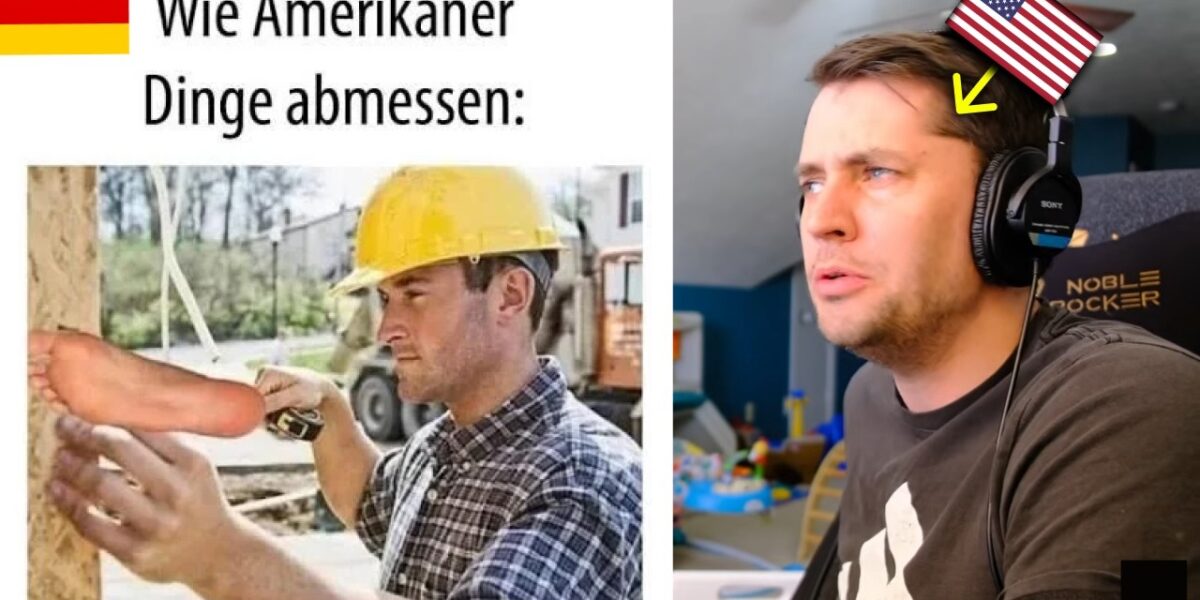
Finally, cultural etiquette and measurement systems provide additional comedic relief. The meme “How Americans measure things. And we got the foot,” while poking fun at the imperial system, also prompts a defense, noting “The Brits still use this [stuff] guys. They still measure stuff in feet, and that’s where we got it from.” This highlights the enduring differences in measurement standards and the playful rivalry between nations. Another meme about “People spitting on the ground” reveals differing social norms regarding public hygiene, with the American commentator noting it’s “not like taboo here in America” in certain contexts, contrasting with what appears to be a stronger disapproval in Germany.
Conclusion
The “FUNNIEST GERMAN MEMES” offer far more than just fleeting amusement. They serve as a vibrant, informal ethnography, reflecting a society navigating economic pressures, technological shifts, and the enduring quirks of human behavior. From the specific frustrations of German public transport to the universal experience of the “clothes chair,” these memes provide a unique, relatable, and often critical commentary on what it means to live in Germany today, all while fostering a sense of shared understanding and, of course, a good laugh.
Source: Reacting to the FUNNIEST GERMAN MEMES [#138] (YouTube)

Related Articles

Reddit’s Rising Influence: A Google-Fueled Marketing Goldmine
Reddit's unique community-driven environment is now amplified by Google, fundamentally altering how brands are discovered and purchases are made. Marketers must engage authentically to capture high-intent buyers, leveraging the platform for research and decision-making rather than direct sales.

Marketers Boost Influencer Spend Amid Social Media’s Rise
A significant 69% of marketers are increasing influencer spend as social media solidifies its role as a primary discovery channel for consumers. Research shows 50% of consumers learn about new brands via social media, highlighting the growing importance of creator partnerships for brand engagement and growth.

Reddit’s Research Mindset Drives Millions in Sales
Reddit users, contrary to popular belief, are not averse to buying but actively dislike being sold to. They utilize the platform as a critical research phase to validate purchases, with their analytical prefrontal cortex engaged. Brands must cater to this mindset with educational content rather than interruptive tactics.