Beyond the Headlines: Why Russia Holds Minimal Economic Leverage Over the United States, According to Bill Browder
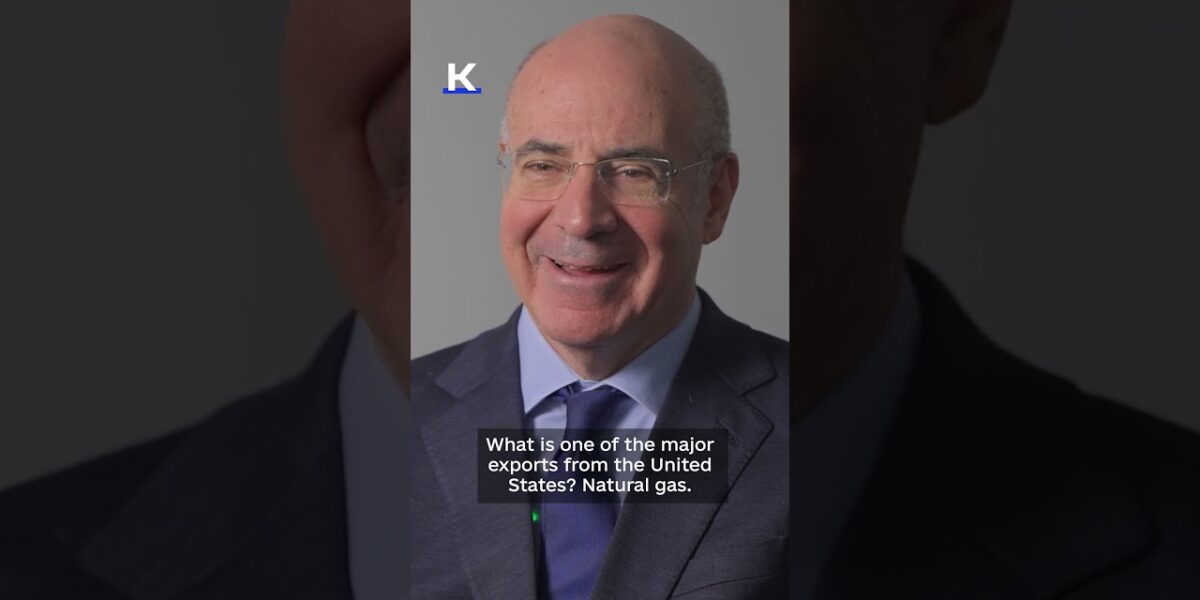
Bill Browder, a prominent financier and former top investor in Russia, asserts that Russia offers minimal economic value to the United States. He highlights that the U.S. is self-sufficient in key Russian exports like crude oil and natural gas, and Russia's relatively small consumer market holds little appeal for American companies. This fundamental lack of economic interdependence profoundly shapes the often-strained U.S.-Russia relationship.

Beyond the Headlines: Why Russia Holds Minimal Economic Leverage Over the United States, According to Bill Browder
In an era defined by complex geopolitical rivalries and shifting global alliances, the economic relationship between major powers often serves as a barometer of their overall interaction. However, when it comes to the United States and Russia, a striking assessment from Bill Browder, a prominent financier and one-time largest foreign portfolio investor in Russia, suggests a fundamental lack of economic interdependence. Browder contends that Russia possesses very little of economic value to offer the United States, primarily due to overlapping resource production and a comparatively small consumer market, rendering the notion of significant commercial cooperation largely “nonsense.”
Browder’s insights, drawn from a decade of deep engagement within the Russian economy, challenge conventional wisdom that often assumes economic ties are a natural byproduct of any bilateral relationship between large nations. Instead, he paints a picture of two economic giants with remarkably little to gain from direct commercial exchange, a reality that profoundly shapes the contours of their often-strained political dialogue.
The Redundancy of Russian Resources: Oil and Gas
At the heart of Browder’s argument lies the fundamental principle of comparative advantage – or rather, its conspicuous absence. Russia’s economy is heavily reliant on the export of natural resources, particularly crude oil and natural gas. Historically, these commodities have been the bedrock of its trade relationships, especially with European nations. However, for the United States, Russia’s primary offerings are not only superfluous but, in many cases, directly competitive with its own robust domestic production.
America’s Energy Independence: A Game Changer
The United States has undergone a dramatic transformation in its energy landscape over the past two decades, largely driven by the shale revolution. Advances in hydraulic fracturing and horizontal drilling technologies have unlocked vast reserves of unconventional oil and natural gas, propelling the U.S. to become one of the world’s leading producers of both. This domestic energy boom has fundamentally altered America’s position in global energy markets, shifting it from a major importer to a significant exporter.
- Crude Oil: Browder points out that the U.S. is the largest crude oil producer globally. This fact alone negates any substantial need for Russian crude. While global oil prices and supply dynamics can influence U.S. markets, the direct reliance on Russian imports is negligible. The U.S. strategic petroleum reserves and diversified global supply chains further insulate it from needing Russian oil. The focus for U.S. energy policy has increasingly been on maintaining domestic production, fostering energy security, and influencing global energy markets through its own output.
- Natural Gas: Similarly, the United States has emerged as a major exporter of natural gas, particularly in the form of Liquefied Natural Gas (LNG). This capability allows the U.S. to supply gas to markets across Europe, Asia, and Latin America, providing an alternative to traditional pipeline gas suppliers like Russia. Given its own abundant reserves and expanding export infrastructure, the U.S. has no commercial incentive to purchase Russian natural gas. In fact, U.S. LNG exports have become a critical tool in bolstering energy security for allies, particularly in Europe, seeking to reduce their dependence on Russian energy.
This self-sufficiency in key energy resources creates a profound detachment in the economic relationship between the U.S. and Russia. Unlike many European countries that have historically relied heavily on Russian energy, the U.S. does not face the same strategic vulnerabilities or economic imperatives to engage with Russia on energy trade. This lack of a natural commercial alliance in the energy sector removes what would otherwise be a significant pillar of economic interaction between two resource-rich nations.
The Limited Appeal of the Russian Consumer Market
Beyond natural resources, another crucial aspect of Browder’s argument concerns the size and attractiveness of the Russian consumer market. With a population of approximately 141 million people, Russia is not insignificant in terms of raw numbers. However, Browder argues that it does not represent the “huge consumer market” that might entice American consumer goods companies looking for vast new opportunities.
Market Dynamics and Purchasing Power
Several factors contribute to this assessment:
- Purchasing Power: While 141 million people constitute a substantial population, the average purchasing power in Russia is significantly lower than in major Western economies. Income inequality is pronounced, and a large segment of the population has limited disposable income for non-essential goods. This contrasts sharply with the affluent and robust consumer base found in the United States, Western Europe, or emerging markets like China and India, which offer far greater scale and profitability for American brands.
- Economic Structure: Russia’s economy remains heavily concentrated in state-owned enterprises and resource extraction. Diversification into high-value manufacturing, technology, and services, which typically drive higher wages and consumer spending, has been slow. This structural imbalance limits the growth of a broad, prosperous middle class that forms the backbone of vibrant consumer markets.
- Market Access and Business Environment: Even for companies interested in the Russian market, the business environment presents considerable challenges. Issues such as corruption, a lack of robust rule of law, bureaucratic hurdles, and unpredictable regulatory changes have historically deterred foreign investment and made operating in Russia complex and risky. For many American companies, the potential rewards do not outweigh the operational and political risks involved.
- Geopolitical Risks: In recent years, geopolitical tensions and the imposition of sanctions have further complicated market access. American companies operating in Russia face increased scrutiny, reputational risks, and the potential for direct or indirect impact from sanctions regimes. This has led many to reconsider or scale back their presence, further diminishing Russia’s appeal as a consumer market destination.
Consequently, while some American brands may have a presence in Russia, the overall economic impact and strategic importance of the Russian consumer market for the U.S. economy are marginal. American companies often prioritize markets with greater stability, higher purchasing power, and more favorable business environments.
A Historical Perspective on U.S.-Russia Economic Ties
The lack of significant economic cooperation between the U.S. and Russia is not a new phenomenon; it has deep historical roots, evolving from the Cold War era through the post-Soviet period.
Cold War and Minimal Interaction
During the Cold War, economic interaction between the Soviet Union and the United States was largely restricted, driven by ideological divides and strategic competition. Trade was minimal, and investment was virtually non-existent. The economies operated on fundamentally different principles – centrally planned socialism versus market capitalism – making deep integration impractical and undesirable for both sides.
Post-Soviet Hopes and Disillusionment
The collapse of the Soviet Union in 1991 sparked hopes for a new era of cooperation, including economic integration. Many believed that Russia, transitioning to a market economy, would become a significant trading partner and investment destination. Indeed, the 1990s saw some initial interest from Western companies, including figures like Bill Browder, who saw potential in Russia’s vast resources and nascent market. However, these hopes were often tempered by reality:
- Economic Instability: The 1990s were marked by severe economic crises, hyperinflation, and political instability in Russia, making it a challenging environment for sustained foreign investment.
- Corruption and Oligarchy: The privatization process often led to the concentration of wealth and power in the hands of a few oligarchs, accompanied by widespread corruption, which deterred many legitimate foreign investors.
- Resource Curse: Russia’s continued reliance on oil and gas exports meant that its economic development remained undiversified, limiting the growth of other sectors that might attract broader foreign investment.
By the early 2000s, under Vladimir Putin, while the economy stabilized, the state’s role in key sectors, particularly energy, grew. This trend, coupled with an increasingly assertive foreign policy and a deteriorating investment climate for non-strategic sectors, further constrained the development of diverse economic ties with the West.
The Impact of Sanctions
The geopolitical events of the 21st century have further cemented this economic estrangement. Following Russia’s annexation of Crimea in 2014 and subsequent aggression in Ukraine, the United States and its allies imposed a series of escalating sanctions. These measures targeted key sectors of the Russian economy, including finance, energy, and defense, as well as specific individuals and entities. The sanctions have had a profound impact:
- Reduced Trade and Investment: Sanctions directly curtailed trade and investment flows between the U.S. and Russia. American companies were restricted from engaging in certain transactions, and Russian entities faced barriers to accessing U.S. capital markets and technology.
- Increased Risk Perception: Even for activities not directly sanctioned, the overall climate of sanctions and geopolitical tension increased the perceived risk of doing business in Russia, leading many companies to divest or avoid new investments.
- Strategic Decoupling: The sanctions regime has initiated a process of strategic decoupling, forcing both sides to seek alternatives and reduce any remaining interdependencies. For the U.S., this has meant reinforcing its own energy independence and diversifying supply chains away from Russia.
These developments underscore Browder’s point: the economic relationship was already weak, and geopolitical actions have only served to weaken it further, making genuine economic cooperation even more elusive.
Russia’s Economic Model and Global Standing
To fully appreciate Browder’s assessment, it is important to understand Russia’s broader economic model and its position in the global economy. Russia largely operates as a “petro-state,” where the government’s revenue and the nation’s wealth are heavily dependent on oil and gas exports. This model has several implications:
- Resource Curse: Despite its vast natural wealth, Russia has struggled with the “resource curse,” where abundant natural resources hinder the development of other economic sectors. This often leads to volatility in economic performance tied to commodity prices, limited innovation, and a lack of diversified export capabilities.
- State Capitalism: The Russian economy is characterized by a significant degree of state control, particularly in strategic sectors. While this provides stability in some areas, it often stifles private sector growth, competition, and foreign direct investment outside of extractive industries.
- Limited Innovation and Technology: Russia has not emerged as a significant global player in high-tech industries or advanced manufacturing, areas where the U.S. excels. Its exports of manufactured goods and services are comparatively small on the global stage, further reducing potential areas of economic synergy with a technologically advanced economy like the U.S.
- Trade Partners: Russia’s primary trade partners are often those with a demand for its natural resources (e.g., European Union, China, India) or those with whom it shares geopolitical alignment. The U.S. does not fit neatly into either category for significant trade volumes.
This economic structure means that Russia’s offerings to the global market are largely raw materials, which the U.S. either produces itself or can source more reliably and competitively from other partners. It lacks the diversified industrial base or innovative capacity to offer complementary goods and services that would naturally foster a robust economic partnership with the United States.
The Broader Implications: Geopolitics and the Absence of Economic Leverage
Browder’s assertion that Russia has little to offer the U.S. economically carries significant geopolitical implications. In international relations, economic interdependence is often seen as a stabilizing force, creating mutual interests that can de-escalate tensions and encourage cooperation. When economic ties are weak or non-existent, this stabilizing mechanism is absent.
- Reduced Stakes: For the U.S., the lack of substantial economic ties with Russia means that it has fewer direct economic stakes in maintaining a stable relationship. This allows U.S. foreign policy to be less constrained by commercial considerations when addressing Russian aggression or human rights issues.
- Asymmetric Vulnerabilities: Conversely, while Russia may not offer much to the U.S. economically, sanctions demonstrate that the U.S. and its allies can impose significant economic costs on Russia. This creates an asymmetric vulnerability, where Russia is more susceptible to economic pressure from the West than vice versa.
- Focus on Non-Economic Tools: Without a foundation of economic cooperation, the U.S.-Russia relationship is largely defined by other factors: strategic competition (military, cyber), diplomatic maneuvering, and ideological clashes. Economic tools, when used, are primarily punitive rather than cooperative.
This situation contrasts sharply with the U.S.’s economic relationships with other major powers like China, where deep commercial ties, despite political tensions, create a complex web of mutual interests and dependencies. The absence of such a web with Russia allows for a more direct, confrontational approach when geopolitical interests diverge.
Conclusion: A Relationship Defined by Scarcity, Not Synergy
Bill Browder’s candid assessment underscores a fundamental truth about the U.S.-Russia relationship: it is one largely defined by economic scarcity rather than synergy. Russia’s primary economic offerings – crude oil and natural gas – are commodities that the United States either produces in abundance or can readily source elsewhere. Furthermore, Russia’s consumer market, while numerically significant, lacks the purchasing power and favorable business environment to attract substantial American commercial interest.
This economic detachment, rooted in overlapping resource profiles, a challenging business climate, and exacerbated by historical trends and geopolitical sanctions, means that economic cooperation is unlikely to serve as a significant driver of U.S.-Russia relations. Instead, the relationship will continue to be shaped by strategic competition, diplomatic friction, and the occasional, albeit limited, punitive economic measures. Browder’s insights serve as a stark reminder that not all bilateral relationships are economically equal, and some, like that between the U.S. and Russia, are characterized by a profound and enduring lack of mutual commercial necessity.
Source: Russia has little to offer the U.S. economically, Browder says (YouTube)

Related Articles

Trump: Iran Strikes Ahead of Schedule, Expects ‘Great Deal for World’
Three U.S. service members have been killed amid escalating conflict with Iran, President Trump confirmed. He stated that strikes are ahead of schedule, with senior Iranian leaders killed, and expressed optimism for a "great deal for the world" despite ongoing talks with Iranian officials.

Trump’s Putin Stance: US Strategy and Global Implications
Analysis suggests Donald Trump's approach to the Ukraine war involves pressuring Kyiv, but US involvement is crucial for resolution. China's influence and the 'MAGA' agenda's geopolitical implications are key factors.


US Strikes Iran: Mounk and Fukuyama Discuss Unpredictable Conflict
Leading political scientists Yascha Mounk and Francis Fukuyama analyze the recent US strikes on Iran, warning of unpredictable outcomes and internal instability. They question the objectives of the "war of choice" and its potential to destabilize the region, while also discussing the shifting global perceptions of Israel.