Beyond the Front Lines: Ukrainian Veterans Confront Life-Altering Injuries with Unyielding Resilience
Thousands of Ukrainian veterans face life-altering amputations and grueling rehabilitation, battling not only physical pain but also profound psychological challenges. Stories like Gleb's, Sean's, and Serhiy's highlight their journey from despair to determination, fueled by family support, innovative prosthetics, and an unyielding will to reclaim their lives and find a new normal.

Beyond the Front Lines: Ukrainian Veterans Confront Life-Altering Injuries with Unyielding Resilience
The echoes of war often fade from the headlines, but for thousands of Ukrainians, the battle continues long after the guns fall silent. Far from the trenches and artillery fire, a quieter, yet equally arduous, fight unfolds daily in rehabilitation centers across the nation. This is the struggle of veterans who have sacrificed limbs, and often their former lives, to defend their country. Their stories are a testament to the devastating human cost of conflict, but more profoundly, to the extraordinary resilience of the human spirit.
In the heart of Ukraine, men like Gleb, Sean, and Serhiy navigate a new reality, one defined by prosthetic limbs, grueling therapy, and a profound re-evaluation of what it means to live a full life. Their journeys, marked by immense pain and frustration, are also illuminated by an unwavering determination to adapt, to overcome, and to reclaim their futures. Their experiences offer a poignant glimpse into the unseen battlefield—the one within, where hope and despair wage a constant war.
The Unseen Battlefield: Life Beyond the Front Lines
The full scope of the war in Ukraine extends far beyond the immediate casualties reported on the front lines. For every soldier lost, many more sustain life-altering injuries, forever changing the trajectory of their lives. Amputations, often the result of sophisticated drone attacks, artillery barrages, or mine explosions, have become a grim hallmark of modern warfare. These injuries necessitate intensive medical care, complex surgical procedures, and an arduous, often lifelong, process of physical and psychological rehabilitation.
As the conflict grinds on, the number of individuals requiring such specialized care continues to grow, placing immense pressure on Ukraine’s healthcare system and its network of rehabilitation facilities. These centers, often supported by international aid and local volunteers, have become sanctuaries of healing and hope, where individuals learn to navigate a world that suddenly feels alien. The stories emerging from these facilities are not just tales of loss, but powerful narratives of adaptation, community, and the persistent pursuit of normalcy against overwhelming odds.
Gleb’s Ordeal: A Mission into Darkness
Gleb, a 30-year-old serviceman with the 79th Separate Air Assault Brigade, known by his call sign “Benya,” found his life irrevocably altered on December 20, 2023. His mission that cold, dark night was seemingly simple yet vital: to deliver trench candles and water to his comrades on forward positions. “It was dark, it was night, it was cold, winter,” Gleb recounted, describing the treacherous conditions as his unit moved across an open field.
It was then that enemy FPV (First-Person View) drones, a ubiquitous and terrifying weapon of modern warfare, located and attacked them. The drone strikes were swift and brutal. “My first comrade died,” Gleb recalled, the memory still raw. In the chaos, another comrade managed to apply a tourniquet to Gleb’s wounds before he, too, was hit by an FPV drone. Alone and severely wounded, Gleb desperately searched for his radio, which he found clutched in the hand of his fallen brother-in-arms. He managed to contact his unit, who assured him that evacuation was imminent.
“Indeed, after a few hours, comrades came, carried me out, and my fallen comrades,” Gleb stated, his voice a testament to the harrowing experience. At the stabilization point, the grim reality became clear: his limbs had “simply died off,” and amputation was the only option. The news was devastating, marking the beginning of a profoundly challenging new chapter.
The Grueling Path to Recovery: Osseointegration and Beyond
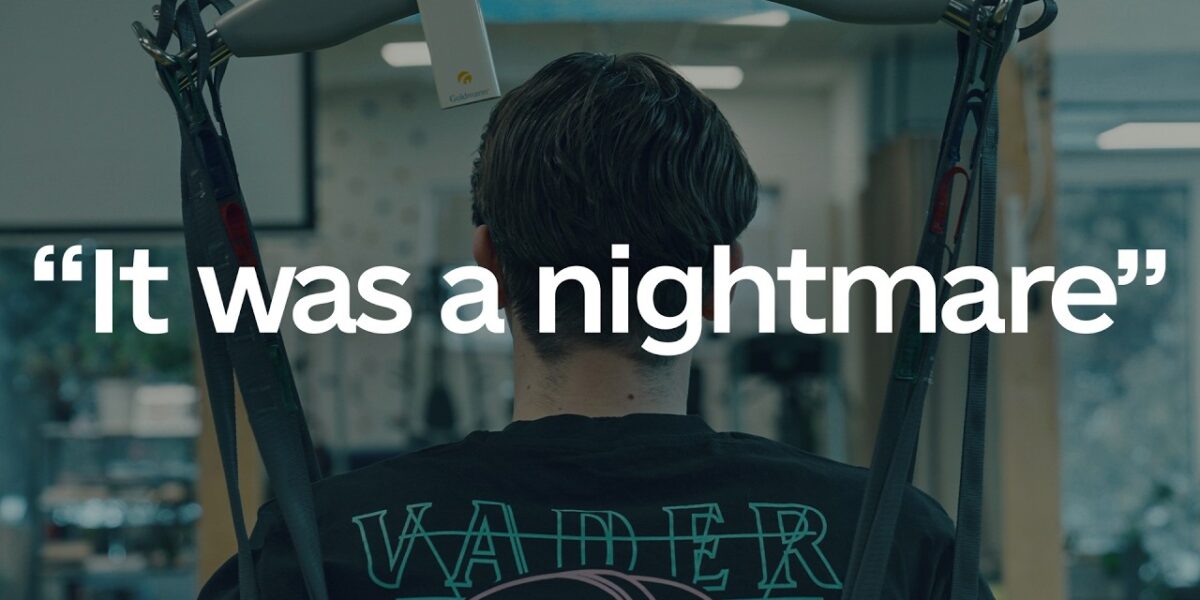
The initial days and weeks following amputation plunged Gleb into a deep despair. “When I received my first prosthesis, I realized it was awful,” he admitted, a sentiment echoed when he faced the same challenge with an arm prosthesis. “I just couldn’t look at myself in the mirror,” he confessed, adding, “I simply didn’t see a full life ahead of me.” He envisioned himself leaving the hospital, returning home, and remaining there, isolated and defeated.
But a deep-seated desire to fight back ignited within him. Gleb chose to pursue osseointegration, an advanced prosthetic technology where a titanium implant is surgically integrated directly into the bone, allowing for a more natural and stable connection with the prosthesis. This decision, while offering immense potential, also committed him to an even more demanding rehabilitation process. “Now I’m doing rehabilitation for my leg. It’s more difficult than for my arm, so I have to put in a lot of effort,” he explained. “It’s pain, it’s time, and certain disappointments, nerves.” Yet, for Gleb, there is “no way back.”
His motivation remains clear and powerful: “I desire to walk again because I’m pretty young. I don’t want to stay in the wheelchair for the rest of my life. So I have to keep fighting.” His aspirations are simple, yet profound: “to go outside, like somewhere to a park, to go by myself to the cinema.” These everyday activities, once taken for granted, now represent significant milestones on his path to independence, a path he currently navigates only with the constant support of his brother.
Sean’s Story: An American Volunteer’s Sacrifice and Spirit
Among the ranks of those fighting for Ukraine are international volunteers, individuals drawn by a profound sense of justice and solidarity. Sean, an American from Houston, Texas, is one such individual. His story of injury is as harrowing as it is typical of the conflict’s brutal nature.
Sean recounted being part of an amphibious assault crossing on the Dnipro River in Kherson Oblast, attempting to liberate an area he jokingly referred to as “Kinky.” Throughout the day, after disembarking boats and moving into forested areas, his unit was relentlessly bombarded by artillery and mortars. “One of them eventually just took my arm off,” he stated with a matter-of-fact tone that belied the horror of the event.
His immediate thought after losing his arm offers a glimpse into his unique coping mechanism: “No more video games for me, I think.” Thankfully, he is still able to play, finding a small but significant victory in maintaining this aspect of his life. Even in the operating room, Sean’s dark humor shone through. “When I got it completely removed though, I asked the doctor if he needed a hand, but he didn’t understand my joke at all.” His irritation at the doctor’s lack of humor, rather than the loss of his limb, speaks volumes about his psychological resilience.
Sean’s life, even after such a profound injury, continues to be vibrant. He proudly shared that he has DJed in front of 10,000 people at Ukraine’s largest venue, alongside a famous Ukrainian artist. His gratitude for being in what he calls “the freest country in the world” is palpable. For Sean, life is about embracing the “rush” of experience, even the relief that follows intense moments. Reflecting on his journey, he offered a poignant piece of advice: “I’m probably someone who loses throughout my entire life. I’ve always known grief and stuff. It’s to me it’s part of life and like you should remember the like enjoy the days and moments that you do have because they’re not forever. And when they do go away, keep the memories alive. That’s the best you can pretty much do there. Uh go on. It sucks, but eventually it’ll be better.”
Serhiy’s Resolve: Mind Over Matter
Serhiy’s injuries are among the most catastrophic, highlighting the sheer destructive power of modern warfare. He sustained his wounds just over a year ago in an artillery shelling combined with a drone explosion. The aftermath was a blur of unimaginable pain. “Horrible pain was there when I was lying in the field, when they were applying tourniquets to me,” he recalled. Desperate, he asked, “What about my hands? What about my hands?” The devastating answer came: “No hands.”
Later, at Mechnikov Hospital, as he emerged from a medically induced coma, the full extent of his sacrifice was delivered with quiet gravity: “Friend, Serhiy, you don’t have hands and you don’t have your left leg.” The news would crush many, but Serhiy’s focus immediately turned to what he could control. “In such a situation, the most important thing is that your head is fine and you are positively настроен on rehabilitation,” he asserted. He believes that if the brain comprehends what needs to be done, then “everything will be okay, and everything will work out.”
Serhiy emphasized the critical connection between mental state and physical recovery. “When you start to get nervous, nothing will work out for you,” he observed, stressing the need to find “a connection of body and soul” for harmonious progress. His lessons from this arduous process are profound: adaptation and socialization within society in his current state. “The most important thing is that you are calm and feel normal among normal, healthy, full-fledged people,” he advised, dismissing the fear of being stared at.
More than anything, Serhiy now values his family. “My family is everything,” he proclaimed. He spoke of how, in difficult times, some soldiers are abandoned by their partners. But his wife and child have remained steadfast. “My family did not abandon me. And from the moment of injury, they are still with me every day, circulating everywhere and helping.” Their unwavering support is his anchor, his motivation, and his greatest treasure.
Beyond the Battlefield: Lessons in Resilience from Civilian Amputees
While the war has dramatically increased the number of amputees in Ukraine, the challenges of limb loss are not exclusive to combat veterans. The transcript also featured an individual who lost both legs due to complications from diabetes—one in 2018, the other in 2022, just before the full-scale invasion. His story, though different in origin, resonates with the same themes of adaptation and resilience.
Remarkably, this individual had no physical therapist and learned to navigate his new reality entirely on his own. “Everything I know, I learned myself,” he stated. The passage of time and the depth of his experience have altered his perception of hardship. “I don’t understand what ‘difficult’ is anymore,” he confessed, finding it hard to relate when others express their struggles. His philosophy is a powerful one: “Every time a person loses something, life ends for them. But you have to learn to live differently. This is not the end of life, it is a new stage of life.”
He drew inspiration from observing others, including veterans with multiple limb losses, who still manage to smile, cook, clean, and care for themselves. “He learned to live with it,” he said, concluding, “This is just a new stage of life. More difficult, perhaps, but a stage of life, not the end.” His perspective offers a universal message of hope and adaptation, demonstrating that the human spirit can find a way forward, regardless of the cause of the loss.
Navigating a New Reality: The Psychological and Social Landscape
The physical wounds of war are often the most visible, but the psychological scars run just as deep, if not deeper. The journey of an amputee is not just about learning to walk or use a prosthetic limb; it is about rebuilding an identity, confronting trauma, and finding a new place in society.
The Emotional Rollercoaster: From Despair to Determination
The initial shock and despair experienced by Gleb, who couldn’t bear to look at himself in the mirror, are common among those who suffer limb loss. The sudden and profound change to one’s body image can lead to depression, anxiety, and a sense of hopelessness. The rehabilitation process itself is a relentless cycle of small victories and frustrating setbacks, demanding immense patience and mental fortitude. Gleb articulated this struggle, admitting, “I have my moments where I just wanted to drop this leg and not to do anything.”
Serhiy’s emphasis on maintaining a positive mental attitude – that one’s “head must be fine” – underscores the critical role of psychological resilience. For many, overcoming the mental hurdles is as challenging, if not more so, than conquering the physical ones. It involves confronting grief, accepting a new reality, and actively choosing to fight for a future that once seemed unattainable.
The Indispensable Role of Family and Community
The unwavering support of family emerges as a recurring and vital theme in these narratives. Serhiy’s profound gratitude for his wife and child, who have stood by him every day since his injury, highlights the stark reality that not all veterans are so fortunate. He spoke of cases where wives abandon injured soldiers, unable or unwilling to cope with the immense challenges. This contrast underscores the invaluable role of a strong, loving support system in an amputee’s recovery and reintegration.
Family members often become primary caregivers, emotional anchors, and unwavering cheerleaders throughout the long and often painful rehabilitation process. Beyond immediate family, broader community support—from fellow veterans to volunteer organizations and medical professionals—plays a crucial role in fostering a sense of belonging and reducing isolation, helping individuals like Gleb, Sean, and Serhiy feel that they are not alone in their struggle.
Finding Inspiration: From Fictional Heroes to Real-Life Peers
In the face of such overwhelming adversity, individuals often seek sources of inspiration to fuel their fight. Gleb, for instance, draws motivation from fictional universes, particularly Star Wars. He identifies with characters who never give up, specifically mentioning Anakin Skywalker, who, as Darth Vader, also suffered multiple amputations and continued to live. “I also told myself: ‘Why am I worse?’” Gleb reflected, channeling the resilience of his heroes.
Similarly, the unnamed amputee who lost his legs to illness found strength in observing others who had faced similar challenges, including war veterans with even more severe injuries. The shared experience of limb loss, regardless of its cause, creates a powerful bond and a source of mutual encouragement. Seeing others adapt and thrive provides tangible proof that a fulfilling life is still possible, fostering a sense of camaraderie and shared purpose that is crucial for long-term recovery.
The Future of Rehabilitation in Ukraine: Challenges and Hopes
The stories of Gleb, Sean, and Serhiy are but a few among the thousands that illustrate the profound human cost of the ongoing war in Ukraine. The country faces an unprecedented challenge in providing long-term, comprehensive care for its injured veterans. The scale of amputations necessitates not only advanced prosthetic technology, such as osseointegration, but also extensive physical therapy, psychological counseling, and vocational training to help individuals reintegrate into civilian life.
The demand for highly skilled physical therapists, prosthetic specialists, and mental health professionals far outstrips current resources. International partnerships and humanitarian aid are crucial in bridging these gaps, providing funding, expertise, and equipment. Efforts are ongoing to establish and expand state-of-the-art rehabilitation centers, ensuring that veterans have access to the best possible care, from initial surgical intervention to lifelong follow-up.
Beyond the medical aspects, the societal integration of amputees is a significant undertaking. This involves not only physical accessibility in public spaces but also combating stigma, promoting understanding, and creating opportunities for employment and social engagement. The hope is that through continued investment in rehabilitation infrastructure, advancements in prosthetic technology, and a compassionate societal approach, Ukraine can provide its heroes with the support they need to not just survive, but to truly thrive in their new stage of life.
Conclusion: An Unyielding Spirit in the Face of Adversity
The narratives of Gleb, Sean, and Serhiy, along with countless others, paint a vivid picture of the profound sacrifices made in the defense of Ukraine. Their journeys through life-altering injuries and arduous rehabilitation are a testament to an unyielding human spirit. From the initial despair of losing limbs to the determined pursuit of walking, playing video games, or simply going to the cinema alone, these individuals embody extraordinary courage and resilience.
Their stories remind us that the war’s impact extends far beyond the front lines, creating a generation of veterans who must rebuild their lives piece by piece. Yet, through the unwavering support of family, the camaraderie of peers, and a deep-seated desire to live fully, they are not just surviving; they are forging new paths, demonstrating that even in the darkest of times, hope and the will to fight for a meaningful future can prevail. These are the unseen battles, fought with quiet dignity, that ultimately define the true strength of a nation.
Source: He is 30. And he lost his limbs in war (YouTube)

Related Articles

Trump’s Putin Stance: US Strategy and Global Implications
Analysis suggests Donald Trump's approach to the Ukraine war involves pressuring Kyiv, but US involvement is crucial for resolution. China's influence and the 'MAGA' agenda's geopolitical implications are key factors.


Melania Trump’s Quiet Diplomacy on Ukraine War
Former First Lady Melania Trump has emerged as an influential, though unofficial, voice on the Ukraine war, reportedly shaping her husband's perceptions and engaging directly on humanitarian issues like the deportation of Ukrainian children. Her advocacy, possibly influenced by her European background, has drawn international attention and sparked unique reactions, including widespread social media support from Ukrainians.
Iran’s Regime Under Siege: Attacks Cripple Leadership, Impact Russia
Iran's regime is reportedly facing critical blows from targeted attacks, crippling its leadership and severing a vital military supply line to Russia. This dual pressure is significantly impacting Russia's war efforts in Ukraine, while internal dissent grows within Iran.