Beyond the American Umbrella: Europe Confronts a New Era of Self-Reliance Amidst Geopolitical Volatility
The long-standing American security umbrella over Europe is undergoing a profound transformation, driven by shifting U.S. foreign policy and a perceived decline in trust. This fundamental change is compelling European nations to reassess their defense postures, including the controversial prospect of developing their own nuclear deterrents, while simultaneously navigating ongoing Russian aggression and the complexities of the Ukraine conflict. The continent faces an urgent imperative to bolster its self-reliance in a volatile geopolitical landscape.

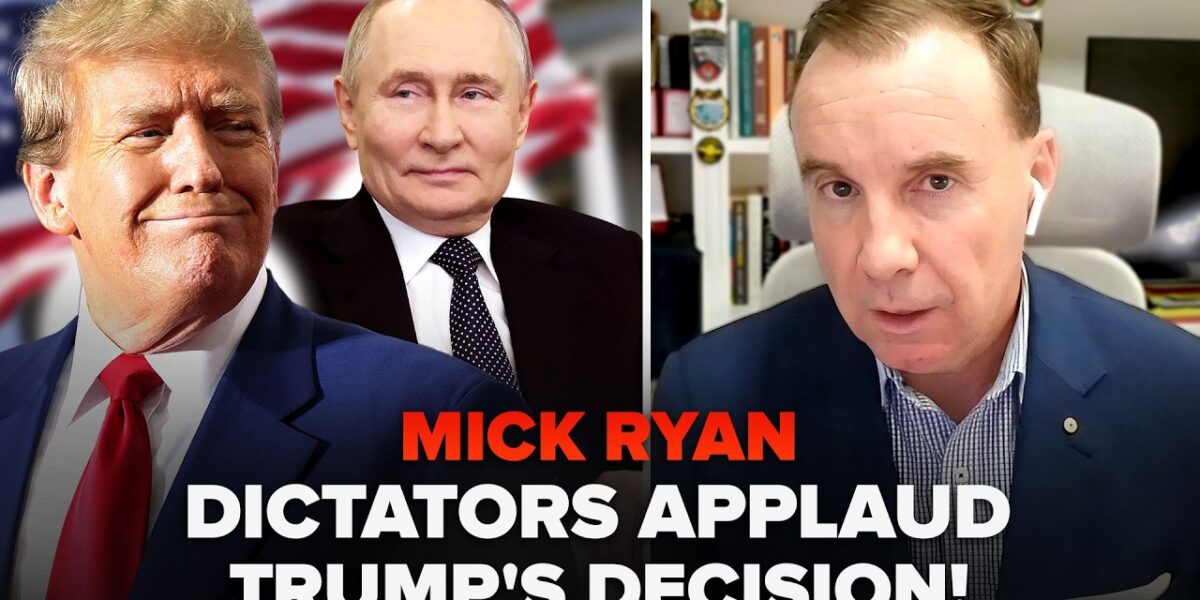
Europe’s Seismic Shift: The Fading American Security Umbrella and the Dawn of a New Era
For over seven decades, the American security umbrella has been an immutable cornerstone of European stability and global order. Forged in the aftermath of two devastating World Wars, this transatlantic compact, epitomized by the North Atlantic Treaty Organization (NATO), has underpinned a period of unprecedented peace and prosperity on the continent. Yet, a profound and unsettling shift is now underway, fundamentally altering the calculus of European defense and forcing nations across the continent to grapple with a future where American guarantees may no longer be absolute. A leading expert recently articulated this dramatic change, noting that the long-held American understanding that European security directly impacts U.S. security has “broken down in the last year,” particularly under the current Trump administration, which “does not appear to support that kind of approach.” This seismic shift is not merely a policy adjustment; it is a re-evaluation of foundational alliances, prompting urgent discussions about European strategic autonomy, increased defense spending, and even the controversial prospect of an independent nuclear deterrent.
The Post-War Consensus: A Legacy Under Strain
The commitment of the United States to European security was not an immediate post-war reflex but a hard-won realization. Before the Second World War, American foreign policy largely adhered to an isolationist stance, viewing European conflicts as distant affairs. It took the cataclysmic scale of World War II for the United States to internalize that the security of Europe was inextricably linked to its own national interests. The devastation wrought by the conflict, coupled with the emerging threat of Soviet expansionism, spurred a radical reorientation of American strategic thought.
This new understanding manifested in a series of groundbreaking initiatives designed to prevent future intra-European conflicts and bolster the continent against external aggression. The Marshall Plan, launched in 1948, injected billions of dollars into rebuilding war-torn European economies, laying the groundwork for political stability. Crucially, in 1949, the North Atlantic Treaty Organization (NATO) was established, creating a collective defense alliance based on the principle of “an attack on one is an attack on all.” This unprecedented peacetime alliance, backed by the immense military and economic power of the United States, effectively guaranteed Europe’s security and ushered in an era of transatlantic cooperation that endured through the Cold War and beyond. The expert underscored that these “linkages were established to ensure that Europe could never go to war with itself again and therefore not impact on American security.”
However, this bedrock understanding, which has shaped global geopolitics for generations, is now facing unprecedented strain. The current political climate in Washington, characterized by an “America First” approach, has openly questioned the value of traditional alliances and multilateral institutions. The expert’s observation that the administration “would rather align itself with authoritarians than democracies” speaks to a profound ideological divergence that strikes at the very heart of the transatlantic bond. This perceived erosion of commitment has sent ripples of anxiety across European capitals, compelling leaders to confront a future where the American shield may no longer be as robust or reliable as it once was.
The Nuclear Question: Europe’s Existential Dilemma
One of the most immediate and profound consequences of this declining trust in the United States is the re-emergence of discussions around a European nuclear deterrent. Several European states are reportedly “openly supporting the idea of negotiating their own nuclear deterrent to complement the American one.” This is a radical proposition, with far-reaching implications for global security architecture and the delicate balance of power.
Currently, France and the United Kingdom are the only nuclear-armed powers in Europe, maintaining independent deterrents that are, to varying degrees, integrated into NATO’s overall strategy. The prospect of other European nations acquiring nuclear weapons, whether individually or as part of a collective European force, introduces a myriad of complex challenges. The expert highlighted the critical distinction between a collective security agreement and individual national guarantees, noting that “the whole command and control for the use of nuclear weapons would need to be political, not military.” The question of “who would have the say over those weapons” – a single developing country or a broader European command structure – is a monumental political and logistical hurdle that would require unprecedented levels of trust and integration among European states.
Beyond the immediate command and control issues, the proliferation risks are substantial. The expert warned of a “wider breakout” beyond the Nuclear Non-Proliferation Treaty (NPT). The NPT, signed by 191 states, aims to prevent the spread of nuclear weapons and weapons technology, promote cooperation in the peaceful uses of nuclear energy, and further the goal of achieving nuclear disarmament. If key European non-nuclear states like Germany or Poland were to pursue their own nuclear arsenals, it could trigger a cascade effect, potentially encouraging other advanced industrial nations outside Europe, such as South Korea or Japan, to reconsider their non-nuclear status. This would fundamentally destabilize the global nuclear order, increasing the risk of miscalculation and regional arms races. The financial cost of developing, maintaining, and modernizing a nuclear arsenal is also immense, diverting resources from other critical defense needs or social services. Moreover, the political ramifications within the European Union and NATO would be profound, potentially creating new divisions and undermining existing security frameworks.
Caught in the Crossfire: Europe’s Dual Challenge
Europe today finds itself in a precarious position, caught, as the interviewer put it, in a “crossfire” of literal fire from Russia and political fire from Washington. The ongoing war in Ukraine serves as a stark reminder of the persistent military threat from Russia, while the shifting sands of American foreign policy introduce unprecedented uncertainty. Under these circumstances, the evolution of European security demands urgent and decisive action.
The most immediate and tangible response, as highlighted by the expert, is for European countries to “spend more on their own defense.” While many NATO members have traditionally fallen short of the alliance’s target of spending 2% of GDP on defense, the war in Ukraine has spurred a renewed commitment, with many states now exceeding this threshold. However, the expert suggested that “3 to 4% is probably a more realistic target” to achieve genuine strategic autonomy. Such an increase, however, comes with significant economic implications. It would “require either more borrowing, higher taxes or decrease spending on the huge number of social services that European citizens are used to receiving.” This presents a difficult political choice for European governments, balancing security imperatives against domestic social contracts.
Despite the growing imperative for self-reliance, the expert cautioned against a complete rupture of the transatlantic relationship. The United States “is still the most powerful nation in the world. It is the most powerful democracy.” Maintaining “good relations with the United States, even if relations at the moment under the Trump administration are not what we would like them to be,” remains in Europe’s long-term interest. The challenge for European leaders is to build greater strategic autonomy without alienating their most powerful ally, navigating a delicate balance between self-assertion and alliance solidarity.
Russia’s Enduring War: Capabilities and Limitations
Central to Europe’s security challenges is the ongoing conflict in Ukraine and Russia’s capacity to sustain it. While some observers suggest Russia is capable of “fighting endlessly,” the expert offered a more nuanced assessment. This would only be true “if Russia was defending its own territory. That is not what it is doing here.” Instead, Russia is engaged in “a legal war of territorial expansion and aggression,” a conflict fundamentally different from homeland defense. Under these circumstances, the expert asserted, “Russia is not capable of an endless war in an expeditionary sense,” even if it has mobilized resources to fight longer than initially anticipated.
Russia’s ability to sustain the war is constrained by several factors, including human resources. President Putin has thus far refrained from a full general mobilization, understanding the significant “cost to his regime for doing that.” A widespread call-up, particularly involving citizens from major urban centers like Moscow, carries the risk of significant domestic unrest and political instability. Instead, Russia has resorted to recruiting from less affluent regions, prisons, and even from countries in Africa and South Asia, often through deceptive means. The expert believes that a general mobilization would only be politically feasible in a “national emergency where Russia was defending its own territory.”
This reluctance to fully mobilize presents a critical “pressure point” for Ukraine. If Ukraine can significantly increase Russian casualties, potentially to “50,000 a month” as suggested by Ukraine’s Minister of Defense Fedorov, it could force Putin “for the first time … to really confront is Ukraine worth the casualties.” Such a grim calculus could compel Putin to seek an end to the conflict on terms more favorable to Ukraine, rather than risking the internal stability of his regime. The long-term economic impact of sanctions and the diversion of resources to the war effort also continue to degrade Russia’s capacity, making an endless war unsustainable.
The Elusive Path to Peace: Geneva and Beyond
Amidst the ongoing conflict, diplomatic efforts continue, albeit with limited prospects for immediate breakthroughs. Recent peace talks in Geneva, for instance, are unlikely to yield “any major outcomes,” according to the expert. Russia’s appointment of a chief negotiator “who’s been proven to be inept and unable to really negotiate effectively with Ukrainians in the past” signals Moscow’s intention to “just play for time.”
President Putin’s primary motivation appears to be a desperate need for “something that he can sell as a victory to the Russian people.” Lacking such a victory at present, he is likely to “continue dragging out negotiations and leading the Trump administration down a garden path until he thinks he can get something that looks like a victory.” This strategy of protracted conflict and stalled diplomacy is designed to wear down Ukrainian and Western resolve, hoping for a more favorable geopolitical landscape to emerge.
The most formidable obstacle to any peace agreement remains the territorial issue. The expert acknowledged the difficulty, noting that the “simplest way to do it is the Russians go home,” but this is an outcome Moscow appears unwilling to accept. Russia has illegally seized Ukrainian territory not just since 2022 but since 2014, making any concession on territorial integrity a deeply contentious political and societal challenge for Ukraine. It is a matter of national sovereignty and international law. Given this intractable nature, the expert suggested that the territorial issue “potentially could be parked,” allowing for “a ceasefire along current lines and then the situation with territory and what happens with territory might be subject to further negotiations.” This approach, while not ideal, could pave the way for a temporary cessation of hostilities, deferring the most difficult questions to future, potentially more favorable, circumstances. However, it also risks legitimizing Russia’s gains and creating a frozen conflict.
Navigating Shifting Alliances: US Diplomacy and Ukraine’s Future
The complexities of the evolving security landscape are further underscored by recent diplomatic maneuvers. The visit of a U.S. official to Hungarian Prime Minister Viktor Orban and Slovakian Prime Minister Robert Fico, both known for their ties with Moscow and opposition to military aid for Ukraine, highlights a nuanced approach to alliances. The expert interpreted this as a signal that the “president feels some kind of fealty or at least feels that they have similar political interests and how they govern their countries.” This engagement with leaders who often challenge the democratic norms championed by traditional U.S. allies suggests a willingness to prioritize perceived political alignment over established diplomatic principles, even immediately after a “reasonably conciliatory speech at the Munich Security Conference.” This indicates that the U.S. approach may be more pragmatic and less ideologically driven than it appears on the surface, potentially causing concern among traditional democratic allies.
For Ukraine, the question of long-term security guarantees from the United States remains paramount. President Zelenskyy reportedly sought guarantees for 30 or 50 years, while a U.S. offer stood at 15 years. The expert admitted that there isn’t a clear “logic” to the specific timeframe of the American offer, viewing it as a negotiable point. The crucial aspect, however, is “getting some kind of security guarantee from the United States” as a starting point. Even a 10-year guarantee would be “good as a start point and then immediately start negotiating for lengthening it at the back end.” Such guarantees are vital for Ukraine’s long-term stability, reconstruction, and its ability to deter future Russian aggression. They provide a framework for continued military aid, intelligence sharing, and economic support, signaling enduring commitment from a key international partner. The duration of these guarantees directly impacts Ukraine’s ability to plan for its future, attract investment, and reassure its population.
Conclusion: A Continent at a Crossroads
Europe stands at a pivotal juncture, grappling with the profound implications of a shifting American security posture, the persistent threat from Russia, and the urgent imperative to forge its own strategic destiny. The post-World War II security architecture, once considered immutable, is undergoing a rapid transformation, pushing European nations towards greater self-reliance and potentially towards a re-evaluation of fundamental defense doctrines, including the highly sensitive issue of nuclear deterrence. The challenges are immense, demanding difficult political choices regarding defense spending, social services, and the very nature of European integration.
While the allure of an independent European defense identity grows, the importance of maintaining robust, albeit evolving, relations with the United States remains critical. The path forward requires a delicate balance of strategic autonomy and continued transatlantic cooperation. As the war in Ukraine grinds on and diplomatic efforts remain stalled, Europe’s ability to adapt, unite, and invest in its own security will determine its resilience in an increasingly volatile and unpredictable world. The current moment is not just a test of alliances but a defining moment for the future of European sovereignty and global stability.
Source: 😱Europe shocked by this US move! Urgent changes in NATO. Here’s what will happen (YouTube)

Related Articles
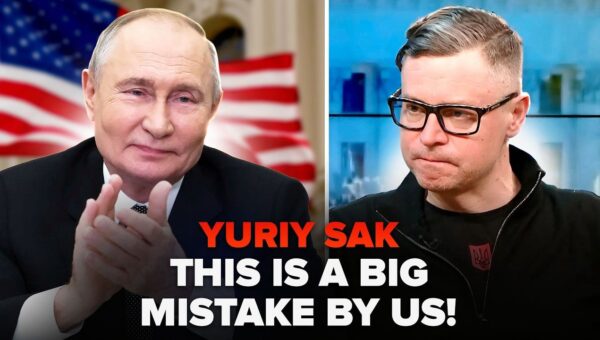
Trump’s Putin Stance: US Strategy and Global Implications
Analysis suggests Donald Trump's approach to the Ukraine war involves pressuring Kyiv, but US involvement is crucial for resolution. China's influence and the 'MAGA' agenda's geopolitical implications are key factors.

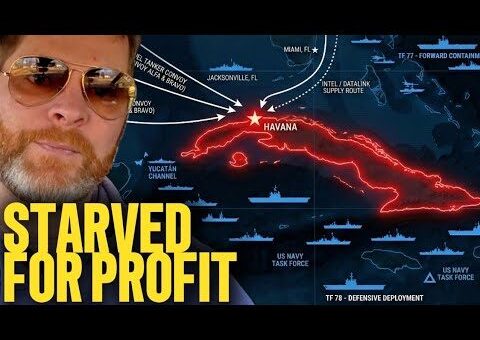
US Accused of Manufacturing Cuba Crisis for Wall Street Profit
The United States is accused of manufacturing a severe humanitarian crisis in Cuba by cutting off fuel supplies, aiming to destabilize the government and create a profitable market for American oil corporations. Critics decry this strategy as a "mafia shakeddown" that prioritizes Wall Street profits over human well-being, drawing parallels to domestic U.S. policies.


US Regime Change Efforts: A History of Tactical Wins, Strategic Losses
A comprehensive review of U.S. interventions reveals a consistent pattern: while the United States is adept at tactically removing foreign governments, achieving strategic success—the establishment of stable, legitimate political orders—has proven exceedingly difficult. Historical analysis points to unintended consequences and long-term instability as common outcomes.