Beyond Ceasefire: Ukraine’s Former Deputy PM Demands ‘Strategic Defeat’ for Russia to Safeguard European Order
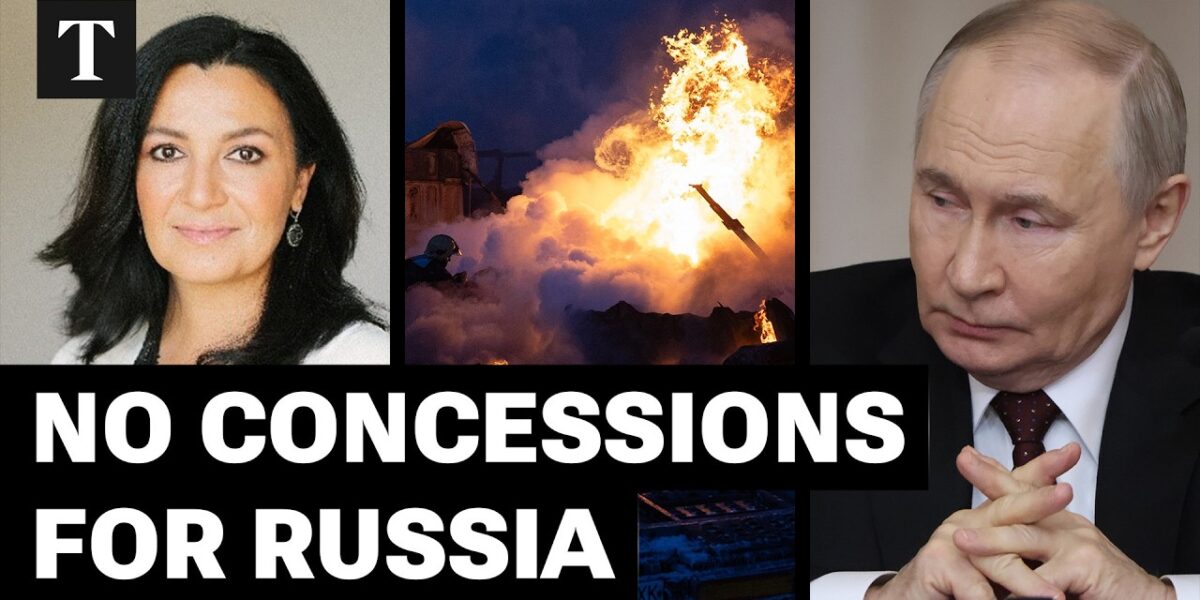
As the full-scale invasion of Ukraine marks its fourth year, former Vice Prime Minister Ivanna Klympush asserts that Russia must face a “strategic defeat” to prevent future attacks on Ukraine and the broader European continent. She rejects the notion of Ukrainian concessions, arguing that the focus must be on debilitating Russia's military and economic capacity through sustained international pressure and aid, thereby preserving the post-WWII international order and allowing Ukraine to rebuild.

Beyond Ceasefire: Ukraine’s Former Deputy PM Demands ‘Strategic Defeat’ for Russia to Safeguard European Order
As the full-scale invasion of Ukraine by Russia marks its four-year anniversary, the international community continues to grapple with the brutal realities of a conflict that has claimed hundreds of thousands of lives and reshaped the geopolitical landscape. Amidst ongoing discussions about potential ceasefire agreements, a stark and unwavering perspective emerges from Kyiv: Russia must experience a “strategic defeat” to not only prevent future aggression against Ukraine but also to safeguard the entire European continent and the post-World War II international order.
This resolute stance was articulated by Ivanna Klympush, Ukraine’s former Vice Prime Minister for European and Euro-Atlantic Integration, in a recent interview. Her comments underscore a deep-seated conviction within Ukraine that anything less than a decisive weakening of the aggressor would merely postpone, rather than prevent, future conflicts. The human cost of the war has been staggering, with the interviewer noting that as many as half a million, possibly even 600,000, Ukrainians have been injured or died as a direct result of Russia’s aggression. This grim statistic casts a long shadow over any talk of compromise, fueling Ukraine’s determination to secure a lasting peace rooted in Russia’s inability to wage war again.
A War of Twelve Years: Beyond the Full-Scale Invasion
While the world largely focuses on the four years since Russia launched its full-scale invasion on February 24, 2022, Ivanna Klympush quickly corrected the prevailing narrative, asserting, “we do have to remember that this war is ongoing for 12 years.” This crucial distinction highlights a broader understanding within Ukraine that the current brutal conflict is not an isolated event but rather an escalation of a long-standing pattern of Russian aggression that began much earlier.
The roots of the current conflagration stretch back to 2014, when Russia illegally annexed Crimea following a sham referendum and simultaneously fomented a separatist conflict in Ukraine’s eastern Donbas region. This period saw the deployment of Russian-backed forces, the establishment of self-proclaimed ‘people’s republics’ in Donetsk and Luhansk, and a protracted, low-intensity war that claimed thousands of lives even before the 2022 escalation. For Ukrainians, the years between 2014 and 2022 were not peacetime but a continuous struggle against Russian encroachment and hybrid warfare tactics, including cyberattacks, disinformation campaigns, and economic pressure.
Klympush’s emphasis on the 12-year timeline serves as a critical reminder that Russia’s imperial ambitions and disregard for international law predate the dramatic events of two years ago. It underscores Ukraine’s belief that Moscow’s objectives go beyond specific territorial gains, aiming instead to undermine Ukrainian sovereignty, prevent its Euro-Atlantic integration, and ultimately reassert Russian dominance over its perceived sphere of influence. Understanding this longer historical context is essential for comprehending Ukraine’s unwavering demand for a definitive outcome that addresses the root causes of this enduring aggression, rather than merely patching over its symptoms.
The Unyielding Spirit: Ukrainian Resilience Amidst Exhaustion
Four years into the full-scale invasion, and a dozen years since the initial aggression, the toll on the Ukrainian population is immense. Klympush candidly acknowledged the profound weariness gripping the nation. “Definitely we are all pretty exhausted. Definitely the people of Ukraine are tired and weary of the war and the this challenges that it brings along with it,” she stated. The challenges extend far beyond the front lines, permeating every aspect of daily life. Russian missile and drone attacks relentlessly target critical infrastructure, leading to widespread power outages, disruptions to heating and water supplies, and constant anxiety for civilians.
Yet, despite the pervasive exhaustion and the relentless hardships, Klympush emphasized that this does not translate into a diminished will to resist. “But I don’t think that all of that brings us to less resolute mood of the people to still push back on the Russian invasion and Russian aggression,” she affirmed. This enduring resolve, she explained, stems from a grim understanding: “because we do know that what comes with the occupation of the Russian Federation is is even much worse than something that we are experiencing either under these attacks.”
The memory of Russian atrocities in occupied territories – documented instances of torture, forced displacement, filtration camps, and the systematic suppression of Ukrainian identity – serves as a powerful deterrent against any thought of capitulation. For many Ukrainians, the fight is not just for territory but for the very survival of their nation, their culture, and their fundamental human rights. The choice, as they see it, is between enduring the present hardships with the hope of ultimate liberation, or succumbing to an occupation that promises an even darker future. This deep-seated conviction fuels the resilience that continues to defy expectations and provides the moral impetus for Ukraine’s continued resistance against overwhelming odds.
The Peril of Premature Concessions: A Path to Future Conflict?
A recurring theme in international discussions surrounding the Ukraine war is the notion that for peace to be achieved, Ukraine will eventually need to make concessions. This perspective often emerges from a desire to end the immediate suffering and a belief that compromise is the only realistic path to de-escalation. However, Ivanna Klympush vehemently rejected this premise, challenging the very framework of such a discussion. “Could I ask you what are exactly the concessions we are asking or the Russian Federation to make in this war?” she retorted, highlighting a critical imbalance in the prevailing narrative.
Klympush argued that framing the conflict as a dispute between “two equal parties” requiring mutual concessions fundamentally misunderstands the nature of the war. “I just cannot understand. Are we trying to see this war as a conflict between two um equal parties or we do remember that there is a clearcut aggressor and there is a clear-cut victim in this?” she questioned. For Ukraine, the moral clarity is absolute: Russia is the unprovoked aggressor, and Ukraine is the victim fighting for its very existence. From this perspective, asking the victim to cede territory or sovereignty to the aggressor is not a path to lasting peace but an endorsement of aggression that would inevitably lead to future conflicts.
The historical parallels are stark. Appeasement, particularly in the lead-up to World War II, demonstrated that concessions to aggressive regimes often embolden them, leading to further demands and larger conflicts. Klympush warned that pressuring Ukraine into concessions “would actually lead to another war just in a couple years later.” Such an outcome would not only betray the sacrifices made by Ukrainians but also undermine the international legal order, signaling that military aggression can be rewarded. Ukraine’s position is clear: the focus must shift from pressuring the victim to holding the aggressor accountable and ensuring its capacity for future aggression is irrevocably curtailed.
Defining ‘Strategic Defeat’: More Than Just a Ceasefire
For Ivanna Klympush, the objective extends far beyond a mere ceasefire or a temporary cessation of hostilities. The goal is nothing less than a “strategic defeat” for Russia, a comprehensive dismantling of its capacity to wage war and threaten its neighbors. This vision of victory is multi-faceted and aims to ensure long-term security, not just for Ukraine but for the broader European continent.
Klympush outlined two primary pillars of this strategic defeat: Firstly, it entails making the Russian Federation “not capable to attack again.” This refers to a fundamental degradation of Russia’s military machine, including its conventional forces, its ability to produce advanced weaponry, and its logistical capabilities. This would likely involve significant restrictions on its military size, modernization, and deployment, perhaps through international agreements or sustained pressure that renders its military ineffective as an offensive force.
Secondly, strategic defeat requires the “restriction of its economic capacity to finance the war.” Modern warfare is incredibly resource-intensive, and Russia’s ability to sustain its aggression is directly tied to its economic strength, particularly its revenues from oil and gas. Limiting these financial flows through robust and sustained sanctions, export controls, and other economic measures is crucial to starving Russia’s war machine. This would cripple its ability to procure necessary components, fund its military-industrial complex, and maintain its armed forces.
Crucially, Klympush emphasized that achieving this strategic defeat “cannot be achieved by Ukraine exclusively.” It demands “common pressure from the outside world on Russian Federation with also Ukrainian capacity to defend itself which has to be stepped up.” This highlights the indispensable role of international solidarity, sustained military and financial aid to Ukraine, and a unified global front against Russian aggression. The ultimate aim is not vengeance, but to create an environment where Ukraine can finally “focus on the development… on building on creation as opposed to fighting and the necessity to all the time um fight for survival and fight for for our everyday existence.” A strategic defeat, in this context, is the prerequisite for Ukraine’s peaceful and prosperous future.
Safeguarding the European Order: A Continent at Stake
The implications of Russia’s war in Ukraine extend far beyond its immediate borders, posing an existential threat to the delicate balance of peace and security that has largely characterized Europe since the end of World War II. Ivanna Klympush articulated this grave concern, warning that Russia’s objective is not merely to subjugate Ukraine but “to stop being able to attack the whole European continent and try to blow up the whole order that you know your people have been experiencing in terms of prosperity, in terms of security over the years after the Second World War.”
The post-WWII order, painstakingly constructed through international institutions like the United Nations, NATO, and the European Union, is founded on principles of national sovereignty, territorial integrity, and the peaceful resolution of disputes. Russia’s unprovoked invasion of a sovereign nation, its blatant disregard for international law, and its rhetoric challenging the very existence of independent states fundamentally undermine these foundational tenets. If Russia were to succeed in Ukraine, it would send a chilling message that might makes right, potentially emboldening other authoritarian regimes and destabilizing regions far beyond Eastern Europe.
For NATO members and EU states, the conflict in Ukraine serves as a stark reminder of Russia’s revanchist ambitions. The security architecture of Europe, built on collective defense and deterrence, is being tested as never before. The fear is that if Ukraine falls, Russia’s aggressive posture could then extend to other neighboring states, particularly those within its historical sphere of influence or those with significant Russian-speaking populations. This would necessitate a massive reorientation of defense strategies, increased military spending, and a heightened state of alert across the continent, directly threatening the prosperity and security Klympush referenced.
Therefore, supporting Ukraine’s strategic defeat of Russia is not merely an act of solidarity; it is an act of self-preservation for Europe. It is about upholding the principles that have ensured relative peace for decades and demonstrating that aggression will not be tolerated or rewarded. The outcome of this war will determine the future trajectory of European security and the viability of the international rules-based order for generations to come.
The Crucial Role of International Solidarity and Pressure
Achieving a strategic defeat for Russia, as envisioned by Ivanna Klympush, is a monumental task that transcends Ukraine’s capabilities alone. It necessitates a robust, unified, and sustained effort from the international community, embodying the “common pressure from the outside world on Russian Federation” that Klympush emphasized. This multifaceted international solidarity manifests in several critical forms, each indispensable to tipping the scales against Moscow.
Firstly, military aid remains paramount. Ukraine’s ability to defend itself and push back Russian forces hinges on a consistent supply of advanced weaponry, ammunition, and training. This includes everything from artillery shells and anti-tank missiles to air defense systems and modern fighter jets. The effectiveness of this aid is not just about quantity but also timeliness and strategic coordination, ensuring Ukraine has the tools to counter evolving Russian tactics.
Secondly, financial aid is crucial for Ukraine’s economic survival and the functioning of its government amidst wartime. Billions of dollars in budgetary support, humanitarian assistance, and reconstruction funds are necessary to maintain essential public services, support the displaced population, and lay the groundwork for eventual recovery. This aid prevents a total collapse of the Ukrainian state, which would be a strategic victory for Russia.
Thirdly, sanctions against Russia are designed to cripple its economic capacity to finance the war. These measures target Russia’s energy sector, financial institutions, key industries, and oligarchs, aiming to reduce its revenue streams and limit its access to critical technologies and components. While sanctions take time to exert their full effect and require constant vigilance against circumvention, they are a vital tool in degrading Russia’s long-term war-making capabilities.
Fourthly, diplomatic isolation plays a significant role in diminishing Russia’s international influence and legitimacy. By condemning its actions in international forums, limiting its participation in global bodies, and fostering a broad coalition against its aggression, the international community can reinforce norms against unprovoked warfare and hold Moscow accountable on the world stage.
Finally, the pursuit of accountability for war crimes and crimes against humanity committed by Russian forces is essential for justice and deterrence. Investigations by the International Criminal Court and other bodies send a clear message that impunity will not be tolerated, further isolating Russia and reinforcing the rules-based international order.
While challenges such as aid fatigue, political divisions within donor countries, and supply chain issues persist, the imperative for sustained and increased international support for Ukraine remains absolute. As Klympush underscored, it is a shared responsibility to ensure that the aggressor is weakened to an extent that it cannot wage another war, securing peace not just for Ukraine but for the entire democratic world.
Economic Warfare: Crippling Russia’s Capacity to Wage War
Central to Ivanna Klympush’s concept of a “strategic defeat” for Russia is the systematic restriction of its economic capacity to finance and sustain its military aggression. Modern warfare, especially at the scale witnessed in Ukraine, is an incredibly expensive undertaking, demanding vast resources for personnel, weaponry, logistics, and reconstruction. By targeting Russia’s economic lifelines, the international community aims to starve its war machine and diminish its long-term ability to project power.
Since the full-scale invasion, a broad coalition of nations, primarily led by the G7, the European Union, and their allies, has implemented unprecedented sanctions against Russia. These measures are designed to achieve several objectives: cutting off Russia’s access to international financial markets, limiting its ability to export key commodities like oil and gas, restricting its access to advanced technology and dual-use goods, and freezing the assets of its central bank and oligarchs. The goal is to degrade Russia’s industrial base, hinder its military production, and reduce its foreign currency earnings, which are crucial for importing necessary goods and financing its military budget.
The impact of these sanctions has been significant, though not immediately decisive. Russia’s economy has been forced to reorient, relying more heavily on trade with countries like China and India, and developing workarounds to mitigate the effects of restrictions. However, the long-term consequences are becoming increasingly apparent. Access to Western technology and components, vital for advanced manufacturing and military production, has been severely curtailed, forcing Russia to rely on less sophisticated alternatives or illicit procurement networks. Furthermore, the exodus of Western businesses and talent has stifled innovation and productivity.
The challenge lies in the consistent enforcement and continuous adaptation of these sanctions to prevent circumvention. As Russia seeks new markets and develops alternative supply chains, the international community must remain vigilant, tightening loopholes and expanding the scope of restrictions. The objective is not to collapse the Russian economy entirely, but to render it incapable of supporting a prolonged, large-scale military conflict. By restricting its economic capacity, the international community directly impacts Russia’s ability to replenish its forces, produce new armaments, and ultimately, wage another war, thereby contributing directly to Klympush’s vision of a strategic defeat.
Rebuilding Ukraine: The Vision Beyond Conflict
Beyond the immediate imperative of defending against Russian aggression, Ukraine harbors a profound vision for its future – one of recovery, development, and integration into the European family. This aspiration, as Ivanna Klympush articulated, can only be realized once Russia has experienced a strategic defeat, allowing Ukraine to “focus on the development… on building on creation as opposed to fighting and the necessity to all the time um fight for survival and fight for for our everyday existence.”
The scale of reconstruction required in Ukraine is immense. Cities have been razed, infrastructure decimated, and vast tracts of land contaminated by war. The task will involve rebuilding homes, schools, hospitals, roads, bridges, and energy networks. This monumental effort will require not only significant international financial investment but also robust institutional reforms, transparent governance, and a concerted effort to attract foreign direct investment.
Crucially, Ukraine’s post-war vision is inextricably linked to its Euro-Atlantic aspirations. Membership in the European Union and NATO remains a strategic priority, seen as the ultimate guarantee of security, stability, and prosperity. The process of EU accession, already underway, involves extensive legislative and institutional reforms aimed at aligning Ukraine with European standards in areas such as rule of law, anti-corruption, and market economy principles. These reforms are not just about meeting external requirements; they are fundamental to building a stronger, more resilient, and democratic Ukraine.
Furthermore, the human capital aspect of rebuilding is paramount. Millions of Ukrainians have been displaced internally or have sought refuge abroad. Facilitating their safe and voluntary return, providing psychological support for trauma survivors, and reintegrating veterans into civilian life will be critical. Investing in education, healthcare, and job creation will be essential to harness the country’s potential and ensure a vibrant future.
The vision for Ukraine is one of a modern, democratic, and prosperous European nation, free from the constant threat of Russian aggression. This future, however, is contingent upon the international community’s unwavering commitment to ensuring Russia’s strategic defeat, thereby creating the necessary conditions for Ukraine to finally embark on its journey of renewal and thrive as a sovereign, independent state.
A New Geopolitical Reality: The Stakes for the World
The conflict in Ukraine transcends a regional dispute; it has become a crucible for the 21st-century global order, testing the resilience of international law, democratic values, and collective security. The outcome of this war will reverberate far beyond Eastern Europe, shaping geopolitical realities for decades to come. As Ivanna Klympush warned, Russia seeks to “blow up the whole order” that has underpinned global stability since World War II, and the world is watching to see if it succeeds.
At its core, the war represents a stark confrontation between authoritarianism and democracy. Russia, under Vladimir Putin, embodies a revisionist power seeking to dismantle the liberal international order and replace it with a sphere-of-influence model, where larger powers dictate the fate of smaller neighbors. Ukraine, in its valiant resistance, has become a frontline defender of democratic principles, national sovereignty, and the right of nations to choose their own alliances and future.
The conflict has also exposed fault lines and realignments among major global powers. China’s nuanced but supportive stance towards Russia, coupled with its growing economic and military might, signifies a challenge to Western dominance. Nations in the Global South often navigate a complex path, balancing economic interests with principles of sovereignty, sometimes creating divisions in the international response to Russia’s aggression. The war has thus become a litmus test for the effectiveness of international institutions and the willingness of nations to uphold universal values even when it entails economic or political costs.
The stakes are immense. If Russia’s aggression is seen to be rewarded, it could embolden other authoritarian regimes to pursue territorial expansion or disregard international norms, leading to increased instability and conflict worldwide. Conversely, a clear strategic defeat for Russia would reinforce the principles of international law, deter future aggression, and demonstrate the power of collective action in defending shared values. It would send a powerful message that unprovoked aggression will not stand and that the international community is prepared to defend the rules-based order.
Therefore, the call for Russia’s strategic defeat is not merely a Ukrainian plea for assistance; it is a global imperative. It is about defining the future trajectory of international relations, safeguarding the principles of sovereignty and self-determination, and preventing a descent into a more dangerous and unpredictable world where might makes right. The cost of inaction or a weak resolution would far outweigh the challenges of ensuring a decisive outcome.
Conclusion: The Enduring Call for a Decisive Outcome
Four years into Russia’s full-scale invasion of Ukraine, and 12 years since its initial acts of aggression, the call from Kyiv for a decisive outcome resonates with increasing urgency. Ivanna Klympush, Ukraine’s former Vice Prime Minister, has articulated a vision that transcends temporary ceasefires or territorial compromises, demanding instead a “strategic defeat” for Russia. This objective, she argues, is not merely about securing Ukraine’s future but about safeguarding the entire European continent and the fundamental principles of the post-World War II international order.
The strategic defeat Klympush envisions is comprehensive: it seeks to render Russia incapable of launching future attacks by severely restricting its military forces and crippling its economic capacity to finance war. This requires a unified and sustained effort from the international community through military aid, financial support, robust sanctions, and diplomatic pressure. Anything less, Klympush warns, would be a dangerous concession that would only embolden the aggressor and pave the way for future conflicts, undermining the very security and prosperity that Europe has enjoyed for decades.
As the conflict continues to exact a horrific human toll and challenge global stability, the choice facing the international community is clear: to pursue a decisive outcome that holds the aggressor accountable and secures a lasting peace, or to risk a precarious stalemate that promises only a temporary reprieve before the next wave of aggression. Ukraine’s resolve, born from exhaustion but strengthened by an unwavering commitment to freedom, demands a response that matches the scale of the threat, ensuring that the nation can finally turn its focus from survival to the vital work of development and creation, free from the shadow of Russian imperialism.
Source: Putin Must Face ‘Strategic Defeat’ To Prevent Future War | Ivanna Klympush (YouTube)

Related Articles

Trump’s Putin Stance: US Strategy and Global Implications
Analysis suggests Donald Trump's approach to the Ukraine war involves pressuring Kyiv, but US involvement is crucial for resolution. China's influence and the 'MAGA' agenda's geopolitical implications are key factors.


Melania Trump’s Quiet Diplomacy on Ukraine War
Former First Lady Melania Trump has emerged as an influential, though unofficial, voice on the Ukraine war, reportedly shaping her husband's perceptions and engaging directly on humanitarian issues like the deportation of Ukrainian children. Her advocacy, possibly influenced by her European background, has drawn international attention and sparked unique reactions, including widespread social media support from Ukrainians.

US Regime Change Efforts: A History of Tactical Wins, Strategic Losses
A comprehensive review of U.S. interventions reveals a consistent pattern: while the United States is adept at tactically removing foreign governments, achieving strategic success—the establishment of stable, legitimate political orders—has proven exceedingly difficult. Historical analysis points to unintended consequences and long-term instability as common outcomes.