Belgium’s Bold Move Cripples Russia’s Shadow Fleet
Belgium's seizure of a Russian shadow tanker signals a significant blow to illicit oil trade networks. This bold move, alongside potential European cooperation and US naval action against Iranian reserves, could spell the end for the shadow fleet, reshaping global energy markets.


Belgium’s Bold Move Cripples Russia’s Shadow Fleet
In a significant development that signals a potential unraveling of illicit global oil trade networks, Belgium has taken decisive action against a Russian “shadow tanker,” seizing the vessel and initiating a criminal investigation. This move by a nation not typically considered a geopolitical heavyweight underscores a growing international effort to dismantle the opaque fleet of aging ships used by sanctioned countries like Russia, Iran, and Venezuela to circumvent international restrictions and continue generating vital oil revenue.
The Rise of the Shadow Fleet
For nearly four years, the “shadow fleet” – comprised of old, often poorly maintained vessels with falsified documentation and insurance – has operated as a crucial lifeline for nations under economic sanctions. These tankers have sailed under the radar, facilitating the movement of oil and circumventing the global financial and regulatory systems. The United States has previously targeted this network, notably by going after vessels involved with Venezuelan crude. However, this latest action by Belgium marks a notable escalation, demonstrating a newfound legal and operational capability to prosecute such activities.
A European Awakening
The Belgian action stands in contrast to a previous incident involving France, where a seized Russian shadow tanker was promptly released due to the French authorities’ perceived inability to prosecute. Belgium’s apparent success in initiating a criminal investigation suggests a more robust legal framework or a stronger political will to confront this challenge. “The Belgians apparently have figured it out and they’ve already opened prosecution,” notes Peter Zeihan, observing the development. “Now, I don’t say positive things about Belgium often… Yet, here they have all their ducks in a row. So, you know, kudos Belgium.”
This development is seen as a catalyst for broader European action. If a smaller nation like Belgium can effectively target the shadow fleet, it removes any excuse for larger European powers, particularly those geographically closer to Russia, such as the Baltic states, Sweden, or the United Kingdom, to hesitate. The potential for a coordinated European effort, involving countries like Denmark, the Netherlands, and Sweden, could effectively shut down major shipping lanes, including the Baltic Sea.
Iran’s Precarious Position
Adding another layer to the shadow fleet’s vulnerability is the ongoing conflict in the Middle East. Iran, anticipating such international pressure, had reportedly moved a significant portion of its oil reserves onto floating storage – approximately 200 million barrels held on tankers without fixed destinations. These vessels are now effectively trapped in the Persian Gulf due to the war. Zeihan posits, “And all of a sudden, they can’t leave the Persian Gulf because of the war. They’re just floating there. And it’s only a matter of time before the US Navy decides just go up bup and confiscate all of them.” Such a confiscation would represent a fatal blow to the shadow fleet, disrupting the flow of roughly 4 million barrels of oil per day that has been reaching the market through these illicit channels.
The Imminent Collapse of the Shadow Fleet
The confluence of these factors – increased international enforcement, European solidarity, and the geopolitical realities in the Persian Gulf – points towards an imminent collapse of the shadow fleet. The United States, with its naval capabilities, is well-positioned to intercept and confiscate the Iranian oil reserves. Zeihan suggests that while the US Navy’s ordinance might be limited for sustained conflict, their capacity to quickly neutralize Iranian naval and air assets, as observed in the current conflict tempo, leaves Iran with little recourse to protect its floating oil reserves. “There’s really nothing that Iran can do to protect the shadow fleet. They’re just basically sitting in a bathtub of the Persian Gulf,” he states.
Why This Matters
The potential demise of the shadow fleet carries significant implications for the global energy market. For years, these vessels have provided a vital, albeit illicit, mechanism for sanctioned nations to monetize their oil resources, thereby bolstering their economies and funding their regimes. The disruption of this flow will force a recalibration of global oil supply and demand dynamics. Countries that have relied on these circumvented channels will face increased economic pressure, potentially leading to shifts in their geopolitical strategies. Conversely, the increased availability of oil from legitimate sources, or the potential confiscation of seized assets, could influence global energy prices and market stability.
Implications, Trends, and Future Outlook
The crackdown on the shadow fleet signifies a broader trend towards increased enforcement of international sanctions and a tightening of regulatory oversight in maritime trade. As technology improves and international cooperation strengthens, operating outside established norms becomes increasingly difficult and risky. The future outlook suggests a more transparent and regulated global shipping industry, where the use of opaque and potentially illegal practices will be met with swift and severe consequences. This could lead to a more level playing field for energy producers and a reduction in the financial resources available to sanctioned regimes.
Historical Context
The use of shadow fleets is not entirely unprecedented. Throughout history, nations have sought ways to circumvent trade restrictions and sanctions, employing various clandestine methods. However, the scale and sophistication of the modern shadow fleet, enabled by advancements in shipping technology and facilitated by a complex web of intermediaries, represent a unique challenge. The current efforts to dismantle it are part of a long-standing international effort to uphold the integrity of sanctions regimes and maintain global financial stability.
The coordinated actions by Belgium and the potential follow-through by other European nations, coupled with the US Navy’s strategic position, suggest that the era of the shadow fleet may be drawing to a close. The consequences for sanctioned states will be substantial, potentially reshaping regional and global energy politics.
Source: Belgium Seizes Shadow Fleet Vessel || Peter Zeihan (YouTube)

Related Articles


US Mulls Iran Ground Troops, Draft Amid Escalating Tensions
The White House is reportedly considering extreme military options against Iran, including the potential deployment of ground troops and even a military draft. Retired Colonel Jack Jacobs expressed skepticism about a draft but discussed limited scenarios for special forces raids.

Israel’s Two-State Solution Hopes Fade Amidst Conflict
The two-state solution for the Israeli-Palestinian conflict is reportedly no longer a serious consideration in Israeli politics, according to Josh Glancy of The Sunday Times. Recent events and political shifts have accelerated this trend, while economic concerns mount over potential energy price shocks.
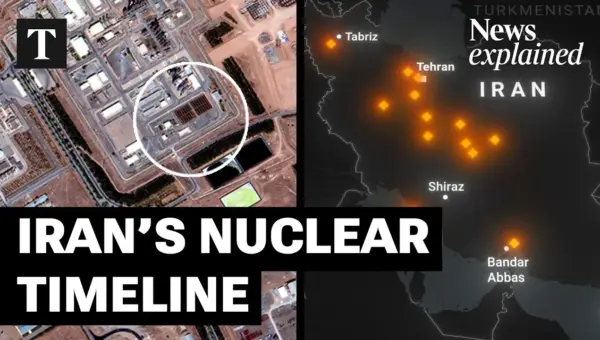
Iran Nears Nuclear Threshold Amid Heightened Global Tensions
Iran is closer than it has been in decades to acquiring a nuclear weapon, having mastered uranium enrichment technology and stockpiled significant amounts of 60% enriched uranium. While intelligence suggests no current order to weaponize, Tehran's capability poses a growing concern amid heightened global tensions.