Behind the Red Curtain: Xi Jinping’s Precarious Grip as CCP Factions Clash
China's Communist Party is grappling with unprecedented internal fracturing, with two power centers now vying for control as President Xi Jinping faces a precarious challenge to his authority. High-profile purges and cryptic state media signals suggest deep divisions among conservatives, reformists, and Xi's loyalists, with the military's ultimate allegiance hanging in the balance. This dangerous stalemate could shatter overnight, reshaping China's future.

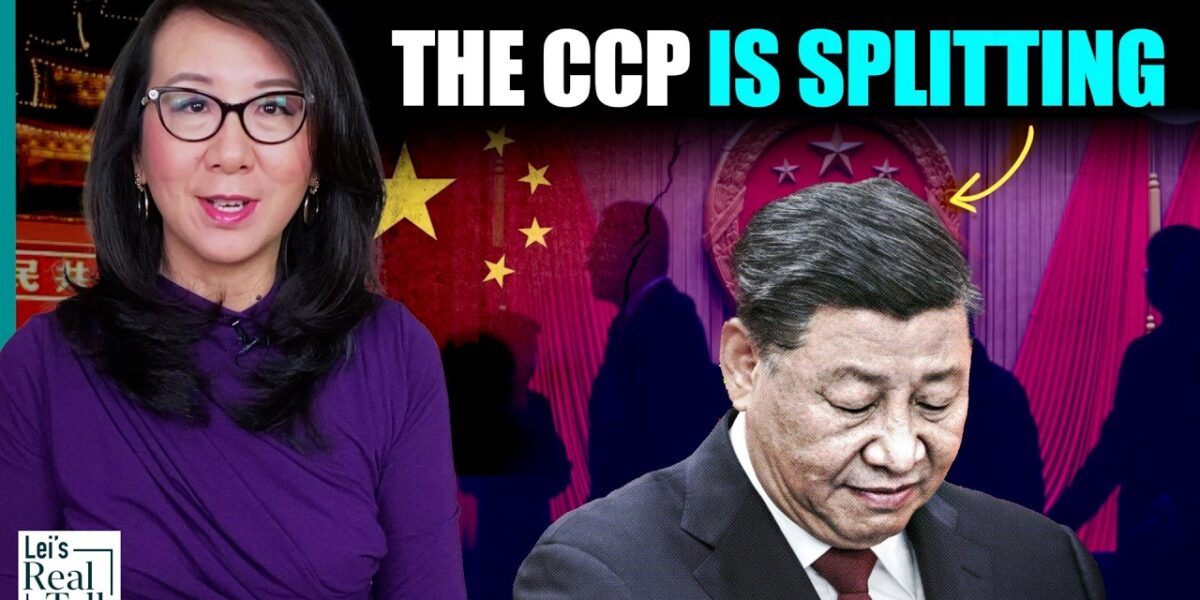
Cracks in the Dynasty: Unraveling the Power Struggle Inside the Chinese Communist Party
In the opaque world of Chinese politics, where outward appearances often mask profound internal dynamics, a seismic shift is underway. Recent events, marked by high-profile arrests and cryptic state media pronouncements, suggest that the Chinese Communist Party (CCP) is not merely experiencing internal friction but is deeply fractured, operating with what observers describe as two distinct centers of power. At the heart of this unfolding drama is President Xi Jinping, whose seemingly unshakeable authority is now facing unprecedented challenges from within the party’s elite.
For too long, many Western analysts, fixated on visible policy shifts and public statements, have missed the true undercurrents of power in Beijing. As one astute observer noted, drawing from ancient wisdom, "the invisible and the intangible is the Dao, while the visible and the tangible is only the container." This ancient insight holds particular resonance in understanding the CCP, where true power dynamics unfold behind closed doors, away from public scrutiny. The current political storm, triggered by the recent downfall of two prominent military figures, Generals Zhang Youxia and Li Shangfu (though the transcript only names Zhang Youxia and mentions "Yuni" which could be a mispronunciation or reference to another figure, the context strongly points to senior military figures caught in the purge), has forced these hidden struggles into stark relief, revealing a leadership teetering on a precipice.
The Battle of Narratives: Pro-Xi vs. Anti-Xi
Following the significant arrests of senior military officials, two contrasting narratives have emerged from within and around Beijing. The pro-Xi camp asserts that the President is consolidating his power through a ruthless crackdown on the military, instilling fear and ensuring submission. Their primary evidence includes a recent public appearance by Xi Jinping alongside General Zhang Youxia (the transcript indicates "Jang Shiming" as the only remaining CMC member, which might be a mispronunciation of Zhang Youxia, as Zhang is a vice chairman of the CMC and a key figure), visiting retired PLA officers in Beijing. Xi was reportedly smiling, projecting an image of triumph. The reappearance of his loyal staffer, Cai Qi, in state media further reinforced the message that Xi remains firmly in control, his purges effective.
Conversely, the anti-Xi narrative paints a picture of a leader increasingly isolated and vulnerable. This camp claims Xi is facing open resistance in high-level party meetings, including the Politburo and the National People’s Congress. Crucially, they argue that the military, the ultimate guarantor of CCP rule, has not yet pledged its full loyalty to Xi. This perceived lack of explicit military support, combined with internal dissent, suggests a chaotic and noisy environment within the party leadership, far from the unified front projected by state propaganda.
Decoding the PLA Daily: State Media’s Unintended Admissions
The clearest sign of the CCP’s internal fracturing comes not from dissident whispers, but from the official mouthpiece of the People’s Liberation Army (PLA), the PLA Daily. A series of editorials published in early 2026 (relative to the video’s likely recording date) inadvertently revealed the depth of the crisis. On January 24th, the same day the investigation into the two generals was announced, the PLA Daily published a striking denunciation of General Zhang Youxia. It accused him of "seriously sabotaging the CMC chairman responsibility and seriously undermining the party’s control of the military."
This language, for those accustomed to reading between the lines of CCP propaganda, was an open admission of Xi Jinping’s weakening grip. As Chairman of the Central Military Commission (CMC), Xi’s authority is paramount. For a vice chairman to "sabotage" the chairman’s power implies a chairman who had already lost effective control. This rare display of public candor about internal military dissent quickly gave way to a shift in tone. In the days that followed, references to "political overreach" vanished, replaced by a focus on corruption charges. This abrupt change suggested an internal realization that too much had been revealed, prompting a damage control effort to depoliticize the purges.
However, the narrative shifted again. More recently, the PLA Daily ran a commentary titled "Political strength is the most fundamental strength," penned by a scholar from the National Defense University. This piece resurrected the historical case of Zhang Guotao, a senior CCP leader who openly challenged Mao Zedong during the Long March in 1935, splitting the Red Army and forming a rival central committee. Historically, whenever Zhang Guotao is invoked as a negative example in CCP media, it signals that internal power struggles have reached a perilous level, and the party faces a genuine risk of division. The subtext was clear: behind the drama surrounding Zhang Youxia, the party itself is fractured, and the leadership has yet to achieve consensus on how to proceed.
The silence from senior PLA leaders in publicly endorsing Xi Jinping’s move against Zhang Youxia is not accidental. It speaks volumes about the deep internal divisions and a reluctance to align unequivocally with Xi. This lack of public support from the military, coupled with the coded warnings in state media, underscores the precariousness of Xi’s position and the undeniable fracturing of the CCP’s core.
The Three Factions: A Layered and Evolving Landscape
The CCP’s internal landscape is not a simple dichotomy of pro- and anti-Xi forces. It is a complex, layered, and constantly evolving battleground involving three major camps:
1. The Conservative Camp (The Princlings)
This formidable force comprises regime loyalists, many of whom are "princlings" – descendants of revolutionary elders who founded the People’s Republic. They are the hardcore defenders of the existing system, having accumulated immense wealth and privilege over decades. Their primary goal is to preserve their forefathers’ legacy and ensure the survival of the "red dynasty." Though labeled "conservatives," they are, in practice, the party’s hardliners, deeply entrenched in vast networks both domestically and internationally. Crucially, they maintain close ties with the military, viewing the PLA as the ultimate "ballast stone" preventing the regime’s collapse.
2. The Reformist Camp
The reformists are represented by influential party elders like Hu Jintao and Wen Jiabao, alongside technocrats with extensive governance experience, and certain reform-minded princelings such as General Liu Yuan. This camp advocates for genuine political reforms, including the critical proposition that the PLA should transition into a national defense force rather than remaining exclusively a party army. From the CCP’s perspective, their relatively progressive vision earns them the label of "rightists." Their strengths lie in their governmental experience, political acumen, and a comparatively better public reputation, often perceived as less prone to corruption. Hu Jintao, in particular, is seen by some as a crucial bridge between the reformist and conservative factions, adept at navigating the intricate power dynamics.
3. The Xi Jinping Camp
Composed of Xi’s most loyal subordinates, many of whom have followed him for decades since his tenures in Fujian and Zhejiang, this camp includes key figures like Cai Qi. While Xi’s loyalists have been instrumental in his rise, their numbers have dwindled due to extensive purges over the past year and a half, particularly within the military where General Zhang Youxia reportedly dismantled much of Xi’s network. Despite this reduction in manpower, Xi’s camp retains a significant advantage: Xi Jinping himself. Holding all three top posts – party general secretary, state president, and CMC chairman – he wields institutional control that still provides leverage over the other factions, even as his personal power base shrinks.
A History of Shifting Alliances and Betrayals
The relationships between these factions have evolved dramatically over the past two decades. Before Xi Jinping’s ascent in 2012, the primary internal struggle was between the conservatives (Jiang Zemin’s faction) and the reformists (Hu Jintao’s camp). A brutal battle for Hu’s successor saw the conservatives championing Bo Xilai and the reformists backing Li Keqiang. The eventual compromise was Xi Jinping, a princeling who initially sided with Hu Jintao to dismantle Jiang Zemin’s faction.
However, once firmly in power, Xi began to sideline Hu’s reformists, consolidating his own network. The most dramatic manifestation of this shift occurred at the 20th Party Congress, where reformists were purged from the Politburo, Li Keqiang was forced into retirement, and Hu Jintao was controversially escorted out of the hall. The subsequent mysterious death of Li Keqiang one year later marked a tragic climax in the factional war between Xi’s loyalists and the reformist camp.
During this period, the conservatives and princelings largely remained on the sidelines, observing with growing fury but refraining from direct intervention as long as their own interests were not directly threatened. This changed fundamentally with the arrest of General Zhang Youxia in early 2026.
The Red Line Crossed: Zhang Youxia’s Arrest and Conservative Backlash
General Zhang Youxia, a prominent princeling and career military officer, belonged squarely to the conservative camp. He had no interest in political reforms, viewing his mission as protecting the party. Indeed, he had cooperated with Xi Jinping in 2022 to help secure Xi’s unprecedented third term. However, Xi, in a move described as "burning the bridge after crossing the river," turned on Zhang once his goal was achieved, using his military loyalists to clip Zhang’s wings.
The turning point, according to the analysis, was a reported stroke suffered by Xi Jinping in the summer of 2024. In the ensuing power vacuum, Zhang Youxia reportedly teamed up with party elders, particularly the reformists, and successfully took control of the PLA. Evidence of the elders’ re-emergence includes a photograph from the October 1, 2024, National Day banquet, where Xi Jinping was publicly flanked by two prominent reformist party elders (Wen Jiabao and another figure, likely Liu Yuan, though the transcript also mentions "Reuan" and Li Keqiang who had passed away earlier). This unusual seating arrangement signaled their return to influence.
Further, in June 2025, the CCP formally announced the creation of a Central Committee Decision and Coordination Body – an entity widely believed to consist of seven members, including five retired and two current Standing Committee members, with Hu Jintao potentially overseeing it or Liu Yuan as a key member. This body effectively created a "boss" for Xi Jinping, introducing checks and balances to his power.
The arrest of Zhang Youxia and another general was the final straw for the conservative camp. Zhang was not just a general; he was a heavyweight princeling who controlled the guns, serving as a critical stabilizer for the regime. By arresting him, Xi Jinping crossed an unspoken "red line" established during Deng Xiaoping’s era: "no bloodshed among the red families." This rule, upheld by party elders, ensured that while political infighting was acceptable, direct elimination of princelings was not.
Furthermore, the princelings harbor deep opposition to Xi Jinping’s aggressive stance towards Taiwan. They believe a war cannot be won and would risk collapsing the regime entirely. Their personal stakes are immense, with much of their family wealth parked overseas, vulnerable to Western sanctions in the event of military conflict. For them, Zhang Youxia’s arrest was an existential threat. They ceased being passive observers and moved to the front lines of opposition. Many insiders now believe Xi’s most dangerous enemies are these very conservatives – the CCP’s core elite, who view themselves as Xi’s peers, not subordinates, and will not tolerate his targeting of their ranks. These are the ruthless, Cultural Revolution-era veterans who, like Xi, are capable of extreme measures when their survival is at stake.
The conservative camp has been actively working behind the scenes, blocking the Politburo’s retroactive approval of the generals’ arrests. Their influence is evident in the National People’s Congress, led by Zhao Leji, which has resisted pressure from Xi to strip the generals of their delegate status. The collective silence of senior military commanders regarding Zhang Youxia’s arrest further underscores the conservatives’ invisible but potent influence. The reformists, eager to curb Xi’s power, have naturally welcomed this powerful new addition to the anti-Xi front, creating a formidable combined force that prevents the PLA from fully aligning with Xi Jinping.
The Military’s Pivotal Role and Dilemma
The PLA remains the ultimate arbiter of power in China. Traditionally aligned with the conservatives, the military has, in the past year and a half, found itself working with both conservatives and reformists, particularly due to Zhang Youxia’s influence and the backing of the Decision and Coordination Body. The military is currently exploiting a key fact: Xi Jinping’s move against Zhang Youxia violated both party rules and internal PLA procedures. This provides generals with a legal and procedural shield, allowing them to delay, hedge, and refuse public loyalty statements without openly rebelling. It grants them crucial room to resist without immediate confrontation.
However, this stalling cannot last indefinitely. Once Xi Jinping manages to patch up the paperwork and retroactively legalize the move against Zhang Youxia, any continued resistance will be redefined as outright disobedience. At that point, thousands of generals and senior officers will face a stark choice:
- Option 1: Soft Resistance and Eventual Purge. Continue delaying, then declare loyalty to Xi, only to be purged later as "two-faced" individuals who cannot be trusted.
- Option 2: Active Push for Political Reset. Coordinate with the anti-Xi camp – party elders, princelings, and other factions – to push for a full reversal of Xi Jinping’s policies and a genuine political reset.
Currently, the military’s collective silence is interpreted as a quiet alignment with anti-Xi forces, a powerful form of passive resistance.
Xi’s Strengths and the Anti-Xi Camp’s Weaknesses
Despite the growing opposition, Xi Jinping retains significant strengths. His status as the party leader allows him to project the message: "I am the party; if you take me down, you take down the regime." This logic, for any CCP insider still committed to preserving the party, creates hesitation. Xi is also known for his ruthlessness, speed, and decisiveness, often acting while his opponents deliberate and calculate. Fear remains a potent tool in his arsenal, which he deliberately cultivates to maintain control.
The anti-Xi camp, while gaining momentum from shifting public, military, and party sentiment, suffers from a critical weakness: internal division. The conservatives prioritize preserving the system and merely replacing Xi, while the reformists seek deeper, systemic changes. Furthermore, most within the anti-Xi camp remain obsessed with "saving the party" and are reluctant to go "all in." They are currently attempting to restrain Xi through party rules and internal procedures, hoping to cage his power without resorting to bloodshed – a strategy that is inherently risky.
The Dangerous Stalemate and the Path Ahead
The CCP currently finds itself in a precarious stalemate – a "quiet phase" within a "danger window." The internal fight has not fully erupted, but the balance is exceedingly fragile. Key figures like Cai Qi and Wang Xiaohong (implied as Xi’s loyalists responsible for the generals’ arrests) are believed to be in a danger zone, potentially serving as bargaining chips if Xi faces overwhelming pressure. Rumors suggest a "solution package" might be on the table: Xi could sacrifice these loyalists in exchange for retaining his titles until the 21st Party Congress in 2027, allowing for a safe exit. While unverified, such a political maneuver would be logical.
The CCP has fractured from within, with two distinct centers of power vying for supremacy. The eventual victor will be determined by two critical factors: who demonstrates greater decisiveness and speed, and who ultimately secures the unwavering loyalty of the military. What the world is witnessing is a tense standoff: two party centers, a waiting military, and elites calculating their next moves. The surface may appear calm, but the underlying structure is deeply fractured. When this delicate balance finally breaks, it will snap overnight, sending shockwaves throughout the entire system, with profound implications for China’s future and global stability.
Source: Xi Jinping’s Real Condition—and Why the CCP has Fractured (YouTube)

Related Articles
China’s Info War: Rumors, Ads Hint at Deep Political Strife
Unusual rumors of executions and a provocative game advertisement hint at a brewing information war within China. State media's own subtly critical reports further suggest deep political undercurrents and potential dissent.
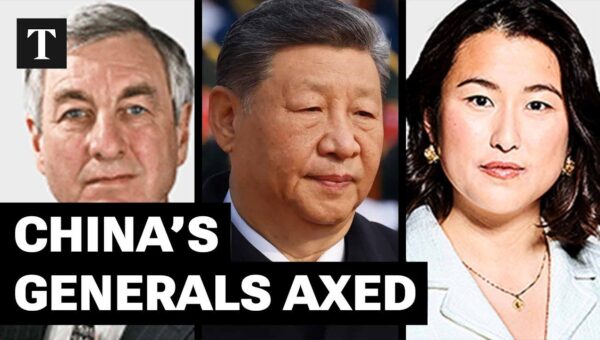
Xi’s Military Purge Sparks Questions of Paranoia and Weakness
President Xi Jinping's extensive purge of top military commanders has triggered debates about his paranoia and the PLA's readiness. Analysts question if these dismissals signal a consolidation of power or reveal deep-seated corruption and incompetence within China's armed forces, with significant implications for regional stability, particularly concerning Taiwan.
Rubio: War’s End Lies in Talks, Not Military Might
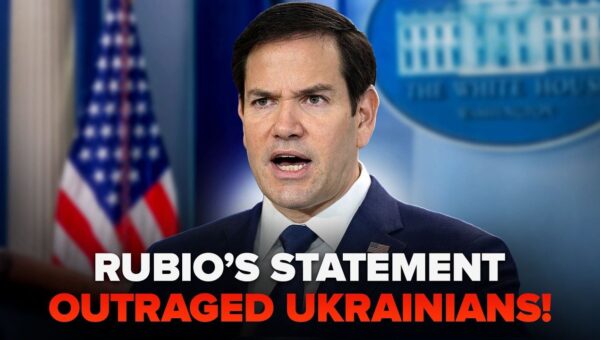
U.S. Secretary of State Marco Rubio stated that the Ukraine war lacks a military solution and will ultimately be settled through negotiation, highlighting America's crucial role in facilitating talks. Meanwhile, Hungary's PM Viktor Orbán accused Kyiv of election interference and disrupting energy supplies, while China's Xi Jinping called for inclusive peace negotiations.