Behind Closed Doors: Unpacking the ‘Tough but Productive’ Geneva Talks and Russia’s Shifting War Rhetoric
Recent high-stakes negotiations in Geneva between Russia, Ukraine, and the United States have revealed significant, albeit fragile, progress on a potential ceasefire and its monitoring. Concurrently, Moscow's rhetoric appears to be shifting from territorial conquest to a focus on demographic strategies, while internal economic pressures and public discontent underscore the mounting costs of the war for Russia.

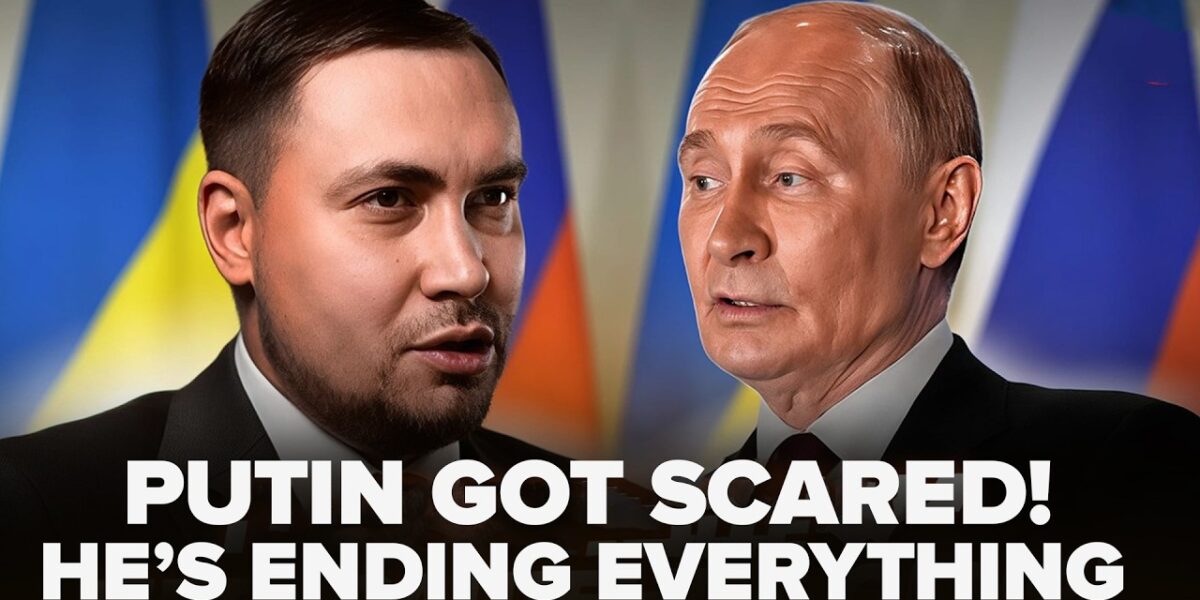
Behind Closed Doors: Unpacking the ‘Tough but Productive’ Geneva Talks and Russia’s Shifting War Rhetoric
Recent high-stakes negotiations in Geneva, Switzerland, between representatives of Russia, Ukraine, and the United States have unveiled a complex tapestry of diplomatic maneuvering, unexpected concessions, and a noticeable shift in Moscow’s public narrative regarding its conflict in Ukraine. While official statements remained guarded, emerging details suggest a significant, albeit fragile, breakthrough on the military track, juxtaposed with Russia’s internal struggles and a potentially recalibrated strategic outlook.
The two-day talks, described as ‘tough but productive’ by Ukrainian President Volodymyr Zelenskyy and ‘tough but professional’ by Russia’s lead negotiator, Vladimir Medinsky, appear to have laid groundwork for a potential ceasefire. Yet, beneath the veneer of diplomatic decorum, the journey to these discussions was fraught with symbolic slights and a palpable sense of international isolation for the Russian delegation, underscoring the deep fissures that continue to define the ongoing conflict.
A Circuitous Route to Diplomacy: Russia’s Symbolic Isolation
The very logistics of the Russian delegation’s journey to Geneva served as a stark reminder of Moscow’s pariah status on the global stage. Reports indicate that the Russian contingent was forced to undertake an arduous 8-to-9-hour flight, circumventing vast swathes of European airspace that remain closed to Russian aircraft, ultimately gaining entry via Italy. This elongated and circuitous route, a departure from the usual three-to-four-hour direct flight, was perceived by some Russian commentators as a deliberate act of ‘open contempt’ by European nations and a ‘humiliation’ for Moscow.
For a nation that prides itself on its geopolitical standing, such logistical impediments carry significant symbolic weight. They underscore the effectiveness of international sanctions and the widespread condemnation of Russia’s actions in Ukraine, translating diplomatic isolation into tangible, inconvenient realities. This forced detour not only highlighted Russia’s diminished access to international corridors but also set a tense backdrop for the negotiations, potentially fueling a sense of grievance within the Russian camp even before discussions commenced.
The Negotiators: A Clash of Personalities and Agendas
The composition and perceived effectiveness of the negotiating teams became a point of considerable discussion. Leading the Russian delegation was Vladimir Medinsky, a figure often derided by critics, including some within Russia, as a ‘pseudo-historian’ and ‘clown.’ His public persona and propensity for delivering what is often dismissed as historical revisionism rather than substantive policy points reportedly undermined his credibility.
In stark contrast, Ukraine’s interests were reportedly championed by Kirill Budanov, the assertive head of the Ukrainian President’s Office. Insiders familiar with the Geneva discussions suggest that Budanov effectively ‘put Medinsky in his place,’ systematically dismantling the Russian delegation’s claims point by point. This assertive stance, coupled with Medinsky’s unusually brief and somber post-negotiation press conference, hints at a significant power dynamic at play, suggesting that Russia, perhaps under duress, was compelled to engage more constructively than initially anticipated.
Budanov’s reported influence, even going so far as to suggest he ‘bent Putin to his will,’ if accurate, signifies a crucial shift. It implies that Russia’s negotiating position, once rigidly uncompromising, may have softened under the weight of military setbacks, economic pressures, and the determined resolve of the Ukrainian side. This narrative challenges the perception of Russia as an unyielding force, instead portraying a delegation potentially forced to confront the realities of its strategic limitations.
Progress on the Military Track: A Glimmer of Hope
Despite the underlying tensions, the negotiations appear to have yielded tangible progress on the military front. Ukrainian President Zelenskyy himself confirmed that the negotiating team briefed him on the ‘constructive’ nature of discussions regarding the military track. Crucially, the sides reportedly reached agreement on ‘almost everything’ related to a ceasefire and mechanisms for its monitoring.
The involvement of the American side in the monitoring process is a particularly significant development. It lends an additional layer of credibility and oversight to any potential ceasefire, offering a degree of assurance that previous, often fragile, agreements lacked. A robust monitoring mechanism, backed by international actors, is essential to prevent violations and build trust between deeply adversarial parties. While the technical specifics of monitoring are yet to be fully disclosed, the mere agreement on such a framework represents a substantial step forward in de-escalating the conflict.
However, the path to a lasting ceasefire remains fraught with challenges. The history of the conflict is littered with failed agreements and broken promises. The political will required to sustain a ceasefire, especially one that necessitates significant troop withdrawals and demilitarization, will be immense. Nevertheless, the reported progress offers a rare glimmer of hope in a conflict that has, for too long, been characterized by relentless attrition and diplomatic deadlock.
The Political Conundrum: Donbas and Zaporizhzhia
While the military track showed promising signs, the political component of the negotiations proved more challenging. Zelenskyy acknowledged that while ‘groundwork’ was laid, significant differences persist on ‘sensitive issues’ such as Eastern Ukraine (Donbas) and the Zaporizhzhia nuclear power plant. These regions represent the core territorial and sovereignty disputes that ignited and continue to fuel the conflict.
Ukraine’s stance on Donbas has seen a conditional shift. President Zelenskyy indicated a willingness to discuss withdrawing Ukrainian troops from parts of the Donetsk region, but only on the explicit condition that Russia undertakes ‘fully mirror steps’ in return, meaning an equivalent withdrawal of its forces. This is a delicate balancing act for Kyiv. While signaling flexibility, it firmly rejects any unilateral concessions or Moscow’s claims of sovereignty over these regions, which Russia purports to have annexed. Zelenskyy also suggested that a formalization of the current line of contact, if supported by a national referendum, could be an acceptable outcome.
The Zaporizhzhia nuclear power plant, Europe’s largest, remains a critical flashpoint. Under Russian occupation since March 2022, the plant has been repeatedly shelled, raising international alarms about a potential nuclear catastrophe. Any comprehensive peace agreement would necessarily have to address the plant’s demilitarization and return to full Ukrainian control, a demand Russia has consistently resisted.
The differing positions on these issues highlight the profound chasm that still separates the belligerents. Donbas, a region with a complex history and a substantial Russian-speaking population, became the epicenter of a proxy conflict in 2014 and a primary target of Russia’s full-scale invasion in 2022. For Russia, control over these territories is framed as a strategic imperative and a historical reclamation; for Ukraine, it is an inviolable matter of territorial integrity and national sovereignty. Reconciling these fundamentally opposed viewpoints will require immense diplomatic ingenuity and a willingness for both sides to make difficult political compromises.
Moscow’s Shifting Rhetoric: From Conquest to Demographics?
Perhaps one of the most striking revelations from the aftermath of the Geneva talks is a noticeable shift in Moscow’s public rhetoric, signaling a potential recalibration of its war aims. Russian State Duma Deputy Konstantin Zatulin, a figure closely associated with the Kremlin, openly discussed the possibility that Russia might ‘fail to capture all the territories it wants in Ukraine.’ Instead of focusing on seizing ‘yet another forester’s hut,’ Zatulin suggested Russia should now concentrate on ‘what comes after’ the ‘special military operation,’ emphasizing a demographic rather than purely territorial strategy.
Zatulin’s remarks, delivered on state television, represent a significant departure from the maximalist objectives frequently articulated by hardliners in Moscow. His suggestion to ‘bring people from Ukraine back to that historic homeland on an ever larger scale’ rather than territories, is a thinly veiled call for demographic engineering. This strategy aims to encourage the emigration of Ukrainians, particularly Russian-speakers or those sympathetic to Moscow, to Russia, thereby altering the demographic landscape of Ukraine and bolstering Russia’s own population.
This rhetorical pivot could be interpreted in several ways:
- Managing Expectations: It could be an attempt to manage domestic expectations in Russia, preparing the public for the possibility of a less-than-total victory in terms of territorial acquisition. After significant military setbacks and a prolonged stalemate, the Kremlin may be seeking to redefine ‘victory’ in more achievable, albeit insidious, terms.
- A Soft Power Play: While military conquest has proven costly, encouraging emigration could be seen as a long-term strategy to exert influence and weaken Ukraine’s social fabric. By offering incentives for Ukrainians to resettle in Russia, Moscow aims to consolidate its cultural and demographic footprint.
- Resource Management: The war has been immensely costly in terms of human lives and material resources. Shifting focus from endless territorial grabs to a demographic strategy might be a way to conserve resources while still pursuing a form of ‘Russification’ by other means.
Such a strategy, if actively pursued, would have profound implications for Ukraine’s future, potentially leading to a brain drain and the loss of significant human capital, further complicating its post-war recovery and national identity.
Internal Pressures: The Cracks in Russia’s Home Front
The shift in official rhetoric comes amidst mounting evidence of worsening economic conditions and rising social tensions within Russia. Public sentiment, as captured in candid street interviews, reveals widespread discontent over escalating prices and a perceived decline in living standards. Citizens openly lament the rising cost of utilities, food (including staples like bread), and other essential goods, attributing the hardship to the ‘authorities,’ ‘government,’ and ‘president.’
The popular Russian idiom, ‘Our country’s always been famous for fools and bad roads,’ resurfaced in these public critiques, with one interviewee wryly noting that while ‘the roads have been fixed,’ it’s ‘time to deal with the fools.’ This biting commentary reflects a deep-seated frustration with corruption and perceived mismanagement at the highest levels of government.
While some acknowledge the role of the ‘tense international situation and sanctions’ in contributing to economic woes, many also point to ‘internal problems,’ including ‘rising fuel prices’ and ‘corruption in the utility sector.’ The sentiment of ‘hand-to-mouth existence’ underscores the daily struggles faced by ordinary Russians, a stark contrast to the narratives of national strength and resilience propagated by state media.
These internal pressures are critical to understanding Russia’s evolving diplomatic and military posture. A leadership facing growing domestic discontent and a deteriorating economy may be more inclined to seek an exit strategy from a costly war, or at least to redefine its objectives to be more palatable to a weary populace. The war, initially presented as a swift and decisive ‘special military operation,’ has become a protracted drain on resources and a source of increasing hardship for many Russians, potentially eroding public support for continued conflict.
The Road Ahead: Fragile Hope and Enduring Challenges
The Geneva talks, by all accounts, represent a delicate inflection point in the conflict. The reported progress on the military track, particularly the agreement on ceasefire monitoring with US involvement, offers a fragile hope for de-escalation. However, the deep divisions on political issues, especially regarding territorial integrity and the future of regions like Donbas and Zaporizhzhia, remain formidable obstacles.
Moscow’s shifting rhetoric, signaling a potential move away from outright territorial conquest towards a demographic strategy, coupled with visible internal economic and social pressures, suggests a Kremlin grappling with the unforeseen costs and complexities of its invasion. While this may indicate a greater willingness to negotiate, it also introduces new, potentially insidious, challenges for Ukraine’s long-term stability and sovereignty.
The international community will be watching closely to see if the ‘tough but productive’ discussions in Geneva can translate into concrete steps towards a sustainable peace. The path ahead is uncertain, but for the first time in a long while, the faint echoes of diplomatic progress offer a cautious reason for optimism, albeit one tempered by the enduring realities of a brutal and complex conflict.
Source: You WON’T BELIEVE what happened to Russian delegation at negotiations! Putin MADE A DECISION on war (YouTube)

Related Articles

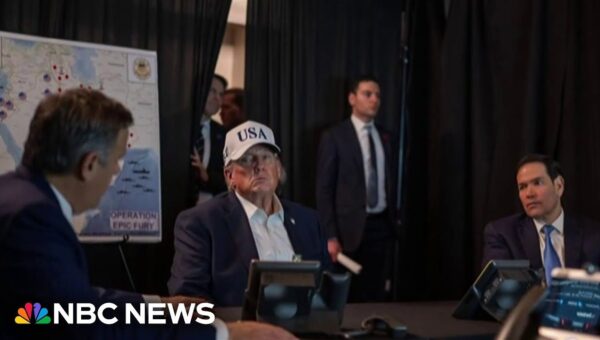
Trump: Iran Strikes Ahead of Schedule, Expects ‘Great Deal for World’
Three U.S. service members have been killed amid escalating conflict with Iran, President Trump confirmed. He stated that strikes are ahead of schedule, with senior Iranian leaders killed, and expressed optimism for a "great deal for the world" despite ongoing talks with Iranian officials.
Trump’s Putin Stance: US Strategy and Global Implications
Analysis suggests Donald Trump's approach to the Ukraine war involves pressuring Kyiv, but US involvement is crucial for resolution. China's influence and the 'MAGA' agenda's geopolitical implications are key factors.


US Strikes Iran: Mounk and Fukuyama Discuss Unpredictable Conflict
Leading political scientists Yascha Mounk and Francis Fukuyama analyze the recent US strikes on Iran, warning of unpredictable outcomes and internal instability. They question the objectives of the "war of choice" and its potential to destabilize the region, while also discussing the shifting global perceptions of Israel.