Bannon’s Airport Plan Hints at Election Intimidation Tactics
Steve Bannon suggested using ICE presence at airports as a 'test run' for deploying agents at 2026 midterm polling stations. This controversial idea raises concerns about voter intimidation and the potential suppression of legitimate votes, particularly among minority communities. Critics question the premise and highlight the legal and ethical implications of such tactics.

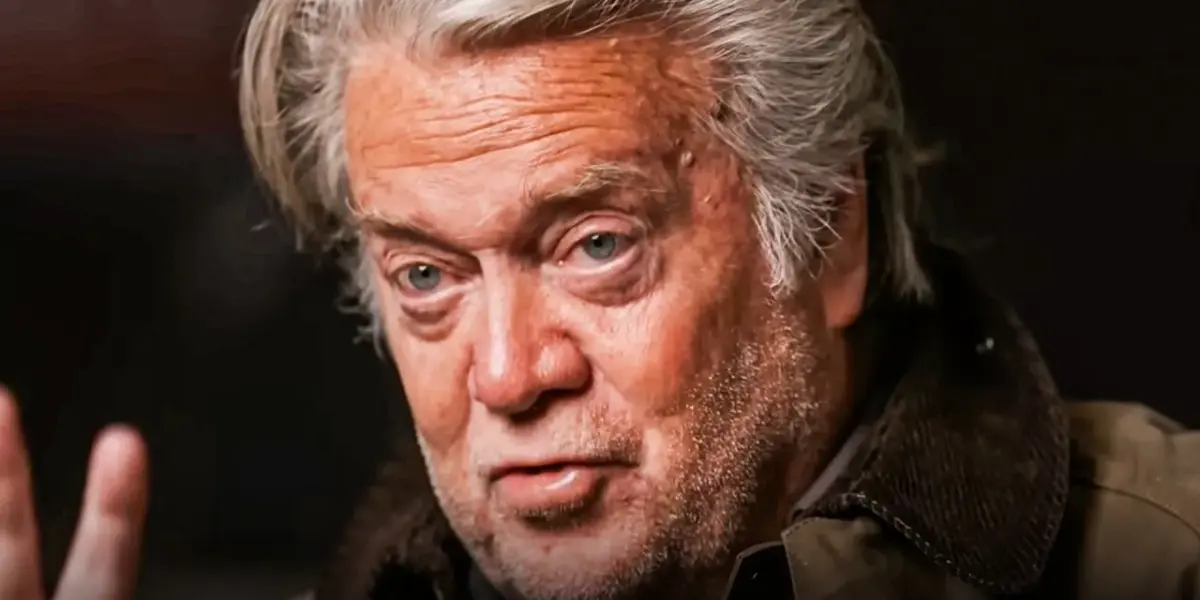
Bannon’s Airport Plan Hints at Election Intimidation Tactics
Steve Bannon, a prominent conservative voice, recently suggested using the presence of Immigration and Customs Enforcement (ICE) at airports as a trial run for deploying them at polling stations during the 2026 midterm elections. This idea, shared on his podcast, has raised serious questions about election integrity and voter intimidation.
The Airport ‘Test Run’ Idea
During a conversation with lawyer Mike Davis on the “War Room” podcast, Bannon stated, “We can use what’s happening with these ICE authorities helping out at the airports. We can use this as a test run, as a test case to really perfect ISIS’s involvement in the 2026 midterm elections.” This statement implies a strategic plan to test and refine methods for involving federal immigration agents in election processes.
Mike Davis agreed with the concept, adding, “I think we should have ICE agents at the polling places because if you’re an illegal alien, you can’t vote, right? It’s against the law. It’s a federal crime for you to vote in federal elections.” Davis argued that undocumented individuals would not risk committing a felony, suggesting that their participation in voting is minimal.
Questioning the Premise
The assertion that undocumented immigrants are a significant factor in voting, or that their presence at airports is due to travel, has been challenged. The speaker on the podcast questioned the logic behind this claim. “Do y’all really, really, really think in your demented, delusional, conservative minds that the reason we are seeing all these long TSA lines is because all of the undocumented people are jet setting around the country?” the speaker asked. The idea that people without identification or significant funds would be traveling extensively for leisure or interviews was presented as illogical.
The speaker further pointed out the practical difficulties: “Explain it to me because I would love to know where all of these undocumented people are flying to and of course how they’re even getting on an airplane without an ID. That would uh blow my mind to really get an answer to that.” This highlights a disconnect between the proposed problem and the reality of travel requirements and the lives of undocumented individuals.
Legal and Ethical Concerns
Beyond the practicalities, the proposal to have ICE agents at polling stations raises significant legal and ethical issues. The speaker noted, “You know what else is against federal law? Having armed authorities from the federal government at polling stations. That’s also illegal, you dumb lawyer. That’s That’s a felony, too, buddy.” Federal laws do exist to prevent the intimidation of voters and the unauthorized presence of law enforcement at polling places.
The underlying goal, according to the critique, is not to prevent illegal voting but to suppress legitimate votes. “The goal is not to actually catch criminals, but to prevent legitimate voters from showing up at all,” the speaker argued. The fear is that a visible presence of armed federal agents, particularly those perceived as targeting specific ethnic groups, could intimidate voters, especially those who are Hispanic or may appear to be. This tactic could disproportionately affect minority communities and discourage them from exercising their right to vote.
Historical Context of Voter Intimidation
Concerns about voter intimidation are not new in American history. Throughout different eras, tactics have been employed to discourage certain groups from voting. These have included poll taxes, literacy tests, and overt threats of violence or legal action. The current discussion echoes these historical patterns, where the aim is to manipulate election outcomes by deterring specific segments of the population from participating.
The strategy Bannon and Davis seem to be exploring fits a broader pattern of election integrity debates that often involve accusations of widespread fraud, particularly concerning non-citizen voting. However, evidence of widespread illegal voting by non-citizens is consistently found to be minimal in academic studies and election official reports. The focus on this issue, critics argue, serves as a distraction from other systemic challenges and can be used to justify measures that restrict voting access.
Why This Matters
The suggestion of using immigration enforcement at polling places is significant because it points to a potential strategy aimed at suppressing votes rather than ensuring election security. If implemented, such a measure could create an environment of fear and intimidation, particularly for minority voters. This undermines the democratic principle of free and fair elections, where all eligible citizens should feel safe and empowered to cast their ballot.
The debate also highlights a growing tension between different views on election security and immigration policy. While proponents may frame such measures as necessary to uphold the law, opponents see them as partisan tactics designed to manipulate election results by disenfranchising voters. The effectiveness and legality of such proposals are highly questionable, and they risk eroding public trust in the electoral process.
Implications and Future Outlook
The implications of Bannon’s comments extend beyond the 2026 midterms. If such tactics are seriously considered and pursued, they could lead to prolonged legal battles and further polarization of the electorate. The focus on immigration enforcement at polling stations could also divert resources and attention from addressing genuine election security concerns, such as cybersecurity for voting machines or ensuring adequate access to polling locations for all voters.
The future outlook depends on how these ideas are received and acted upon by political campaigns and election officials. Increased vigilance from civil rights organizations, election monitoring groups, and the public will be crucial in identifying and challenging any attempts at voter intimidation. The conversation underscores the ongoing need for clear legal protections for voters and robust enforcement of laws that safeguard the integrity of the electoral process for everyone.
Source: Steve Bannon says the quiet part out loud (YouTube)

Related Articles
House Funds DHS, But Senate Deal Unlikely Amid Shutdown
The House of Representatives has passed a bill to fund the Department of Homeland Security, but the measure is unlikely to pass the Senate. TSA workers, who have faced missed paychecks and disruptions, may receive some pay soon due to a presidential order, but the broader shutdown continues.
House Rejects Senate Bill, Citing Border Security Funding Gaps
House Republicans are rejecting a Senate funding bill, arguing it lacks essential appropriations for ICE and CBP, threatening anti-trafficking efforts and border security. They plan to pass a short-term measure to force renewed negotiations.

Voter ID: Common Sense or Suppression?
A growing debate surrounds voter ID laws, with proponents calling them a common-sense measure against fraud and opponents fearing voter suppression. Many countries and U.S. states already require ID to vote.