BAFTA Controversy Ignites Debate: When Involuntary Tics Collide with Profound Offence on Live Television
A BAFTA Awards incident involving an involuntary racial slur from Tourette's activist John Davidson has sparked a complex debate on disability, race, and media ethics. While Davidson's tic was involuntary, the BBC's decision to keep the unedited moment on iPlayer has drawn criticism, highlighting the challenge of balancing compassion for a neurological condition with the profound harm caused by hate speech.

BAFTA Controversy Ignites Debate: When Involuntary Tics Collide with Profound Offence on Live Television
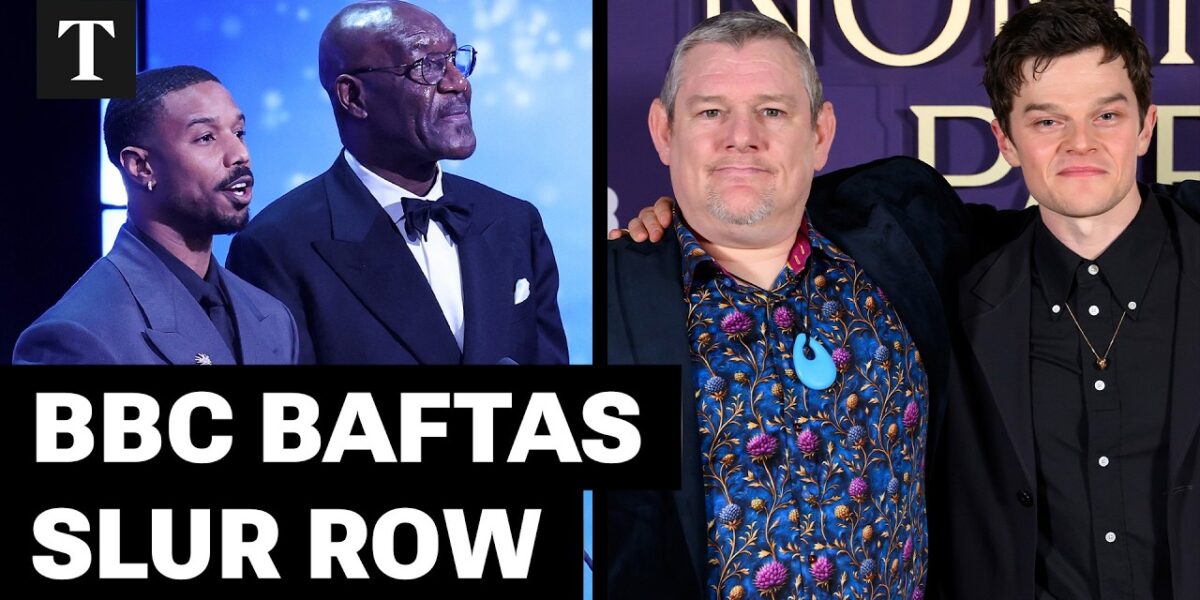
The glitz and glamour of the BAFTA Awards, one of the most prestigious nights in the British film industry calendar, were overshadowed recently by an incident that has sparked a profound and complex debate about disability, race, and media responsibility. During the ceremony, an involuntary vocal tic from John Davidson, a prominent Tourette’s activist whose life story inspired the acclaimed film “I Swear,” included a deeply offensive racial slur. The incident, broadcast live and subsequently made available unedited on the BBC iPlayer, has forced a national conversation about how society, and particularly media institutions, navigate the challenging intersection of involuntary neurological conditions and the profound harm caused by hate speech.
The controversy highlights a critical ethical dilemma: how do we extend compassion and understanding to individuals whose conditions lead to actions beyond their control, while simultaneously acknowledging and mitigating the severe emotional and psychological impact of offensive language on targeted communities? The incident at the BAFTAs, and the BBC’s subsequent handling of it, serve as a potent case study in the complexities of true inclusivity and responsible broadcasting in a diverse and sensitive world.
The Unforeseen Interruption at the BAFTAs
The moment occurred as two Black actors were presenting an award, a poignant backdrop to the utterance of the N-word from the audience. The source of the sound was quickly identified as John Davidson, a figure whose presence at the awards was particularly significant. Davidson’s life journey, marked by his experiences living with severe Tourette’s Syndrome, had been brought to the screen in the film “I Swear.” The actor portraying him, Rob Roberto, had garnered critical acclaim, winning both Best Actor and Rising Star awards for his performance, underscoring the film’s powerful message about understanding and acceptance of Tourette’s.
Davidson’s attendance at the BAFTAs was, in many ways, a testament to growing awareness and inclusion for individuals with Tourette’s. However, the involuntary tic, a manifestation of his condition, created an immediate and deeply uncomfortable atmosphere. Reports suggest Davidson, visibly distressed by the incident, chose to leave the ceremony halfway through, despite not being asked to do so by BAFTA organizers, who later affirmed they would never have requested his departure. This personal act of withdrawal underscores the immense distress that involuntary tics, particularly coprolalia, can cause to the individual experiencing them, who are often acutely aware of the offense their condition can cause.
Understanding Tourette’s Syndrome and Coprolalia
To fully grasp the nature of the incident, it is crucial to understand Tourette’s Syndrome (TS). As Ed Palmer, Vice Chair of Tourette’s Action and a psychiatrist living with Tourette’s himself, explained, TS is a neurodevelopmental condition characterized by involuntary movements and vocalizations known as tics. These tics can range from simple, transient movements like eye blinking or head jerking, to complex, coordinated movements, or vocalizations such as grunts, barks, or, in some cases, the utterance of words or phrases.
The specific type of tic involved in the BAFTA incident is known as coprolalia, which refers to the involuntary utterance of socially inappropriate, obscene, or taboo words and phrases. While often sensationalized and mistakenly thought to be a universal symptom of Tourette’s, coprolalia affects only a minority of individuals with the condition, estimated at around 10 to 15 percent. Palmer emphasized that these utterances are entirely involuntary, meaning the person has absolutely no control over them. “It’s not clear when you tick what the tick will be, what the word will be,” Palmer stated, highlighting the unpredictable nature of these tics. “John wouldn’t have known that that was the tick that he was about to do.”
The involuntary nature of coprolalia is a critical distinction. It is not an expression of personal belief, prejudice, or intent. Unlike an individual who consciously chooses to use a racial slur, a person experiencing coprolalia does not intend to offend, nor do they endorse the meaning of the words their tics produce. While some individuals with coprolalia may find certain environmental stimuli or taboos can trigger specific tics, for many, the words are entirely random. Regardless of potential triggers, the core characteristic remains the same: a lack of volitional control. This fundamental aspect is central to the ethical quandary presented by the BAFTA incident, as it places an involuntary action, stemming from a recognized disability, in direct conflict with the deeply felt offense it causes.
The Broadcaster’s Quandary: BBC’s Unedited Broadcast
The immediate aftermath of the incident saw a delayed and somewhat conditional apology from the awards host, Alan Cumming. Over an hour after the event, Cumming addressed the audience, stating, “You may have heard some strong and offensive language tonight. If you’ve seen the film ‘I Swear,’ you will know that film is about the experience of a person with Tourette’s Syndrome. Tourette’s Syndrome is a disability and the tics you’ve heard tonight are involuntary, which means the person who has Tourette’s Syndrome has no control over their language. We apologize if you are offended.” The phrasing “if you are offended” drew criticism from some, who argued that the use of a racial slur is inherently offensive, not merely subject to individual interpretation.
However, the more significant point of contention has been the BBC’s decision to leave the unedited moment available on its iPlayer platform. As a public broadcaster, the BBC operates under a stringent set of editorial guidelines, balancing freedom of expression, public interest, and harm reduction. The continued availability of the unedited slur has led to widespread questioning of the BBC’s judgment, particularly given that the show was pre-recorded. This pre-recording aspect, as highlighted in discussions, offered a window of opportunity for editorial intervention that was seemingly not taken.
Ed Palmer of Tourette’s Action suggested that for pre-recorded content, “bleeping it out for example might be a reasonable compromise.” This technical solution, widely used in broadcasting to censor offensive language, could have significantly reduced the harm while still acknowledging the event occurred. The BBC’s decision to maintain the unedited version on a platform accessible to millions, potentially repeatedly exposing individuals to deeply traumatizing language, raises serious questions about its commitment to protecting vulnerable audiences and its interpretation of “public interest” in this context.
Balancing Compassion and Consequence: The Ethical Tightrope
The BAFTA incident presents a stark illustration of an ethical tightrope walk. On one side, there is the imperative to show compassion and understanding for individuals with disabilities, particularly those whose conditions manifest in ways that are socially challenging. As Palmer articulated, causing offense is often “very distressing to people who have this condition. They’re aware that the things out of their control can cause offense and knowing that can be very distressing for the people with the condition as well.” For John Davidson and others with Tourette’s, their involuntary actions can lead to profound shame, isolation, and further stigmatization, reinforcing a lifetime of exclusion.
On the other side of the tightrope is the undeniable and profound harm caused by racial slurs. The N-word, in particular, carries a centuries-long history of oppression, violence, and dehumanization against Black people. Its utterance, regardless of intent, can trigger deep-seated trauma, anger, and pain. A Black woman working in the film industry, who attended the BAFTAs, conveyed her deep offense, feeling let down not by Davidson, but by the inadequate apology and the broadcaster’s handling of the situation. Similarly, a viewer named Albby articulated that hearing the word deeply upsets people of color and, if avoidable, should not be broadcast.
The challenge lies in reconciling these two deeply valid perspectives. It is a nuanced situation where the absence of malicious intent does not negate the presence of harm. The involuntary nature of Davidson’s tic means he is not inherently racist, and to label him as such would be a grave misunderstanding of his condition. However, the impact of the word itself remains unchanged for those who hear it. This is where the concept of harm reduction becomes paramount. While Davidson cannot control his tics, broadcasters, as gatekeepers of content, *can* control what they disseminate. Palmer’s suggestion of bleeping out the word offers a pathway to reduce harm without denying the reality of Davidson’s condition or censoring the broader narrative of Tourette’s.
Public Outcry and Diverse Perspectives
The public reaction to the incident, as evidenced by messages sent to broadcasters, reveals a deeply divided, yet thoughtfully engaged, audience. A significant portion of the feedback expressed strong support for John Davidson, arguing that he was being unfairly treated and that the BBC, along with BAFTA, had failed him. Lynn, a thoughtful contributor, encapsulated this sentiment: “John Davidson is being treated horribly following his inclusion at the BAFTAs. He was excluded from so much during his life because people failed to understand his condition. He was beaten and humiliated and now the BBC are repeating the pattern.”
Lynn’s message highlighted the historical context of Davidson’s life, where misunderstanding of his Tourette’s led to severe consequences. She argued that if Davidson was invited under the guise of inclusion, then the organizers and broadcasters had a responsibility to ensure a “safe and inclusive space” for him, which they failed to do by not anticipating and managing the potential for offensive tics. She urged viewers to watch the documentary or film to educate themselves, emphasizing that for people with Tourette’s, offensive words are part of their involuntary vocabulary, unlike those with control over their speech who consciously choose not to use such terms. Lynn also drew a comparison to a previous incident where Davidson received an MBE and, as an involuntary tic, said “F the Queen,” which did not elicit the same level of public outcry, suggesting a double standard in reactions based on the specific offensive word.
Conversely, other voices, particularly from people of color, expressed profound distress and a call for the removal of the unedited content. A Black woman in the film industry felt deeply offended, not by Davidson, but by the perceived inadequacy of the apology and the broadcast’s continued availability. Albby’s message echoed this, stressing that the N-word causes deep upset and therefore, if it was not intentionally uttered, should not be allowed to continue reaching audiences. This perspective emphasizes that while intent matters in judging an individual’s character, the impact of the word itself, given its historical and social weight, remains devastating, regardless of its involuntary origin.
These diverse reactions underscore the complexity: one group champions the rights and understanding of a disabled individual, highlighting historical injustices and the need for true inclusion; the other champions the rights and protection of racialized communities from deeply harmful language, irrespective of intent. Both perspectives are valid and rooted in legitimate concerns, making the resolution far from straightforward.
The Broader Implications: Inclusion, Disability, and Media Responsibility
The BAFTA incident transcends a mere moment of controversy; it serves as a crucial inflection point for broader discussions on societal inclusion, disability rights, and the ethical responsibilities of media institutions. True inclusion means creating environments where individuals with disabilities, in all their diversity, can participate fully. However, this incident reveals the inherent challenges when a disability’s manifestation directly impacts or offends other marginalized groups.
For institutions like BAFTA and the BBC, the incident highlights a need for more proactive and comprehensive strategies for inclusion. Inviting a person like John Davidson, whose condition is known to involve coprolalia, requires foresight and planning. This might include pre-emptive discussions with the individual about potential broadcast interventions, or ensuring that live broadcasts have a slight delay to allow for editing in sensitive situations. The failure to adequately prepare suggests a gap in truly understanding the implications of inviting individuals with complex disabilities into high-profile, public spaces.
Furthermore, the BBC’s decision regarding the iPlayer content raises fundamental questions about media ethics in the digital age. In an era of on-demand content, where broadcasts can live indefinitely, the responsibility to curate and, if necessary, edit potentially harmful material becomes even more critical. The argument that bleeping the word would be “denying agency” to Davidson seems misguided when, by his own reported actions of leaving the ceremony, he clearly wished to mitigate the harm. Instead, continuing to broadcast the unedited slur, particularly when it is involuntary, could be seen as inadvertently amplifying the offense and potentially causing further distress to Davidson himself, who is aware his tics cause harm.
The incident forces a re-evaluation of what constitutes a “safe space.” For Davidson, a truly safe and inclusive space would acknowledge his condition without causing further humiliation or distress. For people of color, a safe space means freedom from the trauma of racial slurs. The challenge is to create spaces that are safe and inclusive for *all* participants, a goal that requires careful planning, empathy, and a willingness to implement practical solutions like harm reduction measures.
Towards a More Mindful Approach: Lessons Learned
The BAFTA controversy, while painful, offers invaluable lessons for future events and media practices. Firstly, for pre-recorded events involving individuals with conditions that may lead to offensive involuntary utterances, proactive editorial decisions are essential. Bleeping out such words, as suggested by Ed Palmer, is not censorship in the traditional sense, but a harm reduction strategy that balances the authenticity of the event with the protection of vulnerable audiences. It respects the individual with the condition by acknowledging its involuntary nature, while simultaneously honoring the pain and historical trauma associated with hate speech.
Secondly, apologies must be unequivocal and acknowledge the inherent harm of offensive language, rather than being conditional. An apology that states, “We apologize if you are offended,” can inadvertently shift the burden of offense onto the listener, rather than acknowledging the objective harm of the language used. A more direct acknowledgment of the slur’s impact, coupled with an explanation of its involuntary origin, would demonstrate greater empathy and understanding for all parties.
Finally, there is a continued and urgent need for public education regarding Tourette’s Syndrome, particularly its less common and more challenging manifestations like coprolalia. This education must go hand-in-hand with a deeper understanding of the profound impact of hate speech. Only through open dialogue, increased awareness, and a commitment to thoughtful, harm-reducing practices can society navigate these complex intersections more effectively, fostering environments that are truly inclusive and respectful of everyone.
Conclusion
The BAFTA incident involving John Davidson and the involuntary utterance of a racial slur has laid bare the intricate challenges of modern inclusivity. It has highlighted the delicate balance between showing compassion for individuals with neurological conditions and protecting communities from deeply offensive language. While there are no easy answers, the widespread debate underscores a societal yearning for both understanding and justice. Moving forward, broadcasters and event organizers must embrace proactive strategies, prioritize harm reduction, and foster continuous education to ensure that inclusivity truly extends to all, without inadvertently causing harm to others. The conversation initiated by this incident is not just about a single word; it is about building a more empathetic and responsible society.
Source: BBC Could Have Bleeped Out Baftas Racist Slur | Tourettes Action (YouTube)

Related Articles
Trump Threatens “Unseen” Force on Iran After Leader’s Death
Following the assassination of Supreme Leader Ayatollah Ali Khamenei, U.S. President Donald Trump has vowed to unleash unprecedented force on Iran. While outlining ambitious goals including regime change, experts express skepticism about the effectiveness of airstrikes and the potential for popular uprising against a resilient Iranian government.


Senator Coons Questions Trump’s Iran Strategy After Troop Deaths
Senator Chris Coons has sharply criticized President Trump's strategy in Iran following the deaths of three U.S. service members. Coons questioned the intelligence regarding Iran's nuclear proximity and the lack of clear strategy and congressional debate for the "war of choice."


Austin Shooting: FBI Probes Terror Ties After 2 Dead, 14 Hurt
A deadly shooting on Austin's 6th Street left two dead and 14 injured, prompting an FBI investigation into potential terrorism links. The gunman was killed by police after opening fire near Buford's bar. Authorities are collecting evidence and witness testimony.