Badenoch Slams Starmer’s Iran Stance, Pushes ‘Muscular Conservatism’
Kemi Badenoch has sharply criticized Keir Starmer's approach to the Iran conflict, accusing him of "sitting on the fence." She also outlined the Conservative party's 'muscular conservatism' agenda, focusing on tackling shoplifting and reforming welfare to fund business rate exemptions for high street shops.

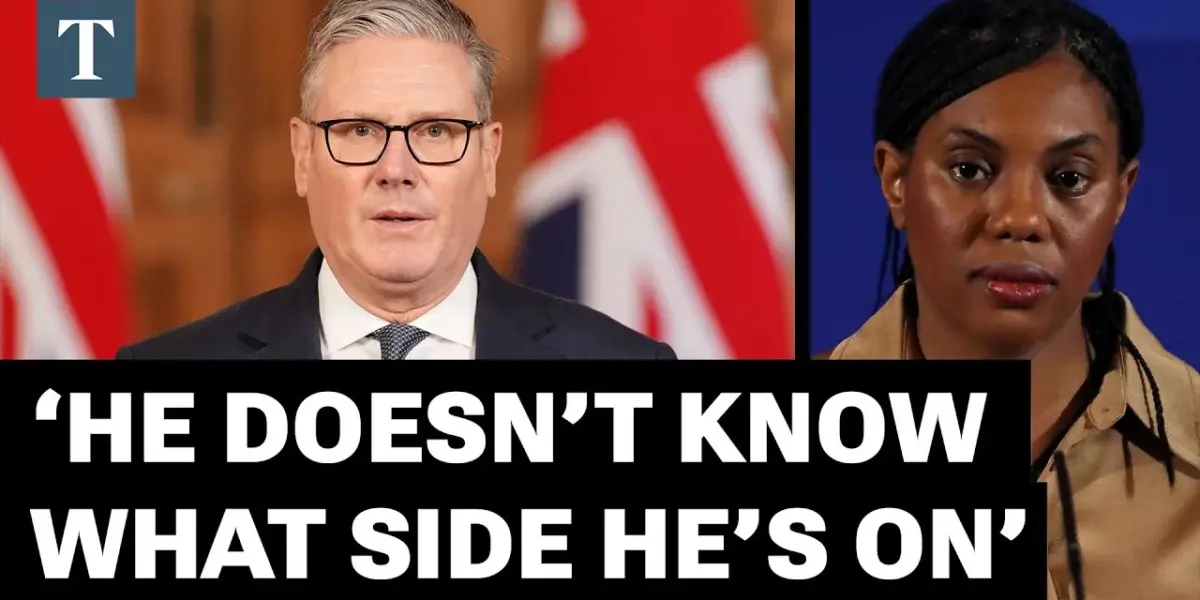
Badenoch Criticizes Starmer’s Hesitation on Iran Conflict
Kemi Badenoch, a prominent figure in the Conservative party, has strongly criticized Labour leader Keir Starmer’s approach to the escalating conflict involving Iran. Badenoch accused Starmer of being indecisive, stating he has been “sitting on the fence” and only pretending to make decisions when public opinion turns against a particular course of action.
Speaking on the geopolitical situation, Badenoch outlined her view that if a conflict between the US and Iran were to occur, Britain should not side with Iran, which she described as a hostile country attempting terrorist plots on UK soil. She highlighted recent reports of Iran firing missiles on Diego Garcia, emphasizing that Britain is being drawn into the conflict regardless of its preference. Badenoch contrasted this with the Conservative government’s proactive stance during the war in Ukraine, led by Boris Johnson, who she said was “ahead of the curve” in preparing supplies.
The minister further suggested that Starmer appeared unaware of the US warships mobilizing in the Middle East, a situation that was widely visible on social media. “He is pretending decisions,” Badenoch asserted, implying a lack of genuine leadership from the Labour leader.
“He’s basically sat on the fence, hoped it would go away, and then when the news looks like um it’s negative, he can he pretends that he actually made a decision.”
— Kemi Badenoch
Conservatives Propose ‘Muscular Conservatism’ to Tackle Shoplifting
Beyond foreign policy, Badenoch detailed the Conservative party’s plans to address the rise in shoplifting, which she described as a growing problem that feels effectively decriminalized. She shared a story about Mary Coughlin, a boutique owner in Cuddens, whose shop was targeted by brazen thieves stealing entire racks of clothing. Badenoch believes that the current environment, where the public is often told not to intervene and police response times are slow, has contributed to this issue.
“I want to stop that,” Badenoch declared, expressing particular concern for individuals like Mark Heer, a bus driver who was reportedly sacked after tackling a shoplifter. She feels this sends the wrong message, punishing those who try to do the right thing. Badenoch clarified that she is not asking the public to put themselves in danger but suggested that a collective inaction allows crime to spiral.
The Conservatives propose a “whole society approach” to tackling crime, including funding 10,000 more police officers and urging councils to take the issue more seriously. This initiative is part of what Badenoch termed “muscular conservatism.” She also noted that the law permits the use of reasonable force, suggesting that issues lie within the judicial system, such as a lack of prison places, which may lead judges to avoid imposing sentences.
Economic Policies: Business Rates and Welfare Reform
The discussion also covered economic proposals, specifically an exemption from business rates for hospitality, retail, and leisure businesses. Badenoch acknowledged that this policy would be costly but stated that the savings have been identified, primarily through welfare reform. She pointed to an increase in people signing on for out-of-work benefits, rising from 2,000 new people each day to 5,000, which she deemed “extraordinary.”
The funds for high street relief would come from welfare, based on Badenoch’s view that small businesses are struggling immensely. She cited examples of cafe owners unable to afford wages or facing rising energy costs, parking charges, and import prices. The proposed exemption would apply to businesses with a rateable value of £110,000 or less, with a tapering system thereafter.
Regarding welfare reform, Badenoch detailed plans to reinstate the two-child benefit cap, with the recovered funds earmarked for defense spending. She also highlighted concerns about individuals with low-level conditions like anxiety and depression claiming benefits. Badenoch advocated for the reintroduction of face-to-face assessments, which were suspended during COVID-19, and expressed dismay at the number of graduates on benefits, calling it a “waste” of their potential. A key principle is ensuring that individuals cannot earn more on benefits than by working.
Badenoch described a situation where some individuals exploit loopholes, even mentioning “sick fluencers” on social media encouraging benefit claims. She argued that getting people into work would have a dual benefit: reducing benefit payments and increasing tax contributions to fund public services. This, she believes, would significantly help struggling workers and business owners.
Debate on Public Space and Religious Expression
The conversation touched upon a recent event where 3,000 Muslim individuals gathered for prayer in Trafalgar Square. Badenoch described the specific event as a “domination of a public space” that she questioned the acceptability of. She noted that Keir Starmer himself withdrew from an event organized by the same group, which she called “highly controversial.”
Badenoch called for a proper debate on where to draw the line regarding public prayer, distinguishing it from freedom of religion. While acknowledging Trafalgar Square’s history of hosting various religious festivities, she stressed the need for inclusivity. She observed confusion among the public about when public prayer is acceptable and when it might be used to send a signal by “troublemakers.” Badenoch stated that the Conservative party intends to lead this debate, encouraging open disagreement and criticizing what she called Labour’s “hypocrisy” in demanding an investigation into Nick Timothy, a Member of Parliament, for expressing his opinion.
Looking Ahead
As the political discourse heats up, the Conservative party’s focus on “muscular conservatism,” particularly in tackling crime and reforming welfare, is likely to be a central theme in their campaign. Kemi Badenoch’s strong stance on these issues, coupled with her sharp critiques of Keir Starmer’s leadership, sets the stage for a clear ideological battle. Voters will be watching to see how these policies are further developed and how effectively they address the concerns raised, from street-level crime to the nation’s economic stability and international relations.
Source: Kemi Badenoch: Keir Starmer Is ‘Sitting On The Fence’ Over Iran War (YouTube)

Related Articles


Kremlin Shakes: Elite Discontent Fuels Putin’s Paranoia
Internal turmoil and paranoia are reportedly gripping the Kremlin as President Putin faces growing elite discontent and the realities of the Ukraine war. Meanwhile, Russia's strategic involvement in the Iran conflict highlights complex calculations and potential risks, even as a wider global war remains unlikely.


Stocks Ignore War Risks, Focus on “Taco Moments”
Stock markets appear to be overlooking the severe supply chain risks stemming from the Iran conflict, focusing instead on potential diplomatic de-escalations. While the S&P 500 shows resilience, bond and commodity markets signal deep concern over disruptions to critical resources like LNG, helium, and fertilizers.


Iran War Claims Ring Hollow as US Troops Injured in New Attack
Days after Donald Trump claimed "we've won" the war with Iran, a new attack injured approximately a dozen U.S. troops and damaged aircraft. This incident contradicts Trump's assertions of victory and raises serious questions about the strategy and reality of the ongoing conflict.