Athlete Fights IOC Ban Over “Memorial Helmet” for Fallen Ukrainians
A Ukrainian bobsledder was disqualified from the Olympics for intending to wear a helmet honoring fallen Ukrainian athletes. He argues the IOC's decision is discriminatory, especially compared to the allowance of Russian symbols, and is now pursuing legal action.

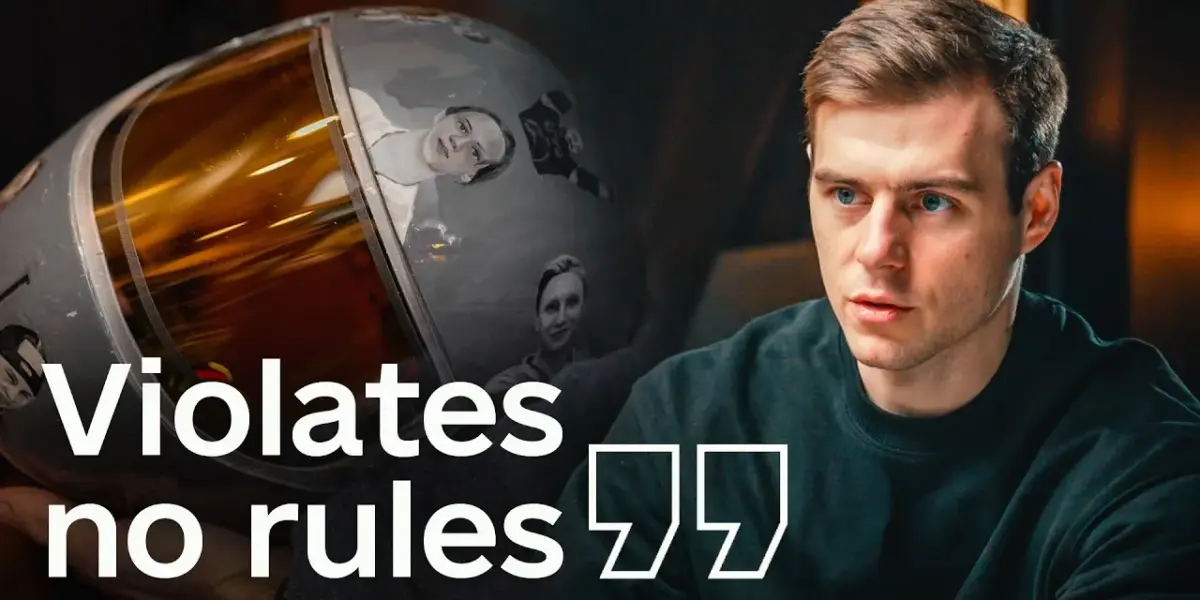
Olympic Athlete Disqualified Over “Memorial Helmet” Faces IOC Over Ban
A Ukrainian bobsledder has been disqualified from the Olympic Games for his intention to compete with a helmet honoring 24 Ukrainian athletes killed since Russia’s full-scale invasion. The athlete, who wishes to remain anonymous, argues the decision by the International Olympic Committee (IOC) is discriminatory and unprecedented, especially when compared to instances where Russian symbols were permitted.
A Helmet of Remembrance, Not Propaganda
The helmet in question, meticulously painted by artist Iryna Proz, features the faces of 24 Ukrainian athletes, including children, who have lost their lives due to the ongoing conflict. These athletes were killed either serving in the Ukrainian army or as a result of Russian attacks on civilian areas. The artist, a childhood friend of the athlete’s father, completed the helmet under immense pressure, working by candlelight to meet the deadline for the Games.
The athlete emphasized that the helmet displays no national symbols, political slogans, or racial propaganda. “It was simply a gesture to honor athletes,” he stated in an interview. “For me, it remains a mystery why I was disqualified.” He explained that many of the depicted athletes were personal acquaintances, including fencer Federanov, young bobsledder Ivan Konanenko, Invictus Games coach Taras, strongman Pavlo, youth Olympic Games medalist Maxim Halichev, and diving coach Vadym Androschuk, among others. He highlighted the profound impact such a tribute has on the families of the deceased, quoting the mother of Taras who said, “Tarasik, even dead, the Russians are afraid of you.”
“This is probably an unprecedented case. An athlete being disqualified for a non-sporting violation.”
Shifting IOC Stance and Permitted Russian Symbols
Four years prior, at the Beijing Olympics, the athlete held up a sign reading “No war in Ukraine” and faced no repercussions from the IOC. He notes a significant shift in the IOC’s attitude, suggesting it has become more accommodating towards Russia. “It has become more friendly toward Russia and it’s evident at the Olympic Games that they are accommodating Russia, allowing its flags,” he observed. He pointed out instances of Russian flags being displayed by spectators and even on an Italian athlete’s helmet, alongside Soviet Union symbols worn by FIDE President Arkady Dvorkovich, all of which went unpunished.
“They discriminated against Ukraine while supporting Russia,” the athlete asserted. He contrasted this with his disqualification over a helmet that bore no national insignia but instead honored fallen Ukrainian athletes.
A Disqualification Without Clear Explanation
The athlete recounted a confusing sequence of events leading up to his disqualification. He trained with the helmet on February 8th during an unofficial session without any issues. Media segments were filmed on the 9th, focusing solely on honoring athletes without mentioning Russia. The IOC began informal verbal contact with the Ukrainian National Olympic Committee on the same day. An official meeting on the 10th, which the athlete did not attend, reportedly resulted in a categorical prohibition of the helmet without explanation. Despite this, he trained in the helmet on the 10th and 11th, receiving no remarks from his international federation. On the 11th, his helmet was inspected by a commission, deemed technically compliant, and he signed a document confirming his intent to compete with it.
A subsequent meeting on the 12th with a higher-ranking IOC representative proved equally unhelpful. When pressed for reasons, IOC officials stated, “We are the judges and we decide how to interpret the rules and how to understand them.” On the competition day, February 12th, after another meeting, the athlete was disqualified without prior warning. Initially, the IOC cited a violation of the Olympic Charter without specifying an article, later referencing Rule 50 concerning political, discriminatory, or racial propaganda, and Article 40.2 prohibiting expressions. The athlete contends that none of these rules were violated, as the helmet contained no such propaganda and the definition of “expression” is overly broad, allowing for arbitrary disqualifications.
“I was being disqualified over images of Ukrainian athletes with no national symbols whatsoever. And for that, I was denied my rights and discriminated against.”
Challenging the IOC’s Interpretation of Rules
The IOC proposed an armband as an alternative, which the athlete dismissed as insufficient to honor all the fallen athletes. He also questioned why other athletes were permitted to display personal tributes. American figure skater Maxim Naumov was allowed to display photos of his parents and a quote in the kiss-and-cry zone, an act the IOC lauded as emotional. Similarly, Canadian skier Jessica Linton competed with the inscription “I ski for Braden” on her helmet without penalty.
The athlete also highlighted the case of Israeli skeleton athlete Jared Firestone, who wore a kippah at the opening ceremony and posted on social media about athletes killed in the 1972 Munich Olympics attack. Despite Rule 50 applying to all Olympic zones, Firestone faced no sanctions. “Again, there seems to be some very particular treatment. Why stricter sanctions are applied to us than others is not clear,” the athlete lamented.
He further argued that disqualification is an extreme penalty, typically reserved for doping or result-affecting violations, making this a unique instance of penalizing a non-sporting gesture. The athlete believes the IOC’s broad interpretation of its rules makes them susceptible to political influence and personal bias.
Legal Battle and Future Aspirations
Following the disqualification, the athlete appealed to the Court of Arbitration for Sport (CAS). However, the CAS upheld the disqualification, ruling that the athlete had violated the Olympic Charter on February 10th, based on an alleged “intent to violate Rule 40.2.” The athlete found this reasoning flawed, questioning how intent could be established before an actual violation occurred and noting that neither the International Bobsleigh and Skeleton Federation nor the IOC had received any complaints about the helmet.
He suspects the CAS ruling was influenced by the IOC’s significant financial contributions to the court. “CAS traditionally rules in favor of the IOC,” he stated. The athlete is now preparing to pursue legal action in Swiss courts, aiming to prove his innocence and secure the right to compete with his memorial helmet at future Olympic Games. “We are ready to fight for our justice,” he declared.
IOC’s “Neutrality” Under Scrutiny
The athlete criticized the IOC’s claim of political neutrality, pointing to instances where the organization has engaged in geopolitical events or shown deference to certain nations. He cited the 1936 Berlin Olympics and the IOC President’s presence with Vladimir Putin at the Sochi Olympics opening ceremony as examples of questionable neutrality. “The IOC today seems to be an organization that hides behind neutrality whenever it is convenient. It looks like massive hypocrisy,” he asserted.
He also questioned the IOC’s approach to allowing Russian and Belarusian athletes to compete under neutral flags, suggesting the vetting process is inadequate. He proposed the concept of a refugee team, similar to that used in biathlon, as a more genuine form of neutrality. “Why does the IOC want to continue working directly with governments?” he asked, implying that the current system benefits Russia.
Community Support and Personal Sacrifice
While many athletes privately expressed support, the athlete was disappointed by the lack of public protest from the international skeleton community. He recalled a time when he supported fellow athletes in canceling a World Cup stage due to safety concerns, contrasting it with the perceived indifference to his Olympic dream being shattered. “It was very painful that in such a moment of injustice, no one stood by me and no one protested to let me compete,” he shared.
Despite the emotional toll and the sacrifice of his Olympic aspirations, the athlete remains resolute. “On the other hand, would I change anything? Certainly not,” he affirmed. He and his father never considered removing the helmet, deeming it a betrayal of the fallen athletes and their families. “This is much more important than any medal,” he stated.
Redirecting Support and Future Endeavors
The athlete’s story has garnered significant public attention, with his social media following surging and substantial financial donations being made. He has pledged all received funds to his charity foundation, which has been providing aid since 2022. The foundation plans to expand its operations, focusing on fundraising abroad to support humanitarian needs in Ukraine, including aid for heating, energy, and animal shelters. A new initiative will be launched in collaboration with a German organization to raise funds for the families of the athletes depicted on the memorial helmet.
Looking ahead, the athlete is committed to his legal fight for justice and also plans to focus on educational initiatives in Ukraine. “We will fight for our justice,” he reiterated, determined to ensure the IOC is held accountable and that athletes are not subjected to such arbitrary decisions in the future.
Source: Exclusive: Heraskevych will fight to compete in 'memorial helmet' at next Olympics (YouTube)

Related Articles
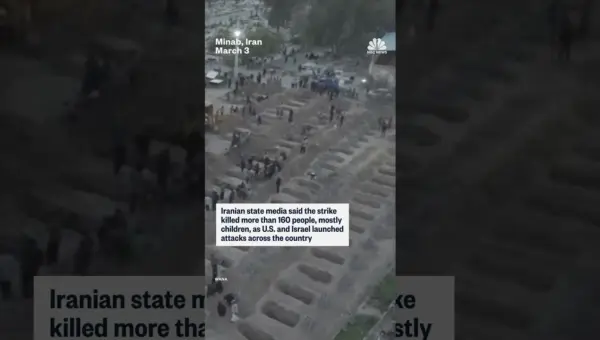
Iran: Schoolgirls’ Graves Prepared Amid Crackdown
Authorities in Iran have reportedly begun preparing graves for schoolgirls killed in a recent strike in Ardabil, signaling an escalation of the crackdown on dissent. This grim development follows months of widespread protests sparked by the death of Mahsa Amini, with women and girls leading the charge for greater freedoms.
Zelenskyy: Ukraine Offers Drone Defense Expertise to UAE
President Zelenskyy convened Ukraine's National Security Council to finalize winter preparedness plans and revealed discussions to share drone defense expertise with the UAE and Qatar. The nation aims to bolster its resilience against anticipated Russian strikes while offering its advanced Shahed drone defense capabilities to allies.

Trump Blasts Allies in Oval Office, Allies Seek Iran, Ukraine Support
President Donald Trump publicly criticized Spain and the UK during a meeting with German Chancellor Angela Merkel, while Merkel sought progress on Iran, Ukraine, and trade. The encounter highlighted unresolved tensions on defense spending and tariffs, leaving key issues uncertain.