Astronomers Capture First Real-Time Supernova Shape
Astronomers have captured the first real-time shape of a supernova explosion, thanks to the ATLAS survey and the Very Large Telescope. The event, SN 2024ggi, revealed a football-shaped blast, offering crucial data to refine theories on stellar death.

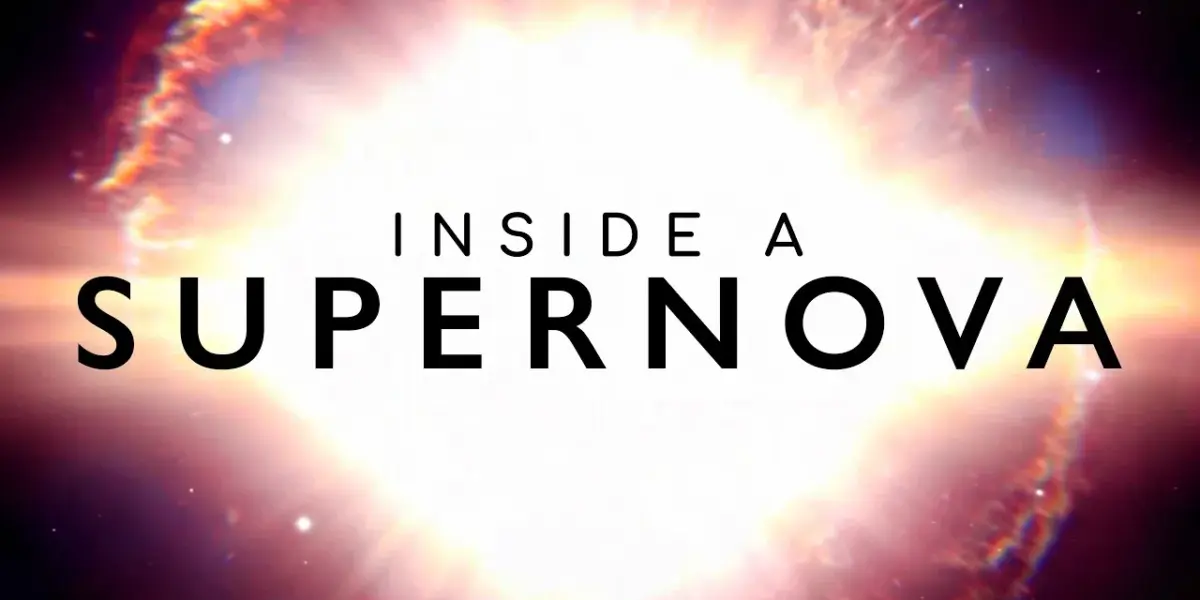
Cosmic Spectacle: First Real-Time Supernova Shape Revealed
For centuries, supernovae—the cataclysmic explosions of stars—have captivated and confounded astronomers. While we understand the general principles behind these stellar death throes, the precise mechanisms driving their explosive power and the exact geometry of the blast have remained elusive. This is largely due to the unpredictable nature of these events and the fleeting window of opportunity to observe them in their pristine, unadulterated state. However, a groundbreaking observation in April 2024 has dramatically shifted our understanding, offering the first-ever real-time capture of a supernova’s explosion shape, thanks to the ATLAS survey and subsequent detailed analysis by the Very Large Telescope (VLT).
A Star’s Final Moments, Caught in the Act
On the night of April 10, 2024, the Asteroid Terrestrial-Last Alert System (ATLAS), a network of four wide-field telescopes strategically positioned across the globe, was conducting its routine sky survey. ATLAS systematically scans the entire night sky every 48 hours, imaging each region multiple times. This rapid revisit capability is crucial for detecting transient astronomical events. At 3:21 AM UTC on April 11, 2024, ATLAS detected an anomaly: a single point of light in the spiral galaxy NGC 3621, located approximately 23.8 million light-years away, had brightened dramatically over the preceding 5.8 hours. This rapid brightening triggered an automated alert, notifying astronomers worldwide of an unusual celestial event.
The detected phenomenon was identified as a Type II supernova, marking the explosive death of a massive star. What made this detection extraordinary was its timing. It occurred mere hours after the explosion began, presenting an unparalleled opportunity for scientists to observe the supernova’s initial breakout phase. This phase, where the shockwave from the core collapse first breaches the star’s outer layers, is critical for understanding the explosion’s fundamental properties. However, this pristine state is ephemeral. Within hours, the expanding debris cloud collides with surrounding interstellar gas and dust, distorting the initial blast geometry and obscuring the direct evidence of the core-collapse mechanism.
The Race Against Time: Capturing the Explosion’s Geometry
Recognizing the immense scientific value of this early detection, a team led by Yi Yang from Tsinghua University in Beijing, in collaboration with international colleagues, initiated an urgent campaign. They understood that to truly decipher the supernova’s shape, they needed to gather data before the explosion’s original geometry was lost. This required immediate access to powerful observational instruments. The team swiftly drafted an emergency proposal to the European Southern Observatory (ESO) to secure observation time on the Very Large Telescope (VLT) in Chile.
Fortunately, ESO rapidly approved the request. The VLT, one of the world’s most advanced optical telescopes, was directed towards NGC 3621. Yang and his team worked through the night, their efforts focused on obtaining spectropolarimetric data using the FORS2 instrument. Spectropolarimetry measures how light is polarized across different wavelengths, and this technique is key to determining the shape of celestial objects. A perfectly spherical explosion scatters light uniformly, producing no polarization. However, an asymmetric explosion, such as one shaped like a football or peanut, will polarize light in a distinct pattern. FORS2, with its unique ability to analyze polarized light, was the ideal instrument for this task.
Unraveling the Mysteries of Stellar Death
The life and death of massive stars are governed by complex nuclear processes. Stars spend billions of years fusing lighter elements into heavier ones in their cores, generating outward pressure that counteracts the inward pull of gravity, maintaining a stable, spherical form. This fusion progresses through elements like hydrogen, helium, carbon, oxygen, silicon, and finally, iron. However, fusing iron does not release energy; it requires it. When a star’s core becomes dominated by iron, fusion ceases, and the outward pressure vanishes. Gravity then takes over, causing the core to collapse catastrophically.
During this rapid collapse, protons and electrons are crushed together to form neutrons, releasing a flood of neutrinos. The collapsing material then rebounds off the newly formed neutron core, creating a powerful shockwave. This shockwave propagates outward but can stall as it encounters the dense iron core. For the star to explode, this stalled shockwave must be re-energized. Two primary theories attempt to explain this revival: neutrino heating and the formation of powerful jets.
The neutrino-driven model suggests that a fraction of the immense number of neutrinos released during the core collapse deposit their energy into the material above the neutron star, creating turbulent convection that re-ignites the shockwave. This process, however, is predicted to lead to highly asymmetric explosions. The alternative jet-driven model posits that a rapidly rotating neutron star and its surrounding accretion disk generate intense magnetic fields, which channel material into powerful jets. These jets, shooting out along the star’s rotation axis, could drive the explosion, leading to an axially symmetric, often elongated, explosion shape.
SN 2024ggi: A Football-Shaped Blast
The spectropolarimetric data from SN 2024ggi, meticulously gathered by the VLT, provided a crucial piece of the puzzle. The observations revealed a clear axis of symmetry and an explosion shape described as a prolate ellipsoid—essentially, an olive or football shape. This finding initially seemed to strongly support the jet-driven explosion model, as a purely neutrino-driven explosion was expected to be much more chaotic and asymmetric.
However, the situation is not as simple as a clear win for one theory. While 2D simulations of jet-driven explosions appear to work, 3D simulations have introduced complexities. A slight wobble in the rotating core can destabilize the jets, causing them to twist and kink. Instead of cleanly punching through the star, these unstable jets deposit energy closer to the core, potentially driving an explosion but in a less predictable manner. Furthermore, some simulations suggest that neutrino heating alone may not provide enough energy to account for the observed brightness of many supernovae, while others indicate that the energy deposition from unstable jets might be more efficient in certain configurations.
The Path Forward: New Surveys and Unanswered Questions
The detailed observation of SN 2024ggi, while providing unprecedented insight, has also highlighted the limitations of current models. The fact that SN 2024ggi exhibited an axially symmetric explosion, yet the classic jet model faces challenges in 3D simulations, suggests that our understanding of the explosion mechanisms is incomplete. It raises questions about whether the jets are inherently unstable in a way that still drives an explosion, or if other mechanisms, perhaps a combination of factors, are at play.
This single observation, while invaluable, underscores the need for more data. Astronomers are optimistic that the next generation of all-sky surveys, including the Vera C. Rubin Observatory’s Legacy Survey of Space and Time, NASA’s SPHEREx mission, and updated data releases from surveys like the Sloan Digital Sky Survey, will significantly enhance our ability to detect supernovae within hours of their occurrence. By systematically observing and analyzing the early moments of numerous supernovae, scientists aim to identify patterns, test different theoretical models, and ultimately solve the enduring mysteries of stellar explosions. The capture of SN 2024ggi marks a pivotal moment, opening a new chapter in our quest to understand how the universe orchestrates its most spectacular celestial events.
Source: We Captured a Supernova For the First Time (YouTube)

Related Articles

Cosmic Neighbors: Supernova Safety Zones and Interstellar Hitchhiking?
Explore the cosmic safety zones around supernovae, the elusive nature of dark matter interactions with neutrinos, and the feasibility of using interstellar objects for future space exploration. This article delves into the science behind these fascinating celestial phenomena.

Cosmic Ocean of Water Found Near Galactic Center
Astronomers have discovered a massive reservoir of water vapor near the Milky Way's supermassive black hole, Sagittarius A*. This unprecedented finding, made with ALMA, challenges our understanding of galactic centers and star formation.


Vera C. Rubin Observatory Begins Sky Survey
The Vera C. Rubin Observatory has officially begun its 10-year sky survey, promising to generate millions of astronomical alerts nightly. Meanwhile, new Webb images reveal Uranus in unprecedented detail, and the Artemis program faces timeline adjustments.