Astronaut Mentors and Mentees Unite in Orbit
Veteran astronaut Don Pettit and his mentee Matthew Dominick share insights on astrophotography and life aboard the ISS from the iconic Cupola. They discuss camera gear, capturing Earth's beauty, and the challenges of orbital mechanics.

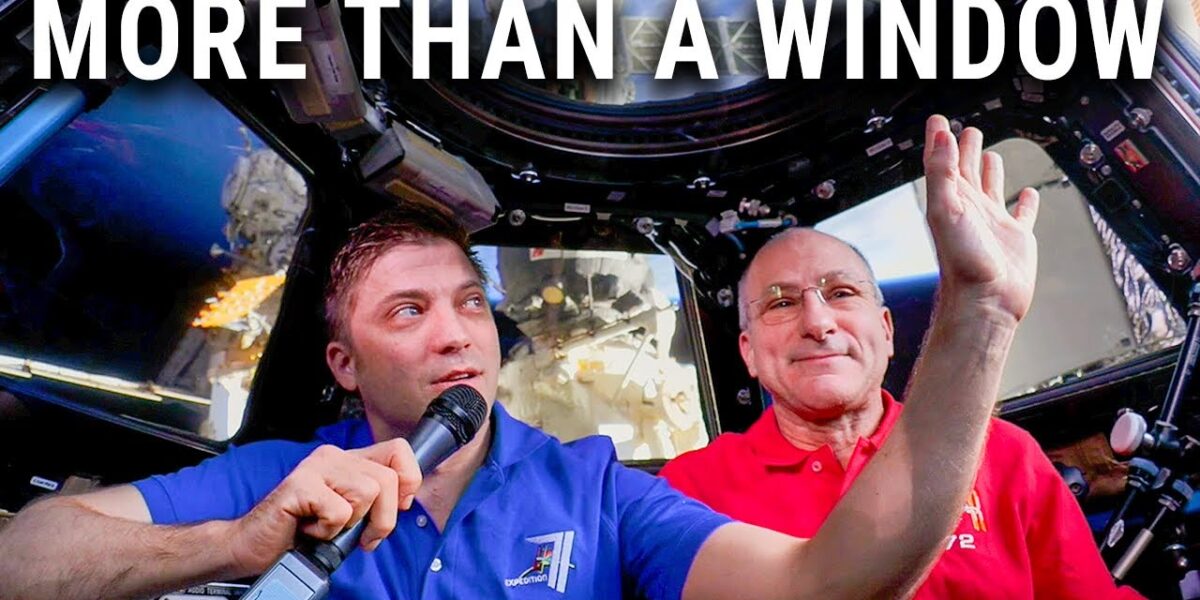
Astronaut Mentors and Mentees Unite in Orbit
In a rare and heartwarming convergence of experience and aspiration, veteran astronaut Don Pettit and his mentee, astronaut Matthew Dominick, found themselves sharing the International Space Station’s (ISS) iconic Cupola window simultaneously. This unique overlap in their missions provided a golden opportunity to capture a conversation filled with shared passion for discovery, breathtaking views, and the art of astrophotography.
A Mentor’s Legacy, A Mentee’s Journey
The connection between Pettit and Dominick is a testament to NASA’s commitment to fostering expertise and camaraderie among its astronauts. Don Pettit, a seasoned space traveler with a renowned curiosity and a knack for explaining complex phenomena, has served as a mentor to Matthew Dominick. Their shared time in space, while both are accomplished photographers, allowed for an intimate glimpse into their professional relationship and their mutual awe of Earth from above.
Destin, the host of Smarter Every Day, orchestrated this unique interview, emphasizing the special nature of a mentor flying alongside their mentee. “This little overlap in time is a very specific moment that I wanted to capture,” Destin explained. The interview, conducted from within the confines of the Cupola, offered viewers an immersive experience, making them feel as if they were right there, squeezed in amongst the astronauts, witnessing the wonders of space photography firsthand.
Capturing Earth’s Majesty: The Art of Astrophotography
Both Pettit and Dominick are celebrated for their photographic skills, transforming the ISS into a moving art studio. The interview delved into the technicalities and artistic considerations of capturing images from orbit. Dominick described the dramatic lighting changes during sunrise and sunset, a spectacle that requires careful management of camera settings to avoid overexposure. “The dynamic lighting is pretty impressive,” he noted, highlighting the challenges and rewards of photographing Earth’s transition from day to night.
A key innovation discussed was the use of neutral density (ND) filters on the Cupola windows. Pettit, drawing inspiration from Hollywood filmmaking techniques, explained how these filters help balance the intense light from Earth with the interior of the station. “What the big boys do is they put neutral density filters as a thin film over the windows to balance the intensity between the outside and the inside,” Pettit stated. He elaborated that these filters, custom-cut to fit the Cupola windows, reduce the light intensity by four stops (four EV), preventing the “blown out” whites often seen in orbital photography and preserving detail in clouds and bright areas.
The conversation also touched upon the specific equipment used, including Nikon Z9 cameras paired with fast lenses like a 24mm f/1.4 and a 50mm f/1.2. These lenses, particularly the f/1.2, are described as “giant light buckets,” crucial for capturing detailed images in low-light conditions, such as photographing celestial bodies like comets or the aurora borealis.
Navigating the Void: Astronauts and Orbital Mechanics
The unique environment of the ISS presents distinct challenges and opportunities for photographers. Dominick shared insights into how astronauts maintain stability while operating cameras. “Beneath us, there’s little handrails and there’s little footholds that you can put your feet on,” he explained, describing how they use their feet for stabilization, allowing their hands to be free for camera operation. He even mentioned the utility of special “ninja socks” for enhanced grip.
The concept of orbital mechanics and its impact on photography was also explored. Pettit and Dominick discussed how the ISS’s speed of approximately 17,500 miles per hour necessitates fast shutter speeds, even when photographing stationary objects on Earth or stars. “We shot a hurricane picture at one over 32,000ths of a second, and it turned out to be a great picture,” Dominick revealed, illustrating the extreme conditions under which they operate.
For night photography, tracking the Earth’s movement through the viewfinder is essential to minimize motion blur. Pettit explained the trade-offs: “I would rather lose detail in the blacks in the low-end than the blow detail out in the whites.” This philosophy ensures that the most striking features remain visible and aesthetically pleasing.
The Pursuit of Sprites and Celestial Wonders
The interview highlighted a specific scientific pursuit: capturing images of ‘sprites,’ transient luminous events that occur high above thunderstorms. Pettit and Dominick have been using 200mm telephoto lenses to capture a nadir view (straight down) of these phenomena. “We haven’t caught one yet, but we’ve probably taken 50,000 pictures of the tops of dark clouds,” Pettit admitted, underscoring their dedication to scientific discovery through persistent observation and photography.
The conversation also touched upon the practicalities of life on the ISS, including the arrival of cargo spacecraft like Cygnus, which delivers essential supplies, science payloads, and even treats like ice cream. They also pointed out other spacecraft docked to the station, such as the Soyuz and Dragon vehicles, and the station’s own solar arrays providing power.
A Farewell and a Look Ahead
As Dominick’s mission neared its end, the interview took on a poignant tone. He expressed immense gratitude for Pettit’s mentorship, acknowledging the invaluable advice received on everything from flying in space to astrophotography. “I feel an immense sense of responsibility as well. I remember coming in, floating into the cupola for the first time six plus months ago and just looking outside and thinking that I had some responsibility to take as many pictures as possible to capture what my eyes have seen to share with the world,” Dominick reflected.
The sheer volume of photographs captured by the astronauts has even impacted the station’s data downlink bandwidth. Pettit, ever the optimist, concluded with a forward-looking statement: “The best is yet to be,” hinting at future experiments and discoveries on the horizon.
This unique interview not only showcased the incredible capabilities of human spaceflight and photography but also underscored the enduring spirit of curiosity and collaboration that drives space exploration. The shared experience of Pettit and Dominick in the Cupola serves as a powerful reminder of the human element at the heart of scientific endeavor, inspiring future generations to look up and wonder.
Source: Live Interview from the ISS Cupola – Smarter Every Day 303 (YouTube)

Related Articles
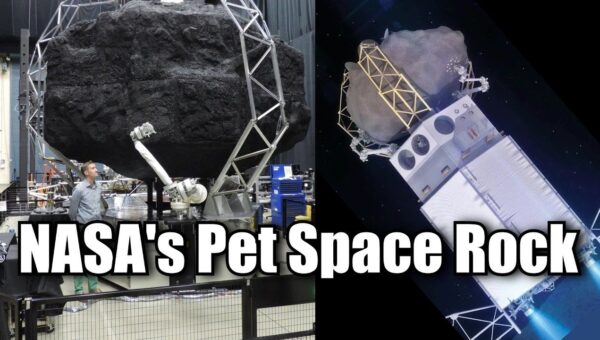
NASA’s Asteroid Mission: From Mars Dream to Lunar Gateway
NASA's ambitious Asteroid Redirect Mission (ARM), designed as a stepping stone to Mars, aimed to capture a small asteroid boulder and tow it to lunar orbit for astronaut testing. Though cancelled, its advanced propulsion and robotic technologies live on in NASA's Lunar Gateway and future deep space exploration plans.
NASA’s Evolving SLS Rocket Hints at New Upper Stage
NASA's Artemis program may be adopting a new upper stage for its Space Launch System (SLS) rocket, potentially utilizing the commercially available Centaur V. An updated infographic reveals design changes and hints at evolving mission strategies, including advanced lunar lander operations.


SpaceX Starship V3 Nears First Flight Amidst Major Artemis Shakeup
SpaceX eyes March for Starship V3's maiden flight as new testing reveals design improvements. Meanwhile, NASA's Artemis program faces delays and strategic shifts, with Artemis III repurposed as a LEO test mission.