Astronaut Chris Hadfield on Artemis Prep & Space’s Human Heart
Former astronaut Chris Hadfield emphasizes that space exploration's greatest challenge is mental, not physical. He discusses the intense preparation required for missions like Artemis and reflects on the deeply human emotions involved in spaceflight, comparing it to our innate drive to explore.

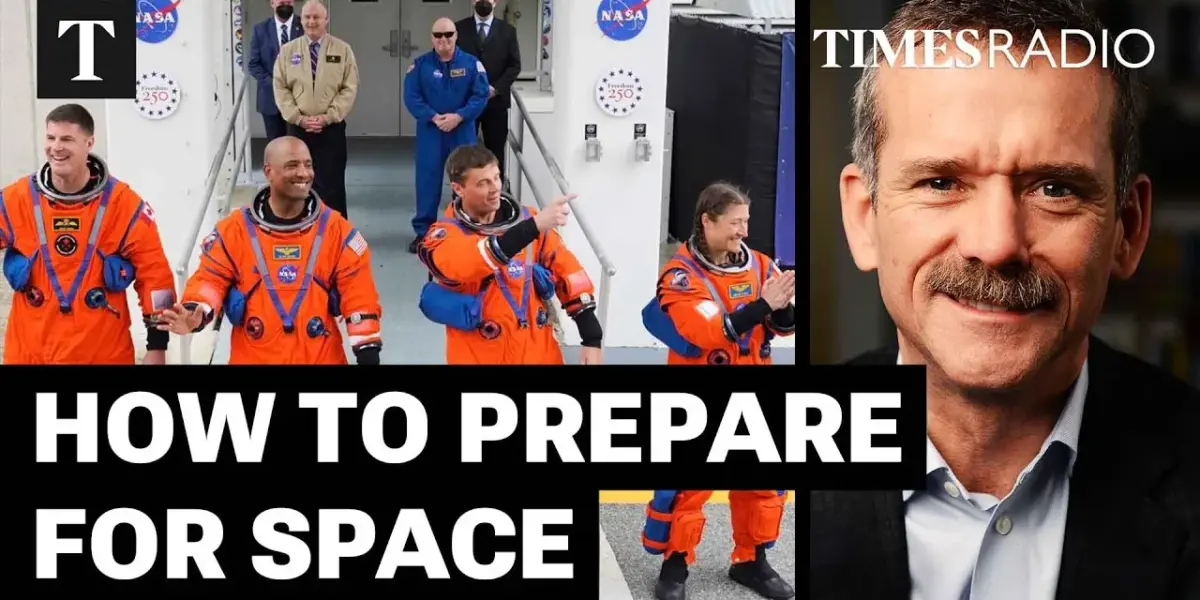
Astronaut Chris Hadfield Shares Deep Dive into Artemis Crew’s Intense Mental Preparation
Former Canadian astronaut Colonel Chris Hadfield, who has commanded the International Space Station, recently spoke about the profound mental fortitude required for space missions, drawing parallels to the recent Artemis launch. Hadfield, a veteran of three space flights and author of the thriller “Final Orbit,” detailed the emotional impact of witnessing the launch of four crew members, including his friend Jeremy Hansen, on a pioneering journey.
The True Challenge: Mental Fortitude Over Physical Strength
Contrary to popular belief, Hadfield emphasized that the most demanding aspect of spaceflight is not physical, but mental. “Any healthy person could fly a spaceship,” he stated, highlighting that the real difficulty lies in decades of training. This rigorous preparation allows astronauts to understand every potential failure and know exactly how to react, especially when communication with Earth is lost, as it was briefly on the first day of the Artemis mission.
Hadfield explained that while the journey itself is a complex and physically demanding ride, the mental task is immense. He distinguished the experience of the crew from that of those on Earth. “From the crew’s point of view, this is business,” he said. “It’s hard work. It’s the culmination of a lifetime of preparation.” For the astronauts, fear and worry are overcome long before launch. The real emotional weight falls on family and friends watching from below.
A Deeply Human Endeavor: Family, Fear, and the Grand Adventure
Hadfield vividly described the emotional rollercoaster experienced by those watching the launch. He recalled seeing the capsule zoom in on screen just before ignition, which took his breath away. “My heart lurched at the reality of what was happening,” he shared, thinking of his friends risking their lives. He described a wave of emotion, with tears in his eyes, as he and friends in the crowd willed the rocket to succeed.
He noted that for family members, the experience is one of helplessness mixed with profound connection. “Everybody grabs someone else’s hand. You know, you just h you need that support and everybody’s crying,” he observed. He recalled his stoic father shaking with emotion while filming his first launch. Hadfield concluded that space exploration, while a monumental scientific and technical achievement, is fundamentally a deeply human event.
The Innate Human Drive to Explore
When asked about the importance of space exploration, Hadfield pointed to a fundamental human desire. He used his one-year-old granddaughter as an example, noting that even before speaking, she has an innate need to explore, touch, and experience her surroundings. “The only way that we can truly appreciate and understand the universe around us is by exploring that,” he asserted. “That’s fundamental to our evolution and who we are.”
He explained that as human technology has advanced, so has our ability to explore, moving from local communities to the entire planet, and now to the solar system and beyond. The moon, he described, is like an enormous unexplored continent, larger than Africa, offering immense opportunity without the complexities of an existing biosphere. “It’s a tremendous unknown of of opportunity,” he said.
Navigating the Future: Competition and Cooperation in Space
Hadfield also touched upon the future of space exploration, particularly the intersection of national interests and commercial ventures. He acknowledged the potential for conflict, driven by human flaws like selfishness and greed, but also pointed to humanity’s capacity for magnificent achievements. “We are imperfect creatures and we’re fueled by selfishness and greed and mostly fear. But at the same time, we accomplish magnificent things,” he noted.
He drew parallels to human history, citing the beauty of human creations like museums and cathedrals, and the everyday efforts of billions seeking joy and a better future. He suggested that viewing Earth from space reveals both conflict zones and the widespread grace of people simply trying their best. He proposed the peaceful, scientific settlement of Antarctica as a model for how humanity can cooperate in new frontiers, similar to the International Space Station, which has operated successfully for 25 years.
A Final Thought: The Fiery Return
As the Artemis crew continues their mission, Hadfield’s thoughts remain focused on their safe return. “There’s one huge step left, and that is when they come around the moon and fall all the way back to Earth,” he stated. He highlighted the critical role of the heat shield in protecting the astronauts during their high-speed re-entry, a process faster than any human has experienced before. This final, perilous phase remains a significant concern until they are safely home.
“It is mental. That’s that’s the hard part of the job. The the decades of training so that you can understand everything about everything that could go wrong and and then know what to do because often if there’s any sort of failure, the first thing you’ll lose is communications with Earth.”
— Colonel Chris Hadfield
Source: Astronaut Explains Intense Preparation Artemis Crew Had To Undertake | Colonel Chris Hadfield (YouTube)

Related Articles

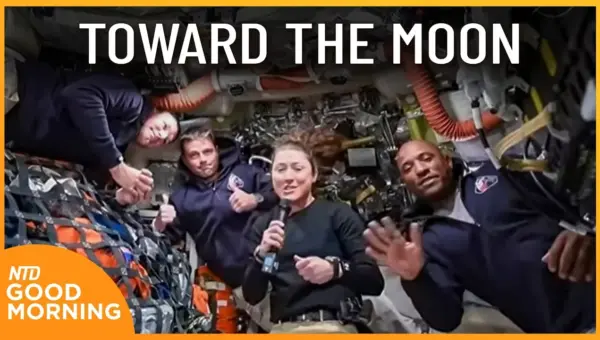
Humans Return to Moon Orbit After 52 Years
Humans are heading back to the moon for the first time in over 50 years with the Artemis II mission. The four-astronaut crew will orbit the moon, marking a historic return to deep space exploration. Meanwhile, political developments include President Trump's warnings of further strikes against Iran and a leadership change at the Justice Department.

Artemis II Fuels New Space Race Era
NASA's Artemis II mission, sending astronauts beyond the Moon for the first time in 50 years, signals a new era of space exploration. Astronaut Butch Wilmore's insights from past challenges and the mission's pristine progress highlight renewed ambition amidst global space competition. This journey is poised to reshape international relations and technological leadership.

Humans Reach Deep Space Again After 50 Years
The Artemis II mission has successfully sent humans beyond Earth's orbit for the first time in over 50 years. The Orion spacecraft is now en route to the Moon after a crucial engine burn. The crew is conducting system checks and carrying a special plush toy with millions of names aboard.