Asteroid Bennu Sample Reveals Life’s Building Blocks
NASA's OSIRIS-REx mission returned samples from asteroid Bennu, revealing a surprising abundance of life's building blocks, including amino acids and nucleobases. This discovery offers crucial insights into the early solar system and the potential for extraterrestrial life.

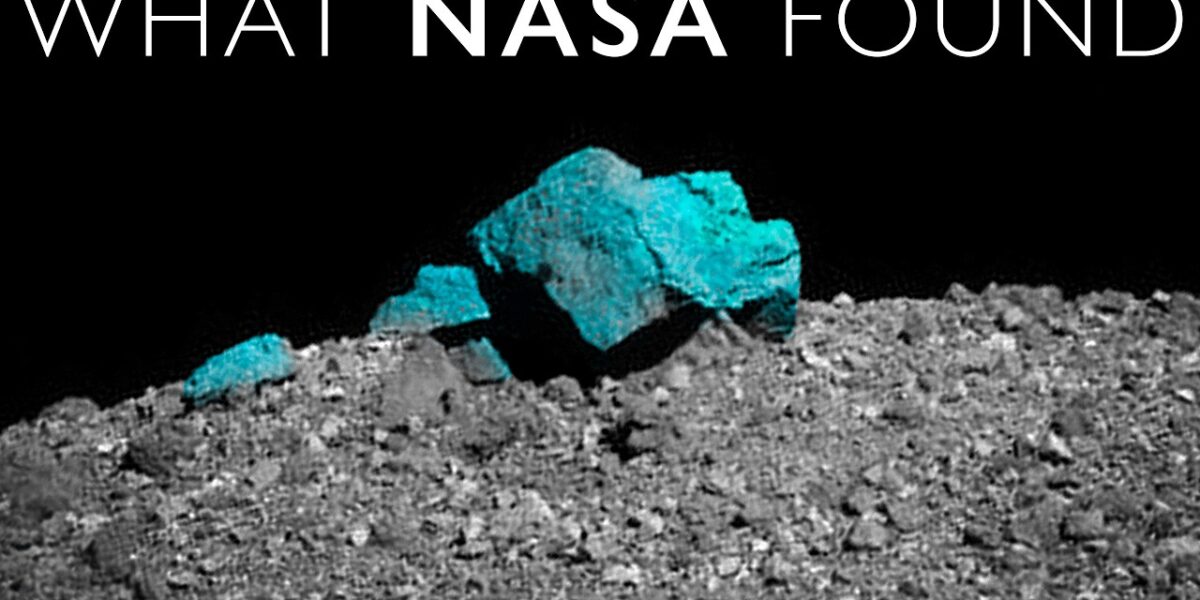
Asteroid Bennu Sample Reveals Life’s Building Blocks
NASA’s groundbreaking OSIRIS-REx mission has returned a treasure trove of ancient material from the asteroid Bennu, offering unprecedented insights into the early solar system and the very origins of life. The meticulously collected samples, delivered to Earth in September 2023, have revealed a surprising abundance of organic compounds, including amino acids and nucleobases, the fundamental components of DNA and RNA.
A Glimpse into the Solar System’s Infancy
Asteroids like Bennu are cosmic time capsules, preserving remnants from the solar system’s formation over 4.5 billion years ago. By studying these pristine materials, scientists can unlock secrets about our cosmic neighborhood’s youth and potentially the genesis of life itself. The OSIRIS-REx (Origins, Spectral Interpretation, Resource Identification, Security, Regolith Explorer) mission, launched in September 2016, was designed to be the first-ever NASA endeavor to collect a sample from an asteroid and bring it back to Earth for detailed analysis. While Japan’s Hayabusa and Hayabusa2 missions had previously achieved sample returns from asteroids, OSIRIS-REx represented a significant leap in capability and scientific ambition for NASA.
Journey to a Rubble Pile
After a journey of over two years, OSIRIS-REx arrived in the vicinity of Bennu on December 3, 2018. Bennu, a near-Earth asteroid approximately 500 meters in diameter, presented a surprisingly complex and dynamic environment. Initial observations revealed that Bennu was not a smooth celestial body but a rough, boulder-strewn ‘rubble pile’ with a spinning-top-like shape. This unusual morphology is attributed to its weak gravity and rapid rotation, which have caused regolith – loose surface material – to accumulate.
The asteroid’s low gravity, a mere fraction of Earth’s, made orbiting and landing a significant challenge. OSIRIS-REx established an orbit just 1.75 kilometers above Bennu’s surface, making it the smallest celestial body ever orbited by a spacecraft. This close proximity allowed for high-resolution mapping and detailed analysis of Bennu’s surface properties, including its mineralogy and chemistry. Spectroscopic surveys detected the presence of hydrated materials, such as clays, which indicated that liquid water was likely present on Bennu’s parent body, even though the small asteroid itself could not have retained a significant atmosphere or liquid water.
The Touch-And-Go Maneuver
Selecting a landing site was a critical step. Scientists aimed for a relatively flat area, free of large boulders, to ensure a safe sample collection. After extensive mapping and analysis, four potential sites – named Osprey, Kingfisher, Nightingale, and Sandpiper – were identified. The mission team ultimately chose the Nightingale site, located within a crater, hoping its recently exposed material would provide a pristine glimpse into Bennu’s interior.
The sample collection, known as the Touch-And-Go (TAG) maneuver, occurred on October 20, 2020. OSIRIS-REx descended towards Bennu, extending its Touch-And-Go Sample Acquisition Mechanism (TAGSAM) arm. Upon contact, the spacecraft fired a burst of nitrogen gas, intended to stir up regolith for collection. However, Bennu’s surface proved to be much more loosely aggregated than anticipated. The TAGSAM arm sank nearly half a meter into the surface, and the nitrogen blast dislodged an estimated six tons of material, far exceeding the mission’s initial goal of collecting just 60 grams.
A Perilous Return Journey
The spacecraft successfully collected a substantial amount of material, estimated between 400 grams and over a kilogram, though a small portion was lost due to a rock jamming the sampler’s flap. After securing the sample head into a sealed container, OSIRIS-REx departed Bennu on April 7, 2021, embarking on its 1.9 billion-kilometer journey home. The return capsule was jettisoned from the spacecraft on September 24, 2023, and entered Earth’s atmosphere at speeds approaching 43,000 kilometers per hour, enduring extreme G-forces and temperatures of around 2,700 degrees Celsius. The capsule’s advanced thermal protection system, PICA (Phenolic-impregnated carbon ablator), ensured the precious sample remained below 75 degrees Celsius throughout its fiery descent.
Unveiling the Secrets of Bennu
The capsule landed safely in a Utah desert, where recovery teams quickly secured it. The initial opening of the sample canister revealed approximately 70 grams of dark grey rocks and dust. However, accessing the most pristine material within the inner canister proved challenging. Two stubborn fasteners on the TAG-SAM mechanism were stripped by Bennu’s dust, necessitating the invention of a custom-built, specialized tool by NASA engineers. This meticulous process ensured that the sample remained uncontaminated by Earth’s atmosphere.
Finally, in early 2024, scientists gained access to the primary sample. In total, more than twice the mission’s initial target amount of Bennu material was recovered. Analysis of this ancient extraterrestrial matter has already yielded remarkable discoveries:
- Presolar Grains: Microscopic crystals that condensed before our Sun formed, offering clues about the types of stars that existed in the galaxy prior to our solar system’s birth. Bennu samples contain an unusually high abundance of supernova dust, indicating enrichment from a diverse range of stars.
- Organic Molecules: The samples are rich in carbon and nitrogen. Crucially, 15 of the 20 amino acids essential for life on Earth and all five biological nucleobases (Adenine, Guanine, Cytosine, Thymine, and Uracil) – the building blocks of DNA and RNA – have been identified.
- Essential Sugars: Researchers have discovered vital sugars, including ribose and glucose, in the Bennu samples. The presence of ribose, rather than deoxyribose, lends support to the ‘RNA world’ hypothesis, suggesting that early life may have relied on RNA before DNA.
- ‘Space Gum’: A novel nitrogen- and oxygen-rich polymeric material, dubbed ‘space gum,’ has been identified. Its layered structure and composition, resembling polyurethane, suggest it could be a precursor molecule for life.
- Water-Bearing Clays: Further confirmation of water’s past presence on Bennu’s parent body was found in the form of water-bearing clay minerals within the sample.
The Significance for Humanity
The OSIRIS-REx mission’s findings are profound. The discovery of these complex organic molecules on Bennu demonstrates that the fundamental ingredients for life are not unique to Earth but are widespread throughout the solar system. This bolsters the scientific quest to understand how life originated and whether it might exist elsewhere in the universe. The ability to study these pristine samples, untouched by Earth’s atmosphere and geological processes, provides an unparalleled window into the conditions of the early solar system and the cosmic origins of the elements that form life.
The OSIRIS-REx mission not only achieved its ambitious sample-return goal but also pushed the boundaries of spacecraft engineering and planetary science. The detailed analysis of Bennu’s material will continue for years, promising further revelations about our solar system’s history and the potential for life beyond Earth. Meanwhile, the OSIRIS-REx spacecraft itself has been repurposed for a new mission, OSIRIS-APEX, to study the asteroid Apophis.
Source: NASA Found a Strange Substance on Asteroid Bennu (YouTube)

Related Articles

NASA’s Asteroid Mission: From Mars Dream to Lunar Gateway
NASA's ambitious Asteroid Redirect Mission (ARM), designed as a stepping stone to Mars, aimed to capture a small asteroid boulder and tow it to lunar orbit for astronaut testing. Though cancelled, its advanced propulsion and robotic technologies live on in NASA's Lunar Gateway and future deep space exploration plans.

NASA’s Evolving SLS Rocket Hints at New Upper Stage
NASA's Artemis program may be adopting a new upper stage for its Space Launch System (SLS) rocket, potentially utilizing the commercially available Centaur V. An updated infographic reveals design changes and hints at evolving mission strategies, including advanced lunar lander operations.


SpaceX Starship V3 Nears First Flight Amidst Major Artemis Shakeup
SpaceX eyes March for Starship V3's maiden flight as new testing reveals design improvements. Meanwhile, NASA's Artemis program faces delays and strategic shifts, with Artemis III repurposed as a LEO test mission.