Artemis Program Delays Signal Deeper Crisis in American State Capacity, Experts Warn
NASA's Artemis program, aiming for a lunar return, faces significant delays and cost overruns, sparking concerns about a decline in American "state capacity." Experts draw parallels to the swift success of the Apollo era, arguing that political interference, entrenched contractors, and a focus on job protection over mission objectives are hindering the program's progress and reflecting a broader governmental challenge.


Artemis Program Delays Signal Deeper Crisis in American State Capacity, Experts Warn
The National Aeronautics and Space Administration’s (NASA) ambitious Artemis program, aiming to return American astronauts to the Moon, is facing significant delays and cost overruns, drawing sharp contrasts with the rapid success of the Apollo era. What was initially slated for a February launch has been pushed to March, primarily due to issues with fueling the massive Space Launch System (SLS) booster. These setbacks, according to various observers, are not merely technical glitches but symptoms of a profound decline in American “state capacity” – the government’s ability to effectively execute large-scale national objectives.
Many Americans remain largely unaware of the Artemis program, despite its monumental goal of re-establishing a human presence on the lunar surface. Initiated nearly two decades ago, the program’s sluggish progress stands in stark relief to the Apollo program, which, conceived by President John F. Kennedy in 1961, achieved its objective of landing humans on the Moon by 1969 – a remarkable eight-year sprint. This historical comparison highlights a perceived erosion of the United States’ ability to mobilize resources and achieve complex national goals efficiently.
The Troubled Journey of Artemis
The Artemis program, with its cornerstone SLS rocket, has been plagued by a series of postponements and escalating expenses. Each launch of the SLS is projected to cost upwards of $4 billion, a figure that critics argue makes the program unsustainable for its long-term goals, such as building a permanent lunar base. The first Artemis mission, Artemis I, an uncrewed test flight, finally launched in late 2022, orbiting the Earth but not venturing near the Moon. Artemis II, which will carry a crew around the Moon, remains an unfinished piece of business, its launch date continually shifting.
These delays are particularly concerning given the program’s origins. The Artemis initiative traces its roots back to President George W. Bush’s 2004 decision to decommission the Space Shuttle program following the Columbia disaster. This led to the creation of the Constellation program, an effort to develop a new booster capable of sending astronauts back to the Moon. However, Constellation was beset by problems from its inception, characterized by inadequate funding from Congress, slow progress due to cost-plus contracting with traditional aerospace giants like Boeing and Northrop Grumman, and ballooning costs.
A Legacy of Achievement: The Apollo Era and State Capacity
The Apollo program is often cited as the zenith of American state capacity. In the mid-20th century, the U.S. government demonstrated an impressive ability to undertake massive infrastructure projects and national mobilizations. Examples include the construction of the Hoover Dam and the Golden Gate Bridge, the electrification of the Upper South through the Tennessee Valley Authority (TVA), the rapid mobilization for World War II, the defeat of formidable adversaries by 1945, and the monumental creation of the Interstate Highway System in the 1950s. The Apollo program, with its ambitious timeline and successful execution, epitomized this era of governmental effectiveness.
However, many analysts contend that this capacity has steadily declined since the moon landing. Contemporary failures like the protracted and under-delivered California high-speed rail project, the problematic rollout of the Healthcare.gov website, and the Biden administration’s struggles to connect rural communities to broadband despite significant funding, are frequently cited as evidence of this broader decline. NASA’s Artemis program, in this context, serves as a prominent example of how this diminished state capacity impacts even the nation’s most ambitious scientific and exploratory endeavors.
The Political Genesis of Artemis: From Constellation to Compromise
The Obama administration, recognizing the deep-seated issues within the Constellation program, attempted a radical shift. It sought to cancel Constellation outright and pivot towards a new model of contracting: fixed-price contracts with emerging private sector commercial space companies like Elon Musk’s SpaceX and Jeff Bezos’s Blue Origin. This approach aimed to foster competition and incentivize efficiency, a stark departure from the traditional cost-plus model where contractors are reimbursed for expenses plus a profit margin, often leading to cost overruns and delays.
This proposed cancellation, however, met fierce resistance in Congress. Representatives from states with entrenched aerospace contractors, particularly Florida and Texas, heavily lobbied against the move. Their primary motivation, critics suggest, was not necessarily to advance space exploration but to protect jobs, contracts, and the political capital derived from these economic interests. This political negotiation ultimately led to a compromise: the problematic Ares V booster from the Constellation program was rebranded as the Space Launch System (SLS), and the Orion crew capsule was retained. However, the Obama administration was permitted to proceed with a smaller, yet significant, initiative: the Commercial Crew program.
Commercial Crew: A Glimmer of Hope and a Warning
The Commercial Crew program, designed to transport astronauts to the International Space Station (ISS) in low Earth orbit, became a crucial test case for the new contracting model. NASA solicited bids for fixed-price contracts, attracting proposals from both established players like Boeing (with its Starliner capsule) and newer entrants like SpaceX (with its Crew Dragon vehicle).
The experience of Commercial Crew offered both validation and a stark warning. SpaceX’s Crew Dragon proved to be a resounding success, demonstrating the viability and efficiency of fixed-price contracts and the capabilities of the burgeoning private space sector. In contrast, Boeing’s Starliner encountered numerous technical problems. After a troubled initial uncrewed test flight, a crewed mission eventually reached the ISS, but further issues led to the Starliner being deemed unsafe for the astronauts’ return, necessitating their rescue by a SpaceX Crew Dragon. This incident not only highlighted the effectiveness of the competitive model but also underscored significant issues within Boeing, a company that simultaneously faced major safety concerns with its 737 MAX and 787 aircraft, attributed by some to excessive bureaucratization and a management focus on Wall Street expectations over engineering excellence.
The Core Problem: Political Interference, Not Intrinsic Capacity
The challenges faced by the Artemis program and the contrasting fortunes of Commercial Crew participants lead to a critical conclusion: the decline in American state capacity is not rooted in a lack of talent or expertise within agencies like NASA. The agency continues to be staffed by highly qualified rocket scientists, engineers, and administrators. The fundamental problem, as articulated by observers, lies at the political level.
Congress, through detailed mandates and the prioritization of constituent interests – particularly the protection of jobs and contracts within specific districts – often constrains NASA’s ability to operate efficiently and pursue its objectives in the most effective manner. In the 1960s, NASA was granted significant leeway to achieve the clear objective of beating the Soviets to the Moon. Today, the agency navigates a complex political landscape where established contractors and their congressional allies often view these programs less as risky endeavors to push the boundaries of exploration and more as job creation schemes. This prioritization, critics argue, prevents the nation’s technocrats and engineers from executing their work effectively, leading to the kind of poor performance seen in the Artemis program.
Broader Implications and the Path Forward
The issues plaguing the Artemis program are not isolated to space exploration. They reflect a broader governmental challenge where the need to comply with intricate rules and satisfy diverse political stakeholders often stifles innovation and efficiency across various sectors of the U.S. government. Overcoming this decline in state capacity will require a fundamental re-evaluation of how national projects are conceived, funded, and executed. A shift back towards clear, objective-driven mandates, coupled with robust competition and accountability in contracting, could potentially reignite the spirit of American ingenuity and restore the nation’s ability to achieve ambitious goals, both on Earth and beyond.
Source: What's Wrong with NASA and the Artemis Program? (YouTube)

Related Articles

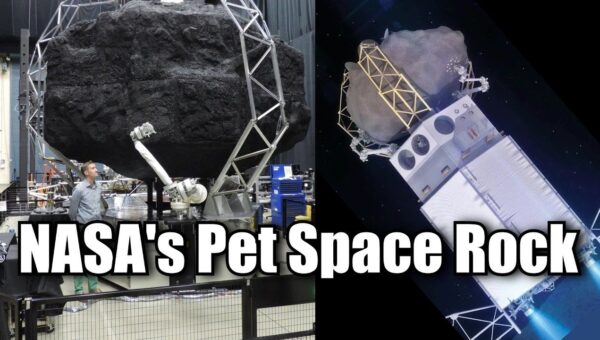
NASA’s Asteroid Mission: From Mars Dream to Lunar Gateway
NASA's ambitious Asteroid Redirect Mission (ARM), designed as a stepping stone to Mars, aimed to capture a small asteroid boulder and tow it to lunar orbit for astronaut testing. Though cancelled, its advanced propulsion and robotic technologies live on in NASA's Lunar Gateway and future deep space exploration plans.

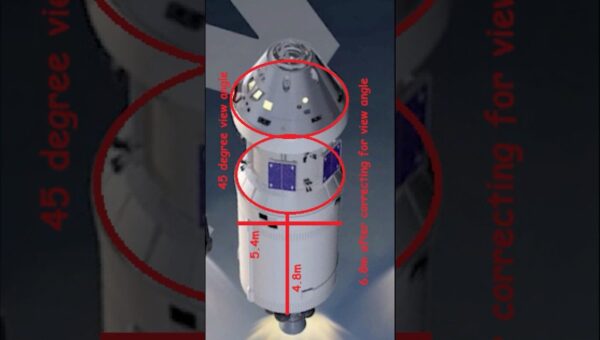
NASA’s Evolving SLS Rocket Hints at New Upper Stage
NASA's Artemis program may be adopting a new upper stage for its Space Launch System (SLS) rocket, potentially utilizing the commercially available Centaur V. An updated infographic reveals design changes and hints at evolving mission strategies, including advanced lunar lander operations.


SpaceX Starship V3 Nears First Flight Amidst Major Artemis Shakeup
SpaceX eyes March for Starship V3's maiden flight as new testing reveals design improvements. Meanwhile, NASA's Artemis program faces delays and strategic shifts, with Artemis III repurposed as a LEO test mission.