Artemis II Paves Way for Lunar Base, Mars Missions
The Artemis II mission is a critical test for future space travel, paving the way for a lunar base and missions to Mars. Astronauts are gaining unique perspectives and testing systems for long-duration spaceflight. Establishing a Moon base will require overcoming extreme environmental challenges and developing new technologies.


Artemis II Paves Way for Lunar Base, Mars Missions
The Artemis II mission is currently sending its four astronauts on a journey around the Moon. They are over 200,000 miles from Earth, with less than 50,000 miles left to reach their destination. This mission is more than just a trip to space; it’s a crucial test for future human exploration. It aims to show we can travel far from Earth and return safely.
Astronauts on the mission are taking amazing photos and sharing their experiences. This sharing of the human experience in spaceflight is important. It helps people on Earth understand what it means for humanity. One astronaut described the view as a “God’s eye view.” This means feeling incredibly small yet privileged to see Earth from afar. Seeing all of human history laid out below is a powerful image.
Re-entry Challenges and Future Inspiration
The most dangerous part of the mission is expected to be the re-entry into Earth’s atmosphere on Friday. This will be carefully managed. Mission control will monitor the spacecraft’s angle as it approaches Earth. Three planned adjustments to the spacecraft’s path will help ensure a safe return. Smart people on the ground and the skilled crew on board will work together. The spacecraft has advanced capabilities to handle this critical phase.
The crew is expected to splash down off the coast of San Diego, California. Seeing the splashdown will be an exciting moment. Past astronauts have shared surprising experiences from space. One mentioned their entire foot skin peeling off in one sheet after a long mission. This happens because in zero gravity, feet don’t form calluses. Instead, they can develop them on the top.
A New Perspective on Earth
Looking back at Earth from space offers a unique perspective. Astronauts see the planet not as separate countries with borders, but as a single, connected system. It’s a beautiful mix of humanity and nature. Seeing this view from the Moon, a quarter of a million miles away, is deeply moving.
Building a Base on the Moon
NASA plans to establish a base on the Moon in the coming years. The Artemis II mission is a stepping stone towards this goal. Having a lunar base will teach us how to live off the land. There is water ice, especially at the Moon’s South Pole. This ice can be mined.
Water can be broken down to create oxygen for breathing. It can also be used to grow plants for food. Furthermore, water can be turned into fuel. This fuel could power future missions to Mars and beyond. The Moon will serve as an incredible testing ground for future human activities in space.
Harsh Lunar Environment
Living and working on the Moon will be very difficult. Temperatures can be extreme. Near the South Pole, temperatures can drop close to absolute zero. At these cold temperatures, mechanical systems may not work well. Even the best lubricants can freeze.
Special heating and power systems will be needed. These challenges will test the best engineers. They must create new technologies to overcome the harsh lunar conditions. This effort will push the boundaries of what humans can achieve in space.
Global Impact
The Artemis II mission and the future plans for a lunar base have broad implications. They represent a renewed global interest in space exploration. This push goes beyond national pride; it’s about scientific discovery and technological advancement. The ability to live and work on the Moon could unlock new resources and possibilities for humanity. It also prepares us for even more ambitious journeys, like reaching Mars. The technologies developed for lunar living could have benefits back on Earth.
Historical Context
This endeavor builds on the legacy of the Apollo program. Those missions proved humans could reach the Moon. Now, Artemis aims to establish a sustained presence. This includes learning to utilize lunar resources, a concept far more advanced than the Apollo era. The challenges of the Moon’s environment echo earlier space missions, but the scale of long-term habitation is new.
Economic and Strategic Considerations
While the transcript focuses on the human and technical aspects, space exploration has economic and strategic dimensions. Establishing a presence on the Moon could involve international cooperation and competition. Control over resources like water ice could become strategically important. The technologies developed could also lead to new industries and economic opportunities.
Future Scenarios
The success of Artemis II and subsequent missions could lead to a permanent lunar base within the next decade. This base could serve as a hub for further exploration. However, challenges remain. Funding, technological hurdles, and the harsh lunar environment are significant obstacles. A slower pace or delays are also possible scenarios. International partnerships will be key to overcoming many of these difficulties and ensuring long-term success.
Source: Artemis II journey a test run for space travel’s future: Ex-astronaut | NewsNation Prime (YouTube)

Related Articles
NASA Reclaims Moon Lead, Ignites New Space Race
NASA's Artemis II mission marks humanity's return to the Moon after 50 years, entering lunar orbit and testing crucial systems. The crew celebrated Easter in space while overcoming technical challenges, inspiring a new generation of explorers. This mission is a key step towards establishing a permanent lunar presence.

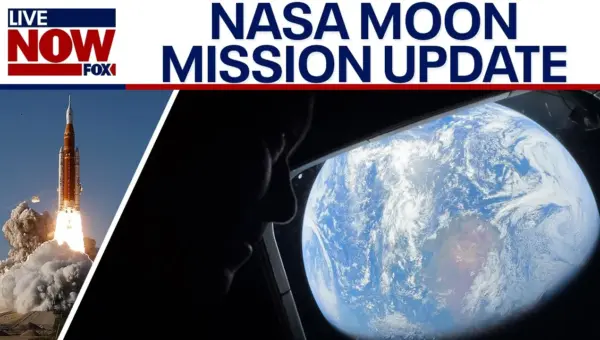
Artemis II Crew Nears Historic Moon Flyby
The Artemis II mission is nearing a historic lunar flyby, with astronauts preparing for the first trip around the Moon in over 50 years. NASA leaders detailed the crew's health, mission progress, and the scientific objectives for the upcoming lunar observations. The mission emphasizes human health studies and real-time collaboration between ground teams and the crew.


US Scrambles to Find Missing American Pilot Shot Down in Iran
The US military is intensifying its search for an American pilot shot down in Iran, amid rising international tensions. Meanwhile, wildfires rage in California, fueled by a dry winter, and astronauts on the Artemis II mission share stunning views from deep space.