Artemis II Moon Mission Ignites Humanity’s Next Space Age
NASA's Artemis II mission has successfully launched, sending four astronauts on a journey around the Moon. This historic liftoff signifies a major step forward in humanity's return to lunar exploration and the beginning of a new era of space endeavors.

Artemis II Moon Mission Ignites Humanity’s Next Space Age
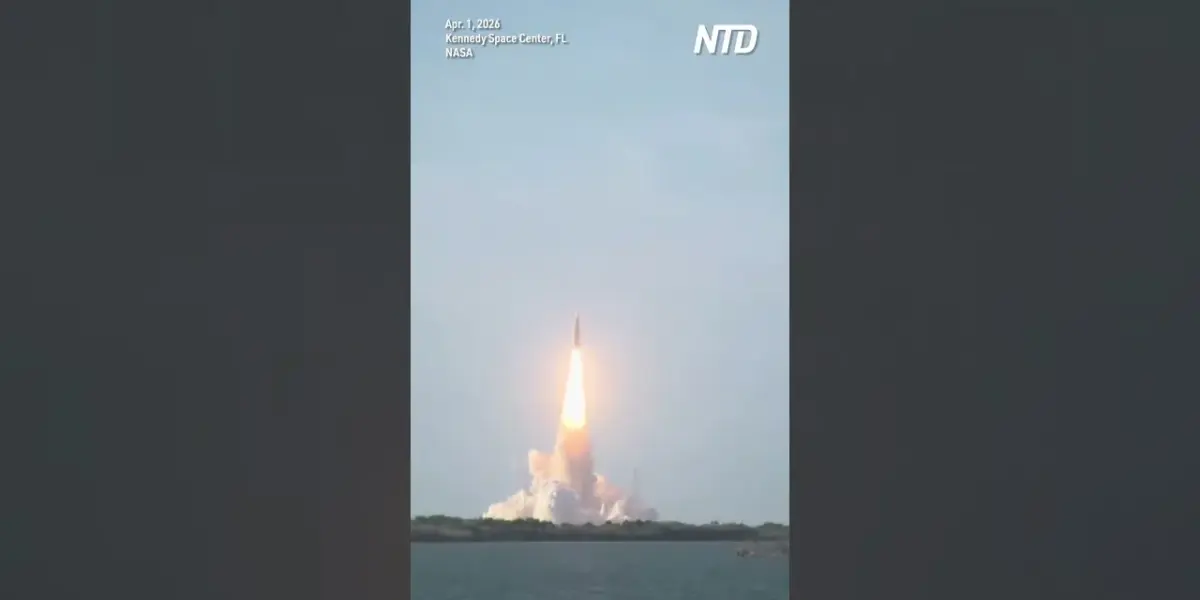
The roar of rockets filled the air at Cape Canaveral as NASA’s Artemis II mission successfully launched, carrying four astronauts closer to the Moon. This launch marks a significant step in humanity’s return to lunar exploration, a journey that began with the historic Apollo missions decades ago. The Artemis program aims to establish a long-term presence on the Moon, serving as a stepping stone for future missions to Mars.
The countdown reached its final seconds, building anticipation for the powerful liftoff. The RS25 engines ignited, followed by booster ignition, and with a mighty surge, the Space Launch System rocket ascended. Onboard, the crew of Artemis II began their bound for the Moon. Mission control in Houston confirmed they were now controlling the flight of the spacecraft, named Integrity.
A New Era of Exploration
Just seconds into the flight, Integrity passed a crucial milestone, reaching 30,000 feet. Mission control reported good performance from the main engines. At this point, the rocket’s core stage was already over 3 miles high and traveling at a blistering speed of more than 12,200 miles per hour. This incredible speed is necessary to escape Earth’s gravity and begin the journey across the vastness of space.
Historical Context: The Apollo Legacy
The Artemis program directly builds on the legacy of the Apollo missions, which saw humans walk on the Moon for the first time between 1969 and 1972. Those missions were a product of intense Cold War competition, a race to prove technological and ideological superiority. Today, the motivation for lunar exploration is broader, focusing on scientific discovery, resource utilization, and preparing for even more ambitious deep-space endeavors.
Unlike Apollo, which was a sprint to plant a flag, Artemis is designed as a sustained effort. The goal isn’t just to visit the Moon but to learn how to live and work there. This includes developing technologies for landing on the lunar south pole, a region believed to hold water ice, and building infrastructure that could support future missions. The Artemis II mission itself is a crewed test flight, designed to verify the Orion spacecraft’s life support systems and capabilities with humans aboard for the first time on a lunar trajectory.
Why This Matters
The success of Artemis II is more than just a technological achievement; it represents a renewed commitment to pushing the boundaries of human exploration. It inspires a new generation of scientists, engineers, and dreamers. Furthermore, the knowledge gained from lunar missions can lead to practical innovations that benefit life on Earth, from advancements in materials science to medical technologies.
Establishing a human presence beyond Earth also offers a unique perspective on our own planet. Seeing Earth from the Moon reminds us of its fragility and the importance of protecting it. The Artemis program is a testament to what humanity can achieve when we work together towards a common, ambitious goal.
Implications and Future Outlook
The Artemis II mission is the first step in a series of increasingly complex missions. Artemis III is planned to land the first woman and the next man on the Moon, potentially within the next few years. Following that, the program aims to build a lunar base camp and a gateway station in orbit around the Moon. These developments will allow for longer stays and more extensive scientific research.
The international collaboration involved in Artemis is also a key trend. Many countries and private companies are partnering with NASA, pooling resources and expertise. This collaborative approach is essential for undertaking the immense challenges and costs of deep-space exploration. The future outlook is one of increasing activity in cislunar space, with potential for lunar tourism, resource extraction, and scientific breakthroughs that could reshape our understanding of the universe and our place within it.
Source: NASA's Artemis II blasts off from Cape Canaveral (YouTube)

Related Articles


Trump Fires AG Bondi, Iran Tensions Rise, Artemis II Heads to Moon
Attorney General Pam Bondi has been fired by President Trump, with Deputy AG Todd Blanche stepping in as acting AG. Amidst rising oil prices and escalating tensions, the U.S. warns Iran as the Artemis II mission successfully heads towards the Moon. Golfer Tiger Woods was arrested for DUI and is stepping away for treatment.


Astronauts Head to Moon Amidst Divided Nation
The Artemis II mission has launched, sending four astronauts towards the Moon in a journey that highlights both humanity's drive for exploration and the current divisions within society. While the launch captured global attention, it also sparked conversations about how fragmented media impacts shared national experiences.


Moon Missions Spark New Space Race: Fuel & Power
Renewed moon missions are fueling a new space race, driven by the potential for rocket fuel production and strategic control. However, concerns about space weaponization and the lack of clear property rights in this lawless frontier add a complex geopolitical layer to lunar ambitions.