Artemis II Lunar Mission Nears Launch: All Systems Go
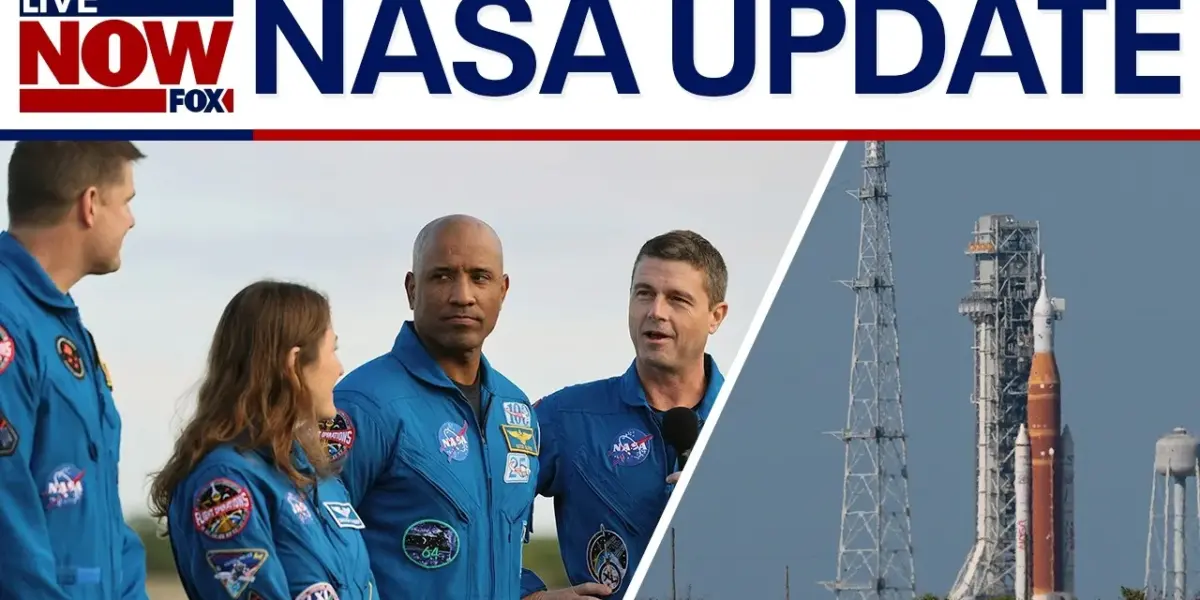
NASA's Artemis II mission is poised for launch, with all systems confirmed ready for the historic crewed flight to the Moon. The crew, rocket, spacecraft, and ground teams are all reporting 'go' as favorable weather is forecast for Wednesday's launch attempt. This mission marks humanity's return to deep space exploration after more than 50 years.

Artemis II Lunar Mission Nears Launch: All Systems Go
NASA’s Artemis II mission, the first crewed flight to the Moon in over 50 years, is on the cusp of launch. Officials confirmed Tuesday that all systems are ready for the historic journey, with the crew, rocket, spacecraft, and ground operations teams all reporting go. The launch window opens this week, with weather forecasts showing an 80% chance of favorable conditions for Wednesday afternoon.
Crew Arrives, Final Preparations Underway
The Artemis II crew arrived in Florida on Monday, marking a significant milestone in the final countdown. The astronauts will spend their remaining days before launch in quarantine, conducting final procedure reviews. Dr. Lorie Glaze, acting associate administrator for NASA’s exploration systems development mission directorate, expressed the team’s readiness. “We are getting very, very close. Um, and and we are ready,” she stated during a press briefing.
The mission’s flight readiness review concluded successfully a few weeks ago, with operations proceeding smoothly since then. The Mission Management Team (MMT) will meet Wednesday to review the closure plan for any remaining open items, ensuring all systems are cleared for launch. NASA officials emphasized the dedication of thousands of personnel who have worked tirelessly, including nights, weekends, and holidays, to reach this critical juncture.
Ground Systems and Countdown Readiness
Sean Quinn, exploration ground systems program manager, highlighted the unprecedented efficiency of ground operations. “Yesterday we had an important meeting, uh, our launch countdown pre-test briefing. This is like the last step before we get into actual launch countdown,” he explained. “And I will tell you that it was one of the cleanest launch countdown pretest briefings we’ve ever had.” He noted that the launch director, Charlie Blackwell Thompson, commented that in all her years, including shuttle countdowns, they had never experienced one as clean.
The team has completed all necessary tasks, including battery replacements and repairs on the flight termination system, and made significant progress on the mobile launcher. Pad turnaround time was reduced to a record 21 days. Cryogenic systems, radio frequency tests, and various other checks have passed. The launch countdown is scheduled to begin around 3:00 PM tomorrow, with final pad and mobile launcher washdowns preceding the process.
SLS Rocket and Orion Spacecraft Status
Chris Caniola, deputy program manager for the SLS program, shared the excitement surrounding the Space Launch System (SLS) rocket. “We too are incredibly excited to be here. Uh, this is our first opportunity to launch humans to deep space in more than 53 years,” he said. The SLS team has focused on ensuring the rocket’s readiness, with all connections between the vehicle and the pad infrastructure confirmed to be correct. Critical safety milestones, such as ordinance checks on the flight termination systems, have been successfully completed.
Howard Hugh, Orion program manager, confirmed the Orion spacecraft is also ready for its journey. “From our perspective, our spaceship is ready to go and fly Reed, Victor, Jeremy, and Christina to the moon and back,” he stated. Final preparations include loading the crew’s laptop and camera batteries, which are considered standard last-minute hardware. The mission evaluation room team, comprised of experts from both U.S. and European partners, will be on station to support the flight control team throughout the launch countdown and mission.
Mission Objectives and Future Implications
Artemis II is designed as a 10-day mission that will send the crew on a lunar fly-around, testing the Orion spacecraft’s systems in deep space before returning to Earth. This mission is a crucial step toward establishing a long-term human presence on the Moon and preparing for future missions to Mars. Officials acknowledged the historical significance of sending humans to deep space for the first time since the Apollo era.
Marcia Dunn of the Associated Press inquired about the added pressure of the new moon base plans on Artemis II. Dr. Glaze responded that while there has always been significant importance placed on this mission as the first crewed flight of the Artemis program, the rollout of the moon base plan and accelerated launch cadence has actually energized the teams. “I think our teams are so excited to see an opportunity to not have to wait several years before the next mission,” she said.
Addressing Technical Challenges and Future Cadence
When asked about confidence in the life support system, Howard Hugh detailed a rigorous testing campaign. “We do a lot of testing, uniquely for life support, we put actually humans with the life support system both in the cabin environment and also in the space suits,” he explained. This includes testing at the individual component level, integrated systems, and with human subjects in a vacuum chamber at Johnson Space Center.
Regarding the increased launch cadence for future Artemis missions, officials highlighted lessons learned from Artemis I and II processing. Sean Quinn noted significant reductions in processing times for both the Orion servicing facility and the launch abort systems facility. Chris Caniola mentioned that the vertical integration of the core stage in High Bay 2 for future missions will be a significant enabler. Howard Hugh added that investments in infrastructure at the operations checkout facility allow for building two spaceships in parallel, crucial for meeting the demand for multiple Orions.
Distance Record and Abort Scenarios
Lauren Gush of Bloomberg asked about the distance the crew would travel from Earth and if it would break previous records. Howard Hugh confirmed that for an April 1st launch, the mission would reach 252,799 statute miles, surpassing the Apollo missions’ farthest point by 4,144 miles. Calculations for other launch dates in April are ongoing.
Will Robinson Smith of Spaceflight Now inquired about abort options post-Trans Lunar Injection (TLI) burn. Howard Hugh explained that while the ascent phase has well-known abort capabilities, post-TLI, these are referred to as “early returns.” He stated that the spacecraft has the capability to return to Earth at any point along the trajectory, with options including a “turn and burn” maneuver early in the mission or a free return trajectory after flying around the Moon. These options have been extensively calculated and simulated to ensure crew safety.
Looking Ahead
With all systems green and the crew prepared, all eyes are now on the weather for Wednesday’s launch attempt. The success of Artemis II will not only mark a new era of human lunar exploration but also pave the way for future deep space missions, including journeys to Mars. NASA officials expressed confidence in the team’s ability to execute the mission and leverage the lessons learned to accelerate the pace of lunar exploration in the coming years.
Source: NASA update on Artemis II lunar fly-around launch attempt (YouTube)

Related Articles

NASA Launches Moon Base Push, Eyes Mars
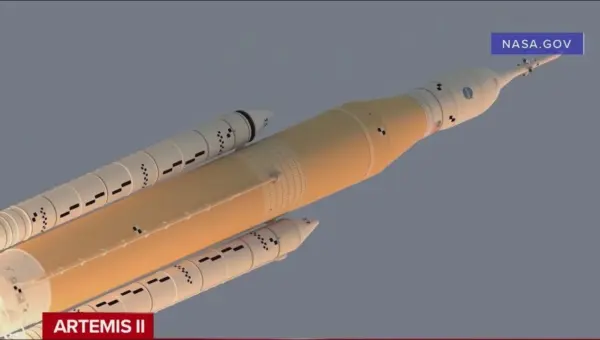
NASA's Artemis 2 mission is launching four astronauts on a 10-day lunar journey, marking a significant step towards building a Moon base by 2028. This mission aims to test technologies and gather data crucial for future human expeditions to Mars.


Artemis 2 Rockets Toward Moon: Humans Fly Furthest Ever
NASA's Artemis 2 mission has launched, sending four astronauts on a lunar flyby and marking humanity's return to deep space for the first time since 1972. This historic mission will see humans travel further from Earth than ever before, testing critical systems for future lunar exploration.
Artemis II Crew Blasts Off for Lunar Orbit
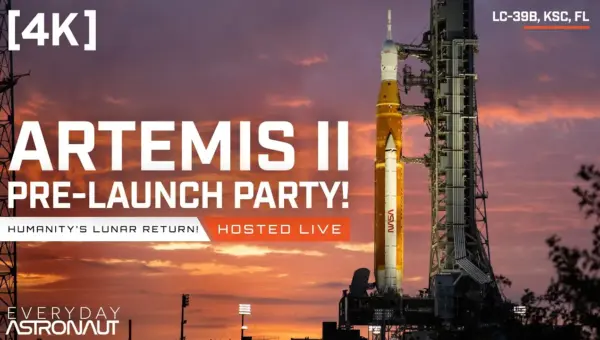
Humans are heading back to the Moon with the Artemis II mission, marking the first crewed lunar journey since 1972. The mission will test the Orion spacecraft and the powerful SLS rocket in deep space.