Artemis II Launches: Humans Blast Off to Moon After 50 Years
NASA's Artemis II mission successfully launched yesterday, sending four astronauts on a ten-day journey around the Moon. This marks the first human voyage to lunar space in over 50 years. The mission will test spacecraft systems and allow astronauts to view the far side of the Moon.

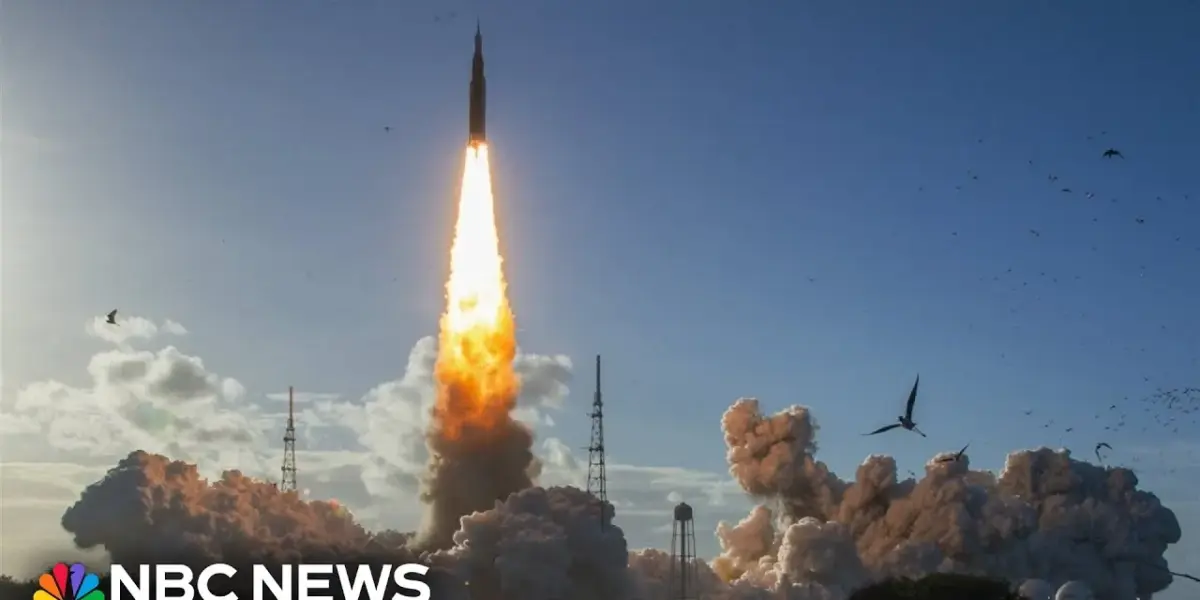
Artemis II Blasts Off: A New Era of Lunar Exploration Begins
The nation is looking to the stars this morning with the historic launch of the Artemis II mission. Yesterday at 6:35 p.m. Eastern, NASA’s most powerful rocket ever built lifted off from the Kennedy Space Center in Florida. This launch marks the first time in over 50 years that humans have left Earth with the Moon as their destination. The mission is capturing the imagination of the entire country as it begins a journey that will take the crew around the Moon and back to Earth.
Meet the Artemis II Crew and Their Orion Spacecraft
The Orion spacecraft, nicknamed ‘Integrity,’ will be home to the four astronauts for the next ten days. While they won’t be landing on the Moon this time, this lunar flyby is a major step in NASA’s plan to extend humanity’s reach further into space. Senior correspondent Tom Costello, who watched the launch up close, described the event as a tremendous success, with everything going exactly as planned.
Journey to the Moon: What to Expect
After liftoff, the Artemis crew quickly entered a high orbit around Earth. This evening, they will perform a ‘trans-lunar injection.’ This means they will fire engines to begin their journey to the Moon, traveling at speeds of Mach 33, or over 24,000 miles per hour. The trip to the Moon is expected to take about four days. Once there, the crew will perform a large loop around the Moon, including flying over the far side – a part of the Moon humans have never seen before. This lunar flyby is a key priority for the mission.
Testing the Limits: Manual Flight and System Checks
During the mission, pilot Victor Glover manually flew the Orion spacecraft for a period. This test was crucial to ensure all systems, including the ability to fly the spacecraft manually, are working correctly. While Orion is mostly controlled by computers and Mission Control in Houston, having manual control capability is vital. The astronauts are currently in Earth orbit, continuing to test their systems before heading to the Moon.
Expert Insights: A New Beginning for Space Exploration
Astronomer and astrophysicist Dr. Emily Rice and former NASA astronaut Jose Hernandez joined the discussion about the mission’s significance. Dr. Rice described the launch as ‘really, really fun’ and celebrated with the online space community. Hernandez felt nostalgic, wishing he could be on board, and called it ‘a new era of space exploration.’ He emphasized that this is a test flight, crucial for evaluating radiation protection and medical kits.
“Looking on the dark side of the moon, man, isn’t that exciting? Never been there before. And we’re going to be the first ones there.” – Jose Hernandez, Former NASA Astronaut
The View from Space: A Life-Changing Perspective
When asked about the experience of seeing Earth from space, Hernandez described it as ‘amazing.’ He said the view made him an ‘instant environmentalist,’ highlighting the thin, delicate balance of Earth’s atmosphere. He believes this is why studying Earth is so important, and now it’s time to establish a lunar base as a stepping stone for missions to Mars and beyond.
Technical Details: Speed and G-Force
Dr. Rice explained the trans-lunar injection burn, which will propel the spacecraft towards the Moon at speeds over 20,000 mph. She noted that astronauts might feel some G-force during these engine burns, but likely less than during liftoff from Earth, as the strongest gravitational pull is near the planet’s surface. Once in motion away from Earth, the feeling of acceleration diminishes.
Why a Lunar Flyby Matters
The mission’s focus on flying around the Moon, rather than landing, is crucial. Seeing the far side of the Moon with human eyes for the first time in decades is a significant achievement. Astronauts will be taking pictures, guided by geologists on the ground. While they will be about 4,000 miles from the Moon’s surface, capturing images of the far side is considered enormous progress.
Comparing Artemis to Apollo: A Technological Leap
Hernandez compared the Artemis mission to the Apollo program, noting the vast technological advancements. He pointed out that 50 years ago, technology relied on vacuum tubes, and cell phones now have more computing power than the entire Apollo system. This new technology allows for longer stays on the Moon’s surface in the future.
Broader Implications: Future Missions and Global Politics
While the Artemis II mission focuses on lunar exploration, the transcript also touches upon unrelated political news regarding a conflict in Iran and a potential shutdown of the Department of Homeland Security. These segments, while present in the original broadcast, are not directly related to the Artemis II mission and are excluded from this article to maintain focus on the space exploration theme.
What’s Next for Artemis?
The Artemis II mission is a vital test flight paving the way for future lunar landings and sustained human presence on the Moon. The data and experiences gained from this ten-day journey will inform subsequent missions, bringing humanity closer to establishing bases on the Moon and eventually venturing to Mars.
Source: This Morning’s Top Headlines – April 2 | Morning News NOW (YouTube)

Related Articles

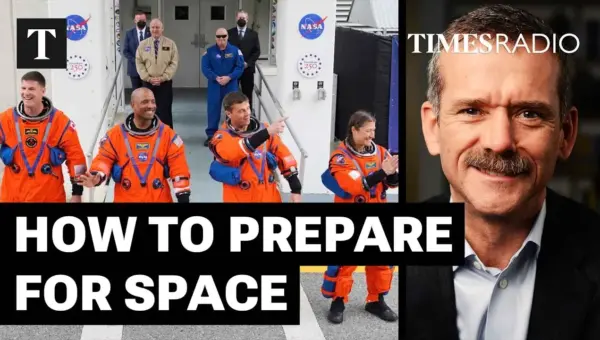
Astronaut Chris Hadfield on Artemis Prep & Space’s Human Heart
Former astronaut Chris Hadfield emphasizes that space exploration's greatest challenge is mental, not physical. He discusses the intense preparation required for missions like Artemis and reflects on the deeply human emotions involved in spaceflight, comparing it to our innate drive to explore.


Humans Return to Moon Orbit After 52 Years
Humans are heading back to the moon for the first time in over 50 years with the Artemis II mission. The four-astronaut crew will orbit the moon, marking a historic return to deep space exploration. Meanwhile, political developments include President Trump's warnings of further strikes against Iran and a leadership change at the Justice Department.

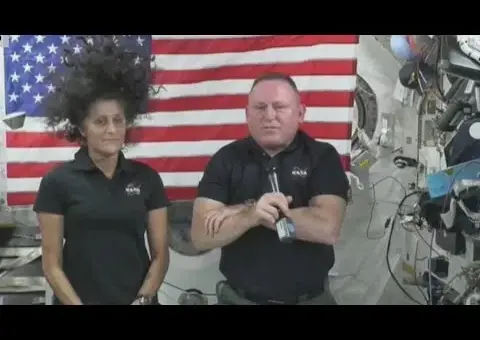
Artemis II Fuels New Space Race Era
NASA's Artemis II mission, sending astronauts beyond the Moon for the first time in 50 years, signals a new era of space exploration. Astronaut Butch Wilmore's insights from past challenges and the mission's pristine progress highlight renewed ambition amidst global space competition. This journey is poised to reshape international relations and technological leadership.