Artemis II Launches: Humanity’s Next Giant Leap to the Moon
The Artemis II mission has successfully launched from NASA's Kennedy Space Center, marking a historic return of humans to lunar exploration. Four astronauts are embarking on a ten-day journey around the Moon, laying the groundwork for future lunar bases and eventual Mars missions. This ambitious undertaking signifies a new era in space exploration and a renewed global race to the stars.


Artemis II Blasts Off for Historic Moon Mission
A new era of space exploration began today as the Artemis II mission launched from NASA’s Kennedy Space Center. The powerful Space Launch System rocket roared to life, carrying four astronauts on humanity’s next great voyage to the Moon. This marks the first human test flight of the Artemis generation, a significant step forward in returning humans to lunar exploration.
A Powerful Lift-Off and a Journey Begins
The liftoff was a spectacular display of power, with an astounding 8.8 million pounds of thrust propelling the rocket. The Space Launch System (SLS), the most powerful rocket ever to launch humans from Kennedy Space Center, accelerated the Orion space capsule to over 17,000 miles per hour. Thousands of spectators lined the coast, witnessing this historic climb into the heavens. Eight minutes and 40 seconds after launch, the engine cutoff confirmed the crew was safely on their way.
Meet the Artemis II Crew
On board the Orion capsule are Commander Reid Wiseman, Pilot Victor Glover, Mission Specialist Christina Koch, and Canadian Space Agency Mission Specialist Jeremy Hansen. Before suiting up, the crew shared a traditional card game to ward off any bad luck. They then walked out to applause, sharing final goodbyes with family members from a distance to prevent any last-minute illnesses.
A Family Affair and a Shared Dream
The astronauts’ families were present to support them. Reid Wiseman was seen with his two daughters, Victor Glover with his wife and four daughters, Christina Koch with her husband, and Jeremy Hansen with his wife and three teenagers. The sight of thousands cheering them on underscored the national and global significance of this mission. The crew entered the White Room at the launchpad, signing the wall for the first time before boarding the Orion capsule, where technicians helped them buckle into their seats.
A Ten-Day Voyage to the Moon and Beyond
After a four-hour wait, the rocket blasted off. The Artemis II mission is a ten-day, 600,000-mile trip. Its primary goal is to lay the groundwork for landing astronauts on the Moon and building a lunar base by the end of the decade. This mission is seen as a crucial part of NASA’s strategy to eventually send humans to Mars.
Strategic Imperative: The New Space Race
Retired NASA astronaut Steve Robbins highlighted the strategic importance of the Artemis program. He noted that America is betting on this technology to return to the Moon before China can establish its own presence. This creates a geopolitical imperative, with the U.S. aiming to regain a leading position in space exploration. The ultimate goal is not just the Moon, but using it as a stepping stone for missions to Mars.
Astronauts’ Mindset and Teamwork
Robbins also shared insights into the astronauts’ mindset. After years of training, they are eager to execute their mission. He emphasized the critical importance of teamwork and trust within the confined space of the Orion capsule. “You have each other’s back,” he stated, highlighting the deep bond formed over years of preparation. This level of communication and mutual reliance is essential for human spaceflight success.
“We have a beautiful moonrise. We’re headed right at it.”
– Artemis II Mission Commander Reid Wiseman
A New Era, Echoes of Apollo
The mission commander’s words, “We have a beautiful moonrise. We’re headed right at it,” captured the awe and determination of the crew. The naming of their capsule, “Integrity,” reflects the values they hold. While this mission echoes the spirit of the Apollo program, it operates in a vastly different technological landscape, with the potential for global connection through social media.
Critical Next Steps in the Mission
The hours following launch are critical. The crew must ensure they reach the correct altitude and orbit for their planned maneuver towards the Moon in about 24 hours. The Orion capsule, about 33% larger than the Apollo capsules, will separate and begin its journey. Early indications suggest the mission is proceeding flawlessly.
Broader Implications and Future Goals
The Artemis II mission is more than just a trip around the Moon. It’s a statement of intent in a new space race, with China aiming to land astronauts on the Moon by 2030. If successful, Artemis II could pave the way for an American lunar landing in just two years. The ultimate ambition is to establish a lunar presence as a frontier outpost, aiding future human exploration of Mars and potentially answering fundamental questions about life beyond Earth.
Source: NBC Nightly News Full Episode – April 1 (YouTube)

Related Articles

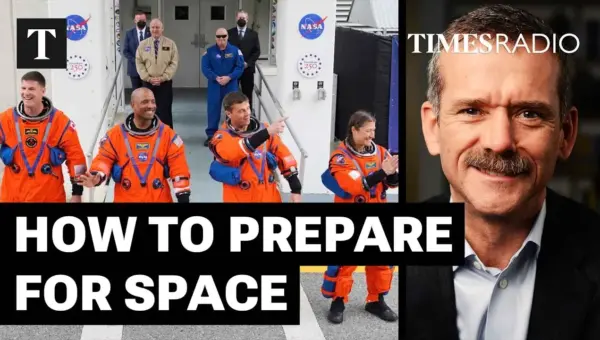
Astronaut Chris Hadfield on Artemis Prep & Space’s Human Heart
Former astronaut Chris Hadfield emphasizes that space exploration's greatest challenge is mental, not physical. He discusses the intense preparation required for missions like Artemis and reflects on the deeply human emotions involved in spaceflight, comparing it to our innate drive to explore.


Humans Return to Moon Orbit After 52 Years
Humans are heading back to the moon for the first time in over 50 years with the Artemis II mission. The four-astronaut crew will orbit the moon, marking a historic return to deep space exploration. Meanwhile, political developments include President Trump's warnings of further strikes against Iran and a leadership change at the Justice Department.

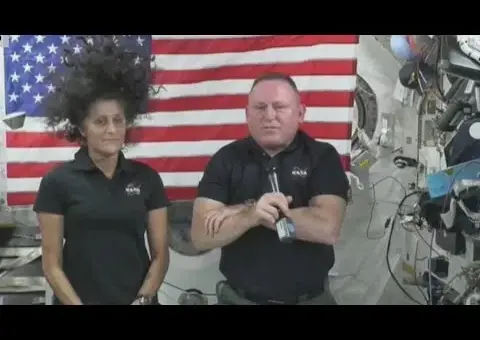
Artemis II Fuels New Space Race Era
NASA's Artemis II mission, sending astronauts beyond the Moon for the first time in 50 years, signals a new era of space exploration. Astronaut Butch Wilmore's insights from past challenges and the mission's pristine progress highlight renewed ambition amidst global space competition. This journey is poised to reshape international relations and technological leadership.