Artemis II Fuels Up for Historic Moon Flyby Mission
NASA's Artemis II mission is fueling up for a historic lunar flyby, the first human voyage beyond Earth orbit in over 50 years. The mission aims to test critical spacecraft systems and astronaut health in deep space. Future Artemis missions plan to establish a sustainable presence on the moon, potentially at the resource-rich lunar south pole.


Artemis II Fuels Up for Historic Moon Flyby Mission
NASA’s Artemis II mission is powering up for its groundbreaking journey, marking humanity’s first flight to the moon in over 50 years. The mission is set to launch tonight, carrying four astronauts on a lunar flyby that will push them farther from Earth than any humans have traveled before. This mission is a critical step in NASA’s long-term plans to establish a sustained presence on the moon and eventually send astronauts to Mars.
A Return to Lunar Space
Artemis II is designed as a quick out-and-back mission, lasting less than 10 days. Unlike the Apollo missions of the past, this flight will not involve a moonwalk or a lunar landing. Instead, the four-person crew will orbit the moon and travel thousands of miles beyond its far side before returning to Earth. This mission is seen as a vital precursor to future lunar landings and the establishment of a permanent moon base.
Behind the Scenes: A Massive Team Effort
The preparation for Artemis II involves thousands of people, including experts in various engineering fields such as life support, propulsion, and electrical systems. Les Johnson, a former NASA chief technologist who worked on the Artemis I mission, highlighted the immense teamwork required. “Literally thousands of people have touched this vehicle,” Johnson explained. “Experts and engineers… working on this. And it really is truly a team effort in a big way.”
Critical Fueling Operations Underway
A key focus during the final preparations is the fueling of the massive rocket. This process involves loading super-cold liquid hydrogen and liquid oxygen into the rocket’s tanks. “You worry about leaks and all those kinds of things. It’s a very critical moment,” Johnson noted. Special attention is paid to detecting potential leaks of liquid hydrogen, which is highly flammable. NASA’s ground crews and onboard sensors are constantly monitoring the vehicle to ensure safety.
Extensive Astronaut Training
The Artemis II crew, consisting of astronauts Reid Wiseman, Victor Glover, Christina Koch, and Jeremy Hansen, has undergone rigorous training to prepare for the mission’s challenges. Space is a dangerous environment, and the astronauts must be ready for any eventuality. “The crew really has to train for every possible contingency,” Johnson stated. “You hope everything goes according to plan and there are no issues, but nature is really against you on this whole flight.” The training ensures the crew can react quickly and effectively to unexpected situations, drawing lessons from past missions like Apollo 13.
Goals of the Test Flight
Artemis II is primarily a test flight to validate the systems that will be used in future lunar missions. “This is really a test flight in every sense,” Johnson said. The mission will test the Orion spacecraft’s systems in the deep space environment and practice rendezvous and proximity operations with the rocket’s upper stage. This practice is crucial for future missions that will involve docking and landing on the moon. The flight will also assess how well the spacecraft’s systems perform with a full crew onboard, building on the success of the uncrewed Artemis I mission.
Understanding Astronaut Health in Deep Space
A significant aspect of Artemis II and subsequent missions will be studying the effects of deep space on astronaut health. Long-duration spaceflight can lead to muscle weakness and bone density loss, similar to osteoporosis. “The human body doesn’t do well in the absence of gravity over time,” Johnson explained. NASA has been developing exercise regimes and other countermeasures on the International Space Station for decades to combat these effects. Artemis II will carry these proven techniques into deep space to help astronauts stay healthy during their journey.
Targeting the Lunar South Pole
NASA’s ambitious plans include building a moon base at the lunar south pole. This region is of particular interest due to its unique environmental conditions. “The South Pole is key,” Johnson stated. Unlike most of the moon, which experiences long periods of darkness, certain areas at the south pole receive near-continuous sunlight. This provides a consistent power source for a base. Additionally, the south pole is believed to contain significant deposits of water ice in permanently shadowed craters. This ice can be used for drinking water, and its components, hydrogen and oxygen, can be broken down to create rocket fuel, making the south pole an ideal location for a sustainable lunar presence.
A View of Home and the Future
For the astronauts, the mission offers a profound perspective. Looking back at Earth from space, they will see the only known place in the universe where life exists. “When they are at the moon, they’ll be able to put up their thumb and with their thumb block out the view of where every other human that’s ever lived except them and the Apollo astronauts spent their entire lives,” Johnson reflected. This view is expected to be a deeply emotional experience, emphasizing humanity’s place in the cosmos and the significance of taking the first steps to spread life throughout the solar system.
A Multinational Endeavor
While the Artemis II crew is primarily American and Canadian, the Artemis program is a global effort. “This isn’t just a US endeavor,” Johnson emphasized. International partners, including countries from Europe and Japan, are contributing hardware and will send astronauts to future multinational bases on the moon. This collaborative approach signifies a new era of space exploration, working together to achieve common goals beyond Earth.
Source: Fueling Operations Underway for Artemis II Mission (YouTube)

Related Articles
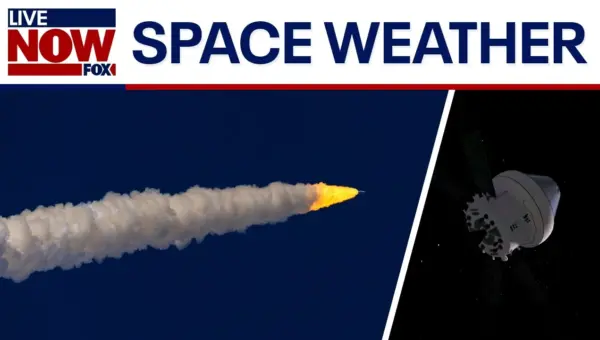
Artemis II Crew Faces Space Weather Threats to Moon Mission
NASA's Artemis II mission is underway, with astronauts embarking on the first lunar trip in over 50 years. The crew faces potential space weather threats, including solar flares and radiation, but NASA has implemented advanced shielding and monitoring systems for their protection. This mission marks a significant leap in safety and knowledge compared to the Apollo era, paving the way for future endeavors like Mars exploration.


Artemis II Mission: Humans Loop Moon After 50 Years
The Artemis II mission has launched four astronauts on a historic 10-day journey around the Moon, the first crewed lunar mission in over 50 years. This flight tests NASA's powerful SLS rocket and Orion spacecraft, paving the way for future lunar landings and deeper space exploration.


Artemis II Astronauts Fly Past Moon on Historic Deep Space Test
Artemis II has launched, sending four astronauts on a historic 10-day mission around the moon, marking humanity's first crewed journey beyond Earth orbit in over half a century. The mission tests the Orion spacecraft and life support systems, paving the way for future lunar landings.