Artemis II Crew Shares Profound Earthly Insights
The Artemis II crew returned with profound insights, emphasizing the shared human experience and a renewed appreciation for Earth over scientific data. Their reflections highlight gratitude, teamwork, and a call for deeper understanding, offering a global perspective on our interconnected planet.

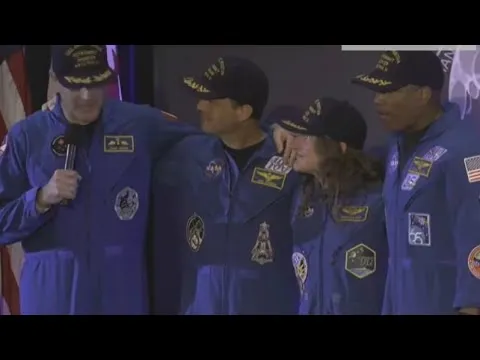
Artemis II Astronauts Reflect on Earth’s Fragility and Human Connection
Returning from their historic mission, the Artemis II crew shared powerful reflections on their journey, emphasizing the profound human experience and their renewed appreciation for planet Earth. While the scientific discoveries are significant, the astronauts highlighted the emotional and existential impact of seeing our world from space. This perspective offers a unique lens through which to view global challenges and opportunities.
A Shift in Perspective: The Human Experience Above All
The crew spoke passionately about the “human experience” of their mission, suggesting it was more impactful than the scientific data collected. This focus on shared humanity and connection resonates deeply, especially in a world often divided by borders and differing interests. They expressed deep gratitude for their families, NASA, its leadership, and the international partners who supported their mission. This includes acknowledging the bravery and dedication of the teams on the ground, whose meticulous work often goes unnoticed but is crucial for success.
Gratitude and Teamwork: Pillars of Success
Gratitude was a recurring theme, extended not only to the support systems but also to the astronauts themselves. They acknowledged the courage required for such a mission and the extensive training that prepared them. The crew emphasized the importance of teamwork, describing their bond as a valuable life skill. They noted that while joint training is vital, maintaining that connection requires ongoing commitment. This highlights how strong relationships and shared goals are essential for achieving complex objectives, whether in space exploration or on Earth.
A Call for Deeper Understanding
The astronauts urged listeners to look beyond the surface, suggesting that the true impact of their journey lies in a deeper understanding of ourselves and our place in the universe. They implied that their experience serves as a reflection, inviting others to find meaning and connection in their own lives. This call for introspection and shared purpose is particularly relevant as nations grapple with interconnected global issues.
Global Impact: A Unified View of Earth
The Artemis II mission, by bringing astronauts back with a shared perspective of Earth, subtly reinforces the idea of a single, interconnected planet. Seeing Earth as a fragile blue marble, as many astronauts have described it, can foster a greater sense of global responsibility. This shared viewpoint can encourage international cooperation on critical issues like climate change, resource management, and disaster response. The emphasis on human experience and gratitude also points to the universal values that can bridge cultural and political divides. As humanity continues to explore space, these missions serve not just as scientific endeavors but also as powerful reminders of our shared destiny and the need for collective action.
Historical Context: Humanity’s Reach for the Stars
The Artemis program builds on decades of space exploration, from the Apollo missions that first landed humans on the Moon to the International Space Station (ISS) which has fostered international collaboration in orbit. Each step outward has provided new perspectives on Earth. The Apollo missions, for instance, famously captured the “Earthrise” photo, which significantly influenced environmental awareness. The ISS has shown that nations, even those with political differences, can work together effectively in space for mutual benefit. Artemis II, as the first crewed mission to go around the Moon in over 50 years, represents a renewed commitment to lunar exploration and a stepping stone for future human missions to Mars. It carries the legacy of past achievements while forging a new path forward.
Economic and Political Considerations
While this particular reflection focuses on the human and emotional aspects, space exploration inherently involves significant economic investment and political will. Nations like the United States, through NASA, invest billions of dollars in these programs, driven by scientific curiosity, technological advancement, national prestige, and economic opportunities in the burgeoning space sector. International partnerships, such as those involving the European Space Agency (ESA) and the Canadian Space Agency (CSA), are crucial for sharing costs and expertise. These collaborations also serve diplomatic purposes, strengthening relationships between participating countries. While no sanctions or specific trade figures were mentioned in the astronauts’ statements, the success of such missions relies on sustained funding and international cooperation, which can be influenced by broader geopolitical and economic conditions.
Future Scenarios: Sustaining Momentum
The success and impact of missions like Artemis II depend on continued support and investment. One scenario is the sustained growth of space exploration, leading to further international collaboration, technological breakthroughs, and a deeper understanding of our solar system. Another scenario could involve shifts in political priorities or economic downturns that slow down ambitious space programs. The crew’s emphasis on shared human experience and global perspective suggests that future missions might increasingly focus on their role in fostering international unity and environmental awareness, potentially influencing public and political support for continued exploration.
Source: Astronauts from Artemis II crew speak after returning to Houston | NewsNation Live (YouTube)

Related Articles


Navy Ship Aids Lunar Mission, Boosting US Space Power
The USS John P. Murtha's return to San Diego with the Artemis II Orion capsule highlights the U.S. Navy's vital role in space exploration. This successful recovery showcases American technological prowess and reinforces its global leadership in venturing beyond Earth.

Astronaut Reveals Moon Base Plan for Mars Missions
Veteran astronaut Butch Wilmore explained that establishing a base on the Moon is crucial for future Mars missions. He noted the need to learn how to operate far from Earth before attempting the journey to Mars. The current era of space exploration is exciting but requires sustained effort and public support.


Artemis II Astronauts Return: A Giant Leap for Space Exploration
The Artemis II mission has successfully returned to Earth, concluding a groundbreaking voyage that sent astronauts further into space than ever before. The mission tested critical technologies for future lunar and Martian exploration and provided valuable scientific data. Experts emphasize the mission's inspirational value and its role in humanity's expansion into the solar system.