Artemis II Crew Reports “Snow Day” as Mission Proceeds Smoothly
NASA's Artemis II mission is off to a smooth start, with astronauts reporting excellent spirits and the Orion spacecraft performing flawlessly. A planned course correction burn was deemed unnecessary, and the crew has captured stunning images of Earth. The mission continues to gather vital data for future lunar exploration.

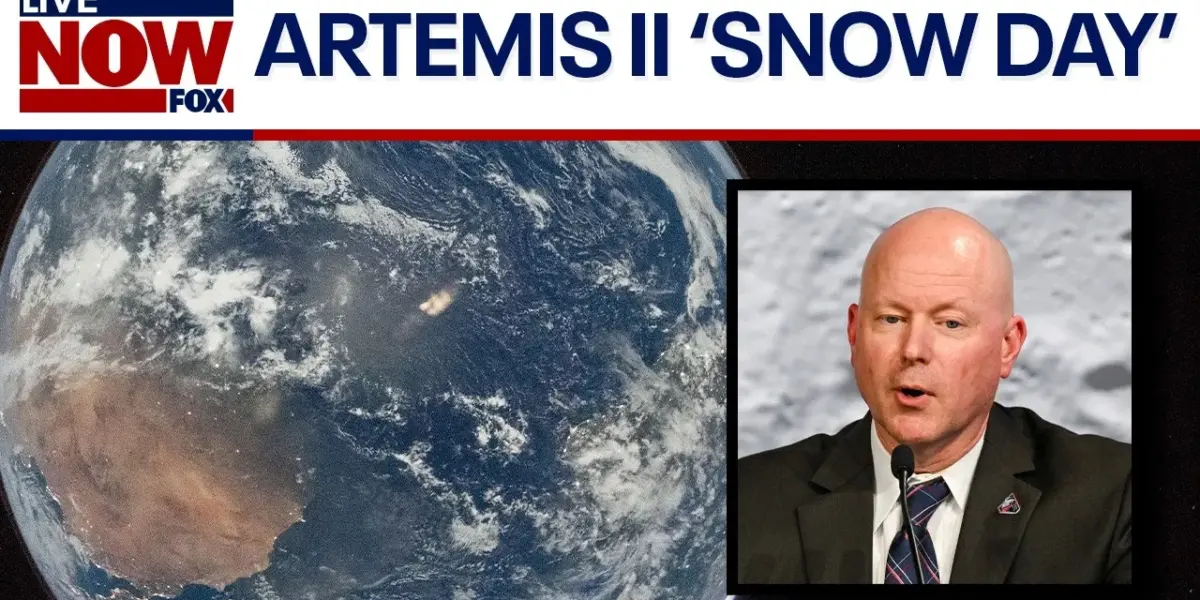
Artemis II Mission Update: No Correction Burn Needed, Astronauts Enjoying Journey
NASA’s Artemis II mission continues to impress as the crew journeys toward the Moon. Officials provided an update on the mission’s progress, highlighting the spacecraft’s stellar performance and the crew’s excellent spirits. The mission, which aims to return humans to lunar orbit for the first time in over 50 years, is proceeding smoothly, with no immediate need for course corrections.
Smooth Sailing: “Snow Day” and No Correction Burn
Lakesha Hawkins, deputy director for NASA’s Artemis program, announced that the Artemis II mission is performing exceptionally well. The crew is currently over 100,000 miles from Earth, with about 150,000 miles left to reach the Moon. “The mission continues to perform well overall and the crew is in great spirits,” Hawkins stated during a NASA briefing.
Flight Director Jud Freeling shared that a planned trajectory correction burn, known as OTC1, was not necessary. “The systems are doing so well, navigation and propulsion systems together, that that was not needed,” Freeling explained. This decision highlights the Orion spacecraft’s precise navigation and the effectiveness of its propulsion systems. The need for this burn will be rolled into the next planned correction tomorrow.
The crew even declared a “snow day” of sorts, enjoying a moment of relaxation and taking in the stunning views. “We call amazing things that humans do moonshots for a reason and indeed this is literally and symbolically our moonshot that we are in the middle of,” Hawkins added, emphasizing the historic nature of the mission.
Stunning Views and Spacecraft Performance
Astronauts aboard the Orion spacecraft have captured breathtaking images of Earth from space. One image, taken by pilot Reed Wiseman, shows a backlit Earth with visible auroras and zodiacal light. “It shows a unique vantage point of the crew as they look back at the Earth,” Hawkins described. These images offer a spectacular view of our home planet as the crew ventures deeper into space.
Howard Hugh, Orion program manager, reported that all spacecraft subsystems are performing exceptionally well. “Everything is nominal and as expected,” Hugh said. The trans-lunar injection burn, which sent the crew toward the Moon, used propellant within 5% of predicted limits. “The performance for that 5 minutes 57 seconds was outstanding,” he noted.
The air revitalization system is also functioning optimally, maintaining healthy levels of carbon dioxide scrubbing and humidity. Other subsystems are performing as expected, or even better in some cases. This strong performance is crucial for a mission carrying humans into deep space.
Addressing Minor Issues with Redundancy
While the mission is largely going according to plan, NASA is managing a minor issue with the Service Module’s propellant system. One of two redundant helium pressurization branches had to be isolated. “No mission impacts. This is why we build redundancy in the system,” Hugh assured reporters. The second branch is fully operational and capable of supporting the remaining mission burns without regulation.
This redundancy ensures that the mission can continue as planned. The system can operate in a “blowdown mode,” using existing helium pressure to push out fuel and oxidizer, even without the regulated flow from the isolated branch. This demonstrates the robust design of the Orion spacecraft.
Crew Comfort and Future Objectives
The crew’s comfort is also a priority. After initial temperature adjustments, the cabin is now maintained in the low to mid-70s Fahrenheit, with humidity levels supporting the effectiveness of the CO2 scrubbers. “We’ve got a lot of different kind of knobs to turn to enable the comfort level or temperature changes,” Hugh explained, highlighting the various controls available to manage the cabin environment.
Looking ahead, the crew will conduct a manual piloting test tomorrow, exploring different thruster modes to understand how the vehicle handles. They will also have an opportunity for a “selfie moment,” similar to what was done on Artemis I, using the spacecraft’s cameras to capture images of the Orion vehicle.
The Importance of Human Eyes in Space Exploration
Addressing questions about the value of human observation compared to satellite imagery, NASA officials emphasized the unique capabilities of the human eye. “Your eyes, the human eyes can resolve details much better than taking a picture and then looking at the at the picture, even with a telephoto lens,” explained one official. This human element is critical for scientific observation and understanding the lunar surface in ways that automated systems might miss.
The Artemis II mission is a vital step in NASA’s broader exploration goals. It serves as a crucial test flight for the transportation system needed to send humans back to the Moon and eventually to Mars. “We have to walk before we can run,” one speaker stated, underscoring the importance of testing and learning with each mission.
Looking Ahead: Lunar Flyby and Future Missions
The mission is building towards its lunar flyby on Monday, a significant milestone that will allow the crew to see the lunar surface with their own eyes. This event marks a critical step in NASA’s long-term objective of establishing a sustainable presence on the Moon. The insights gained from Artemis II will pave the way for future missions, including the eventual landing of astronauts on the lunar south pole.
NASA continues to monitor space weather, including a recent geomagnetic storm watch, with radiation specialists on hand to ensure crew safety. While this particular event is not expected to pose a significant threat, the agency remains vigilant. The success of Artemis II is not just about reaching the Moon, but about learning, adapting, and building the foundation for humanity’s next giant leaps into the cosmos.
Source: Artemis II update: No need for first correction burn, astronauts declare 'snow day' (YouTube)

Related Articles


Young Space Enthusiast Inspires Nation’s Space Ambitions
A young boy's viral enthusiasm for the Artemis space launch has reignited public interest in space exploration. His clear explanations and astronaut praise highlight a generation inspired by the cosmos. This renewed passion could shape future space policy and international cooperation.
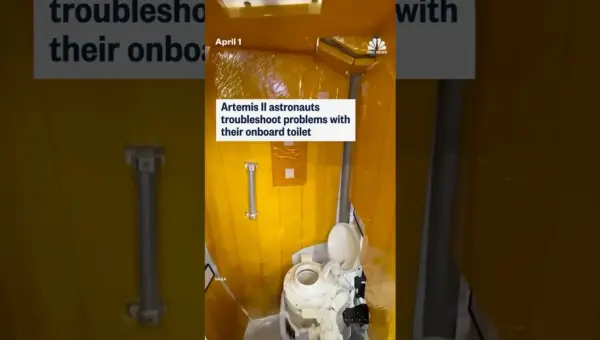
Artemis II Toilet Trouble: Astronauts Fix Spacecraft “Plumbing”
Astronauts aboard the International Space Station are troubleshooting a problem with the onboard waste management system. Mission control is guiding Christina Koch through specific steps to repair the space toilet. This fix is crucial for upcoming Artemis II lunar missions.
Harvard Professor Challenges NASA on Mars Object
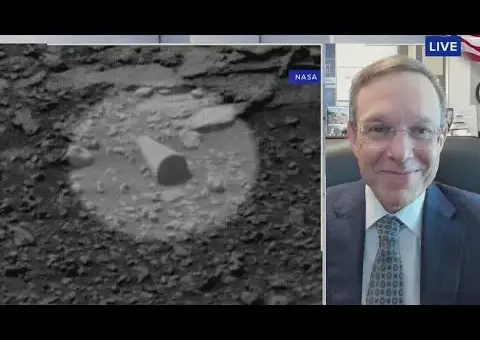
Harvard Professor Avi Loeb is questioning NASA's explanation of a 'party hat'-shaped object on Mars. While NASA calls it a natural rock, Loeb believes it warrants further investigation and highlights the importance of curiosity-driven science.