Artemis II Crew Relives Launch; Moon Landing Eyed by 2028
The Artemis II crew reflected on their mission, with launch being a standout moment they'd relive. As the Orion capsule prepares for splashdown, discussions turn to the future, with hopes of lunar landings by 2028 and significant technological and commercial advancements.


Artemis II Astronauts Reflect on Mission Highlights Amidst Earth Re-entry
As the Artemis II mission nears its conclusion, the four astronauts aboard the Orion capsule have shared reflections on their historic journey. Congressman Brian Babin of Texas had the opportunity to question the crew, focusing on their most cherished moments. One astronaut, speaking for the team, identified the launch as the experience they would most like to relive. The powerful ascent, though brief – shorter than the press conference itself – represented a dynamic and crucial phase of their mission. The astronaut expressed a desire to replay the launch in slow motion to fully imprint the memories.
Artemis II Orion Capsule Poised for Pacific Splashdown
The Artemis II Orion capsule, named ‘Integrity,’ is set to splash down in the Pacific Ocean off the coast of San Diego. The landing is scheduled for 8:07 p.m. Eastern Time, approximately four hours and 43 minutes after the interview segment. Earlier, the capsule completed a critical thruster maneuver, known as “the burn,” to adjust its trajectory for a safe re-entry into Earth’s atmosphere. Before splashing down, the Orion capsule will separate from its European Service Module, which houses its life support systems.
Journey Through the Atmosphere: A Fiery Re-entry
The re-entry process is expected to be intense, lasting about 13 minutes. Traveling at speeds up to 24,000 miles per hour, Orion’s heat shield will face temperatures soaring to 5,000 degrees Fahrenheit as it cuts through Earth’s upper atmosphere. During this critical phase, a six-minute communications blackout will occur, cutting off contact between the crew and mission control due to the extreme heat. At an altitude of 22,000 feet, parachutes will deploy to further slow the capsule’s descent. U.S. Navy teams are on standby to assist the astronauts once they are safely aboard the USS John Stennis.
A Giant Leap for U.S. Space Ambitions
From launch to splashdown, the Artemis II astronauts will have traveled over 695,000 miles, marking a significant milestone in human space exploration. Congressman Babin emphasized the broader implications of the mission, stating it signals the United States’ readiness to return astronauts to the Moon and eventually venture to Mars. He praised the crew’s courage and determination, highlighting their role as representatives of the best of humanity. The astronauts witnessed a spectacular solar eclipse during their mission, offering views of creation that few humans have ever seen, pushing the boundaries of human experience in space.
Future of Lunar Exploration: Boots on the Moon by 2028?
The conversation turned to the future of lunar exploration, with discussions about when American astronauts might once again walk on the Moon. The last time this occurred was during the Apollo 17 mission in 1972. Congressman Babin expressed confidence that American boots could be back on the lunar surface by 2028. He anticipates Artemis III, a mission involving a docking operation, and Artemis IV, which aims to land four astronauts on the Moon that same year. While acknowledging the significant work still ahead, particularly with lander development, Babin remains optimistic, citing strong leadership within NASA.
Commercial Opportunities and Technological Spin-offs
Beyond the exploration aspect, the Artemis program is expected to unlock vast commercial opportunities and drive technological innovation. The goal of establishing a permanent Moon base and developing commercial space stations could lead to advancements akin to those seen during the Apollo program, which yielded everyday technologies like memory foam and water filters. The rapid pace of development, fueled by advancements in artificial intelligence, nuclear propulsion, and quantum computing, is expected to yield numerous practical applications. These innovations will likely spin off into everyday products and services used by Americans, mirroring the legacy of past space missions.
National Security and the Global Space Race
Congressman Babin also underscored the national security implications of the renewed focus on space. He stressed the importance of maintaining a sustained American presence on the Moon, including habitation, mining, and exploration. This presence is viewed as crucial for national security, especially in light of China’s ambitious lunar program, which includes plans for a lunar probe. Babin asserted that the U.S. cannot afford to fall behind in this critical race for space dominance. The Artemis program is seen not just as a scientific endeavor but as a strategic imperative for the United States.
Source: WATCH: Artemis II crew reveals which moment of mission they would relive (YouTube)

Related Articles

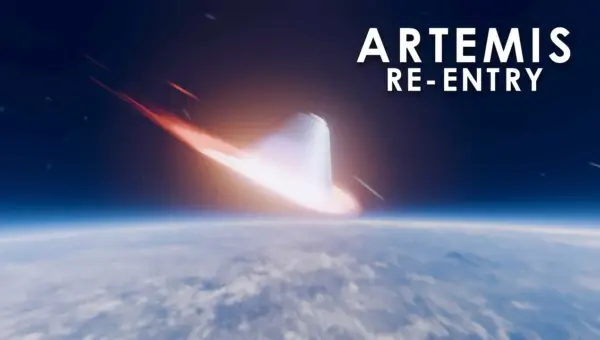
NASA’s Fiery Return: Artemis’s Riskiest 20 Minutes
NASA's Artemis program faces a perilous 20-minute re-entry into Earth's atmosphere. Traveling at 25,000 mph, the Orion capsule endures extreme heat and a communication blackout before deploying a complex parachute system. This critical phase ensures the safe return of astronauts from deep space missions.


Texas Engineer Leads Artemis II Heat Shield Effort
Texas engineer Ronnie Backus discusses his critical role in developing the Orion spacecraft's heat shield for the Artemis II mission. After over a decade of work, Backus and his team have implemented new strategies to ensure a safe return to Earth, addressing concerns from previous missions. The mission represents a significant step in human space exploration, fulfilling a childhood dream for the West Texas native.


Space Toilet Woes: Artemis II Fixes Clog With Sun Power
Artemis II astronauts faced a frozen waste pipe just after launch, proving space toilets are critical. Mission control used solar heat to thaw the clog, leading to a memorable "go for toilet" announcement. This incident highlights the human realities of space exploration.