Artemis II Crew Nears Historic Moon Flyby
The Artemis II mission is nearing a historic lunar flyby, with astronauts preparing for the first trip around the Moon in over 50 years. NASA leaders detailed the crew's health, mission progress, and the scientific objectives for the upcoming lunar observations. The mission emphasizes human health studies and real-time collaboration between ground teams and the crew.

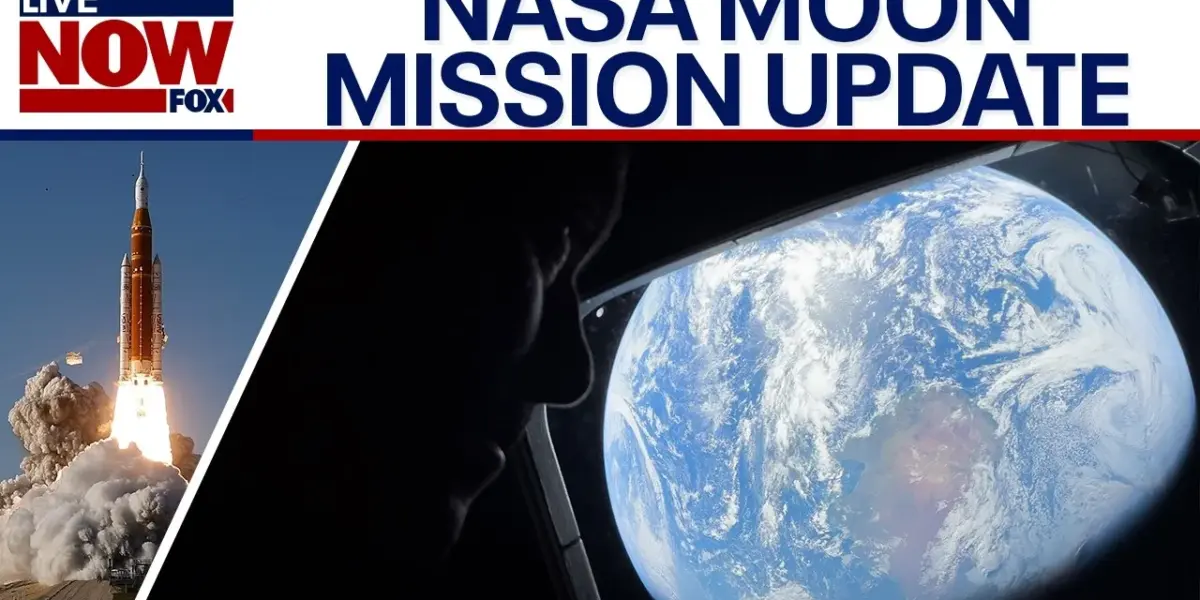
Artemis II Mission Update: Crew Prepares for Lunar Flyby
NASA is providing daily updates on the Artemis II mission as its four astronauts prepare for a historic flyby of the Moon. The crew, currently healthy and on track, is set to make the first lunar flyby in over 50 years. Leaders from NASA’s Artemis program, flight directors, and lunar science specialists shared insights into the mission’s progress during a recent briefing at Johnson Space Center in Houston.
A Glimpse Inside the Orion Spacecraft
The Artemis II crew, aboard the Orion spacecraft named ‘Integrity,’ has been sharing breathtaking views. They described seeing Earth nearly in full eclipse while the Moon was in full daylight, a perspective only possible when positioned halfway between the two celestial bodies. Crew members expressed awe at the three-dimensional views of lunar features like Copernicus and Rainier Gama, noting how it mirrored their extensive training.
“It’s just, you know, I’m not one for hyperbole, but it’s the only thing I could come up with just seeing Tao, there’s mountains to the north, you can see Capernicus, Rainier, Gama. It’s just everything from the training, but in three dimension and absolutely unbelievable,” shared one crew member about the visual experience.
Inspiration from Apollo’s Legacy
The Artemis II crew received a special message of encouragement from Apollo 16 astronaut Charlie Duke. Duke, who landed on the Moon in 1972 in the lunar module named Orion, expressed his pride in seeing a new Orion helping to return humans to the Moon. He shared a family photo, reminding the crew that the world is cheering them on and building upon the Apollo legacy.
“Hello Reed, Victor, Christina, and Jeremy. This is Apollo 16 astronaut Charlie Duke. John Young and I landed on the moon in 1972 in the lunar module we named Orion. I’m glad to see a different kind of Orion helping return humans to the moon as America charts the course to the lunar surface,” Duke stated in his message.
Scientific Objectives and Human Health
Dr. Lorie Glaze, head of NASA’s Artemis program, highlighted the fundamental connection between Earth and the Moon, noting they are made of the same material. The Moon, she explained, serves as a witness to the billions of years of Earth’s evolution. The Artemis II mission aims to complement robotic exploration with human observation, gathering crucial data for future lunar missions.
A key focus is on human health studies, such as the Avatar experiment, which will inform how to keep crews healthy on longer missions. The mission also serves as a critical test case for real-time collaboration between flight operations, science teams, and the crew, essential for future surface operations.
Mission Operations and Technical Milestones
Rick Henling, flight director for the mission, detailed the crew’s activities, including manual piloting exercises and testing the spacecraft’s thrusters. The crew also practiced donning their launch and entry suits in zero gravity and simulated contingency scenarios for extended suit use. These preparations are vital for ensuring crew safety and mission success.
A significant technical milestone is the upcoming outbound trajectory correction maneuver, the first of its kind for this mission, as Orion has maintained an exceptionally precise path. The mission will also feature a demonstration of increased bandwidth using an optical communication system, reaching 100 megabits per second. A major event will be Orion entering the lunar sphere of influence, where the Moon’s gravity will exert a stronger pull than Earth’s.
A Detailed Lunar Flyby Plan
Kelsey Young, Artemis II lunar science lead, described the meticulous planning for the upcoming lunar flyby. The crew will follow a detailed lunar targeting plan, guiding their observations for several hours. This plan includes specific targets linked to the mission’s 10 lunar science objectives, with prompts for both camera use and direct visual observation.
The crew trained extensively for these observations, practicing in simulators with mockups of the Orion spacecraft and even a giant inflatable Moon globe. During the flyby, the crew will work in pairs to maintain focus and freshness, observing features like the Apollo 12 and 14 landing sites and unique lunar formations like Reiner Gamma. They will also witness an eclipse from Orion’s vantage point and observe planets like Mercury, Venus, Mars, and Saturn.
Engaging the Public
NASA is actively tracking public engagement metrics, which have been strong since launch. A significant increase in interest is anticipated for the lunar flyby and other key mission events. The mission’s success is not only measured by scientific data but also by its ability to inspire the public, drawing parallels to the widespread fascination during the Apollo era.
The images captured by the crew’s film cameras will be downlinked as bandwidth allows, with remaining footage processed upon the crew’s return. NASA plans to release these images to the public as quickly as possible, continuing the tradition of sharing the wonders of space exploration.
Looking Ahead
With the lunar flyby imminent, all eyes are on the Artemis II crew and the Orion spacecraft. The mission continues to achieve its objectives, providing invaluable data and inspiring a new generation of explorers. The success of this flight will pave the way for future Artemis missions, including landing astronauts on the lunar surface.
Source: NASA gives daily update on Artemis II astronauts, ongoing mission (YouTube)

Related Articles


US Scrambles to Find Missing American Pilot Shot Down in Iran
The US military is intensifying its search for an American pilot shot down in Iran, amid rising international tensions. Meanwhile, wildfires rage in California, fueled by a dry winter, and astronauts on the Artemis II mission share stunning views from deep space.

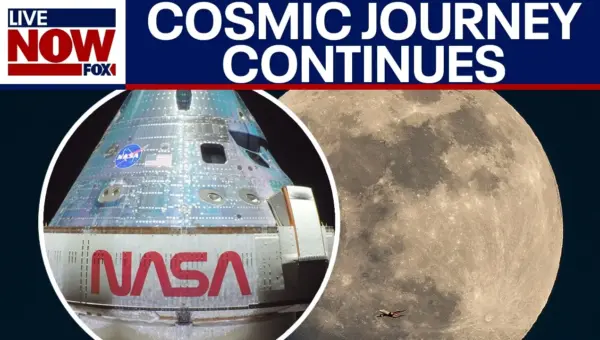
Artemis II Crew Nears Moon, Astronaut Honored for Historic Flight
The Artemis II crew is nearing a historic lunar flyby, set to become the furthest humans from Earth. On their fifth flight day, astronaut Jeremy Hansen was honored with a gold pin for his first spaceflight, a tradition celebrating legacy. The mission continues NASA's ambitious Artemis program, aiming for future lunar landings and beyond.


Artemis II Crew Soars Past Moon, Breaks Space Records
The Artemis II mission is breaking records as its four astronauts journey around the Moon. The crew has surpassed the Apollo 13 distance record and will perform a close lunar flyby. This mission marks a significant step in humanity's return to deep space exploration.