Artemis II Crew Faces Perilous Re-entry After Historic Lunar Flyby
The Artemis II crew is preparing for a dangerous re-entry into Earth's atmosphere after completing a historic journey around the Moon. Concerns linger over the spacecraft's heat shield, identical to one that failed in a previous test. This mission marks humanity's return to lunar vicinity after 50 years and carries significant geopolitical weight in the burgeoning space race.


Artemis II Crew Nears Earth After Historic Lunar Journey
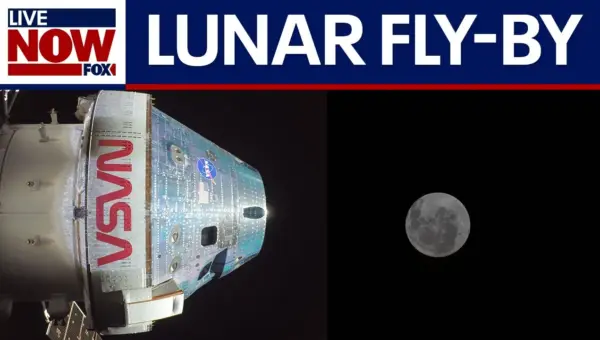
The Artemis II mission, humanity’s first crewed voyage toward the Moon in over 50 years, is nearing its conclusion with the crew preparing for a critical re-entry into Earth’s atmosphere. The four astronauts have spent days traveling farther from Earth than any humans before them, reaching the far side of the Moon and experiencing views never before seen by human eyes.
A Risky Return: Heat Shield Concerns Loom
While the mission has been hailed as a historic success, the most dangerous phase is yet to come: re-entry. This is the second time the Orion spacecraft carrying the crew has attempted atmospheric re-entry. Years ago, an uncrewed test flight experienced problems with its heat shield, and the Artemis II spacecraft uses an identical shield. NASA is addressing this risk by altering the crew’s re-entry trajectory, a maneuver they state will ensure safety. However, as former NASA consultant David Whitehouse noted, “nobody who goes into space and this crew particularly goes into space without knowing the realities of the fact it is dangerous.”
Journey to the Dark Side and Beyond
The Artemis II crew has already achieved significant milestones. Five days ago, they blasted off on a mission that would take them on a lunar slingshot. Using the Moon’s gravity, the spacecraft is being swung around the far side of the Moon, accelerating it back towards Earth. On their journey, the astronauts experienced 40 minutes of complete communication blackout as they passed across the far side of the Moon, a region few humans have ever seen. Mission specialist Christina Koch described the view as “absolutely spectacular,” noting it was “not the moon that I’m used to seeing.” The crew is expected to set a new record for the furthest distance traveled from Earth by humans.
Scientific Gains and Geopolitical Stakes
While the mission is primarily symbolic and focused on testing the spacecraft and crew for future lunar missions, David Whitehouse explained its deeper significance. “This is America’s stake for the intellectual dominance of this century,” he stated. Whitehouse believes that with China’s growing space capabilities, the U.S. must maintain its lead in space exploration to secure its global standing. He drew parallels to the original space race against Russia, emphasizing that falling behind could diminish America’s intellectual influence on the world stage.
A New Era of Lunar Ambition
The Artemis program signifies a renewed focus on lunar exploration, with plans for future moon bases and eventual missions to Mars. However, the program faces challenges, including historical disorganization and competition. Whitehouse pointed out that China has made steady progress, potentially landing astronauts on the Moon near the equator in the next few years, possibly before the U.S. can mobilize its efforts. This has led to a strategic emphasis by the U.S. on the long-term nature of its lunar and Martian ambitions, acknowledging the possibility of losing the short-term race.
The Moon: A Frontier for Cooperation and Conflict
Beyond exploration and potential bases, the Moon has also become a critical strategic asset. Whitehouse highlighted its military importance, not for surface operations, but for using lunar space to hide and protect vital military satellites from surveillance. This dual nature means the Moon is evolving into a new high frontier, presenting opportunities for international cooperation but also potential for future tension and conflict.
Looking Ahead: The Future of Lunar Exploration
As the Artemis II crew prepares for their return, the mission serves as a crucial stepping stone. The data gathered and the crew’s experiences will inform future missions, including the planned lunar landings. The success of Artemis II and the subsequent Artemis missions will be vital for the United States to assert its leadership in space and achieve its long-term goals, while navigating the complex geopolitical landscape of the new space race.
Source: Artemis II Mission Is About More Than Just The Moon | David Whitehouse (YouTube)

Related Articles


Trump Warns Iran, Faces Criticism Amid Escalating Tensions
President Trump issued a series of strong warnings to Iran, setting a deadline for the reopening of the Strait of Hormuz and threatening severe consequences. Meanwhile, the U.S. military successfully rescued a second airman downed in Iran. Democrats criticized the President's rhetoric, calling it dangerous, while economic impacts of the conflict, including rising gas prices, are being felt at home. In space news, NASA's Artemis II crew is set to make history with a lunar flyby, and Pope Francis called for peace on Easter amidst global conflicts.


Trump Tackles Iran Crisis; Artemis II Prepares Lunar Leap
President Trump will address the ongoing U.S. operations in Iran, while NASA's Artemis II mission prepares for a historic lunar flyby. The White House also hosts its annual Easter Egg Roll with a patriotic theme.

Artemis II Astronauts Shatter Distance Record from Earth
The Artemis II crew has made history by shattering the record for the farthest humans have traveled from Earth during their lunar flyby. The mission involves critical scientific observations and navigating a temporary communication blackout as they orbit the Moon.