Artemis II Crew Faces Fiery Return
The Artemis II crew faces a critical reentry into Earth's atmosphere, a phase demanding precision and resilience. Astronauts will endure intense G-forces and heat as they return from lunar orbit, testing both human endurance and spacecraft technology.

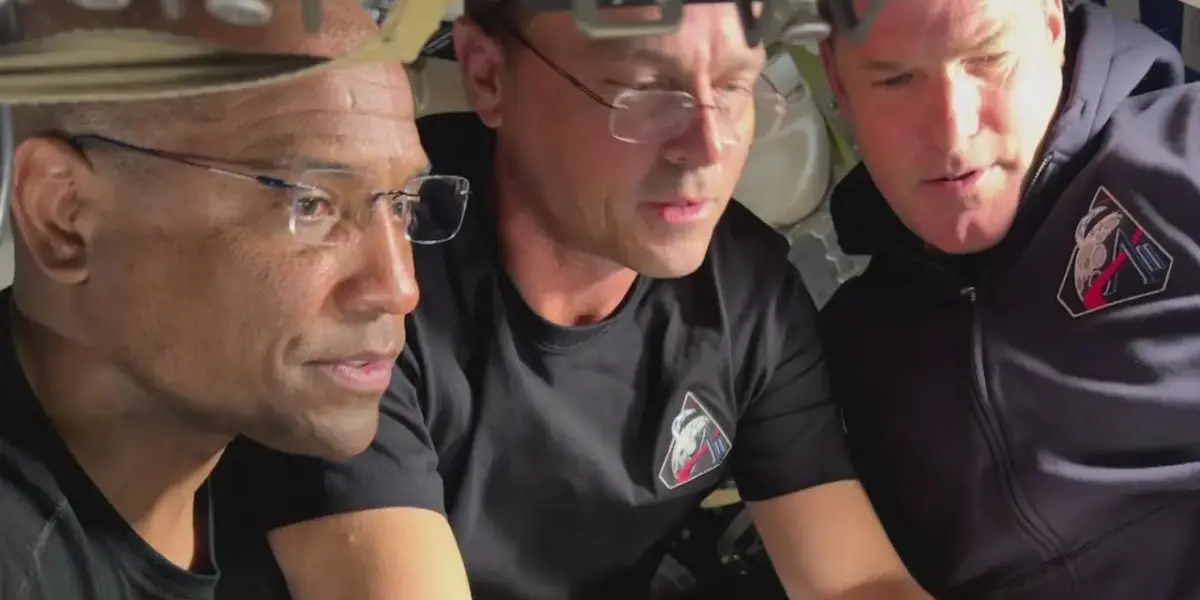
Artemis II Crew Faces Fiery Return
The Artemis II mission is reaching a critical point as its crew prepares for a high-stakes reentry into Earth’s atmosphere. This phase of the mission, often described as the most challenging, tests the astronauts’ training and the spacecraft’s resilience. After a journey around the Moon, the crew will experience intense forces as they hurtle back to Earth at speeds of approximately 25,000 miles per hour.
The Thrills and Dangers of Reentry
Former NASA astronaut Terry Hart explained that reentry is a crucial moment, even after extensive practice. Astronauts will practice this maneuver hundreds of times with trainers before the actual mission. During reentry, they must secure everything inside the capsule and execute precise maneuvers. Mission control teams are on standby, ready to assist if any unexpected issues arise.
Hart emphasized that while simulators are valuable, they cannot fully replicate the real experience. “The training is as close as actual intercourse,” he noted, highlighting that real missions often present small, unexpected events. This is why rigorous training and constant vigilance from mission control are essential.
Understanding the Forces at Play
The reentry process involves immense heat. The heat shield on the spacecraft must dissipate the energy built up during the mission. For about 10 minutes, the crew will endure forces three times the pull of gravity. This means they will feel much heavier, experiencing up to 600 pounds of force on their bodies. Once this intense period passes, the spacecraft will slow down enough to deploy parachutes for a safe splashdown.
The Astronauts’ Physical Experience
Former Space Shuttle Commander Andy Allen described the physical sensations of reentry. While not as jarring as some might imagine, the G-forces build gradually. Allen noted that the experience is more aggressive than during the Apollo missions. A key challenge for astronauts is the disorientation that occurs when gravity returns. In space, the body’s balance system, which relies on gravity, is not used. Once gravity reasserts itself, astronauts can feel like they are falling, even when standing still. Allen likened this to needing to get their “sea legs” back, meaning they might struggle to walk in a straight line for a while after returning to Earth.
Recovery Operations
Allen, who has logged over 900 hours in space across three Space Shuttle missions, also discussed the recovery process. Once the capsule splashes down, recovery teams are expected to reach the spacecraft within minutes. However, it will take some time to bring the capsule aboard a recovery ship and then safely extract the astronauts. This careful process ensures the crew’s well-being after their demanding journey.
Global Impact
The success of the Artemis II reentry is more than just a milestone for this specific mission. It represents a vital step in humanity’s return to the Moon and the development of long-duration space travel. Each successful mission builds confidence and refines the technologies needed for future endeavors, such as establishing a lunar base or sending astronauts to Mars. The data gathered and the lessons learned from these flights are invaluable for advancing space exploration for all nations involved in the international space community.
Historical Context
Reentry has always been a high-risk phase of spaceflight, dating back to the earliest days of space exploration. The Mercury, Gemini, and Apollo programs all faced similar challenges in bringing astronauts back safely. The Space Shuttle program, while using a different vehicle design, also relied on robust heat shields and precise atmospheric entry. The Artemis program builds on this legacy, using advanced materials and technologies to ensure crew safety during these critical moments.
Future Scenarios
A successful reentry for Artemis II will pave the way for more ambitious lunar missions, including landing astronauts on the Moon. Failure, however, could lead to significant delays and a reevaluation of safety protocols. The crew’s ability to handle unexpected events and the performance of the Orion spacecraft’s systems will be closely watched. The data from this mission will directly inform the design and execution of future Artemis missions, including Artemis III, which aims to land the first woman and the next man on the Moon.
Source: Artemis II crew prepares for high-stakes reentry | Morning in America (YouTube)

Related Articles

Astronauts Inspire Nation on Historic Moon Journey Home
Lawmakers connected with the Artemis II astronauts as they prepared for re-entry, praising their inspiring journey around the moon. The crew shared personal reflections and a commitment to future space exploration, highlighting the mission's unifying impact.


Artemis II Nears Earth; Vance to Lead US-Iran Talks
NASA's Artemis II mission is nearing its critical splashdown, with the crew preparing for a high-speed return to Earth. Simultaneously, Vice President JD Vance is set to lead U.S.-Iran talks in Pakistan aimed at securing a ceasefire. Meanwhile, a federal court will review the legality of President Trump's global tariffs.


Artemis II Mission Sparks Cosmic Debate: Are We Alone?
Artemis II mission's upcoming journey sparks conversations on space exploration and the possibility of extraterrestrial life. Hosts Symone Sanders-Townsend and Eugene Scott discussed the mission's significance and the vastness of the universe, questioning humanity's solitude among the stars.