Artemis II Crew Enters Lunar Blackout, Faces Budget Cuts
The Artemis II crew has entered a temporary communication blackout as they successfully passed behind the Moon during their historic flyby. This critical phase highlights the challenges and wonders of lunar exploration, even as NASA faces potential budget cuts. The mission signifies a renewed commitment to the Moon, aiming for sustained presence and scientific discovery.


Artemis II Crew Enters Lunar Blackout During Historic Flyby
The Artemis II mission, carrying four astronauts on a groundbreaking journey around the Moon, entered a planned communication blackout on Tuesday. This critical phase of the mission occurred as the spacecraft passed behind the Moon, temporarily cutting off contact with Mission Control in Houston. The crew is expected to re-establish communication after about 40 minutes. This event marks a significant step in humanity’s return to lunar exploration, even as NASA faces potential budget challenges.
Astronauts Experience Surreal Views During Blackout
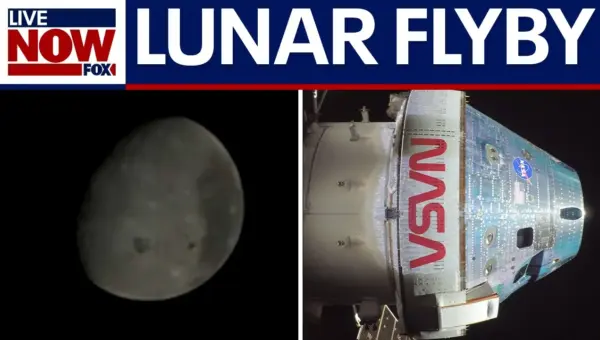
During the communication blackout, the Artemis II astronauts will have a unique and potentially surreal experience. While Mission Control and observers on Earth will be unable to communicate with them, the crew will be at their closest point to the Moon during the flyby. They are expected to witness breathtaking views of lunar craters and dramatic shadows. Astronauts have been capturing photos and videos throughout the mission, sharing their observations of the Moon’s surface with experts on the ground. This period of isolation, though brief, offers a rare opportunity for direct, unobstructed observation of the lunar landscape.
Artemis Program: A New Era of Lunar Exploration
Artemis II is the first crewed mission of NASA’s Artemis program, which aims to establish a sustainable human presence on the Moon. Unlike the Apollo missions, which focused on short visits, the Artemis program intends to enable longer-term exploration and scientific discovery. “We’re going back to stay this time and to sustainably explore the moon,” explained Asa Stall, science editor for The Planetary Society. “The goals of Artemis are different than the goals of Apollo. And that just means more exploration, more scientific discovery.” This long-term vision is crucial for understanding the Moon’s potential resources and its role in the history of our solar system.
Addressing Criticisms: Why Return to the Moon?
Some critics question the need to return to the Moon, suggesting that humanity should already be exploring Mars. Stall addressed this concern by highlighting the limited time spent on the lunar surface during the Apollo era. “Over the course of the entire Apollo program, we only spent a total of 12 days on the surface of the moon,” she noted. “I wouldn’t feel like I had gotten to know a city in just 12 days, let alone a country, let alone an entire world.” The Moon, with its billions-of-years-old craters, offers a pristine record of the solar system’s history. Sustained exploration through Artemis could unlock vital information about Earth’s origins and evolution.
Budget Concerns Cloud NASA’s Lunar Ambitions
Despite the excitement and historical significance of the Artemis II mission, NASA is facing considerable budget uncertainty. The White House Office of Management and Budget has proposed significant cuts to NASA’s overall budget, potentially slashing it by a quarter. The science budget, in particular, could see a reduction of nearly half. This financial pressure creates a challenging environment for an agency striving to achieve ambitious goals like returning humans to the Moon and eventually reaching Mars. “At the same time that this agency is reaching toward the moon and making history with this incredible achievement, it’s being actively dismantled,” Stall observed, expressing the mixed emotions within the scientific community.
A Quarter Million Miles: The Vastness of Space
The distance to the Moon, approximately a quarter million miles, underscores the immense scale of the Artemis II mission. It took the crew several days to travel this distance at high speeds. The mission has fostered a new relationship between humanity and the Moon, transforming how people perceive the celestial body. “It’s hard not to think, ‘Wow, in just a few days we’re sending people to that thing,'” Stall remarked, describing the sentiment shared by those involved with the mission and the public alike. This renewed connection signifies a growing commitment to space exploration and the pursuit of knowledge beyond Earth.
Looking Ahead: The Future of Artemis
As the Artemis II crew successfully emerges from their lunar blackout and continues their mission, attention will turn to the next steps in the Artemis program. Future missions aim to land astronauts on the Moon and establish the infrastructure for long-term stays. However, the ongoing budget discussions will be critical in determining the pace and scope of these future endeavors. The success of Artemis II provides a powerful testament to NASA’s capabilities, but sustained funding will be essential to realizing the program’s full potential and continuing humanity’s journey into the cosmos.
Source: Artemis II enters communication ‘blackout’ during lunar flyby (YouTube)

Related Articles


Artemis II Astronauts Circle Moon, Reach Farthest Humans Ever
NASA's Artemis II astronauts are currently orbiting the Moon, setting a new record for the farthest humans have ever traveled from Earth. The mission is testing the Orion spacecraft's capabilities and conducting vital lunar observations. This journey is a critical step toward NASA's goal of returning humans to the lunar surface and beyond.

Artemis II Crew Captures Stunning Lunar Views
The Artemis II crew has begun its historic lunar flyby, capturing stunning images and making crucial observations about the Moon's surface. Experts highlight the enduring value of human insight in space exploration, complementing robotic data. The mission is gathering vital information for future lunar bases and advanced space travel technologies.


Artemis II Crew Faces Perilous Re-entry After Historic Lunar Flyby
The Artemis II crew is preparing for a dangerous re-entry into Earth's atmosphere after completing a historic journey around the Moon. Concerns linger over the spacecraft's heat shield, identical to one that failed in a previous test. This mission marks humanity's return to lunar vicinity after 50 years and carries significant geopolitical weight in the burgeoning space race.