Artemis II Crew Embarks on Historic Lunar Journey
Artemis II has successfully launched, sending four astronauts on a historic journey around the Moon. This mission tests the Orion spacecraft and marks humanity's return to deep space after a half-century pause, paving the way for future lunar and interplanetary exploration.

Artemis II Crew Embarks on Historic Lunar Journey
The roar of the Space Launch System (SLS) rocket echoed across Florida’s Space Coast on March 31, 2026, as it successfully propelled the Orion spacecraft and its four-person crew toward the Moon. This monumental launch marks humanity’s first crewed voyage beyond low Earth orbit in over 50 years, signaling a new era of lunar exploration.
A Bright Spectacle and a New Beginning
The launch itself was a breathtaking spectacle. The SLS, with its two massive solid rocket boosters, produced one of the brightest and most awe-inspiring sights ever witnessed during a liftoff. For many, it was a once-in-a-lifetime experience, bringing tears to their eyes and a profound sense of wonder. This mission is seen as both the end of an era, where SLS stood as the most expensive launch system to never carry humans, and the dawn of a new age focused on returning to the Moon and venturing further into the cosmos.
Why Go Back to the Moon?
Some have questioned the necessity of returning to the Moon, a place visited by the Apollo missions decades ago. However, the Artemis II mission serves a crucial purpose: testing the Orion spacecraft and its systems with humans aboard. This is akin to building a better airliner or test-flying a new aircraft; it’s about validating and improving our capabilities. The mission mirrors the early Apollo flights, with an initial phase in low Earth orbit followed by a journey to lunar space, allowing engineers to gather vital data on the spacecraft’s performance.
A Test Flight with Real-World Challenges
The debut of the Orion spacecraft with a crew was not without its challenges. Astronaut Christina Koch, humorously dubbed the “space plumber,” had to address an issue with the spacecraft’s toilet system. This highlights the intricate nature of spaceflight and the constant need for problem-solving. The mission’s success hinged on extensive preparation, including rehearsals and meticulous checks of the rocket’s many components. The ability to fully fuel the rocket eight hours before launch, including topping off liquid hydrogen, demonstrated significant progress in ground systems operations.
The Ground Experience: A Creator’s Perspective
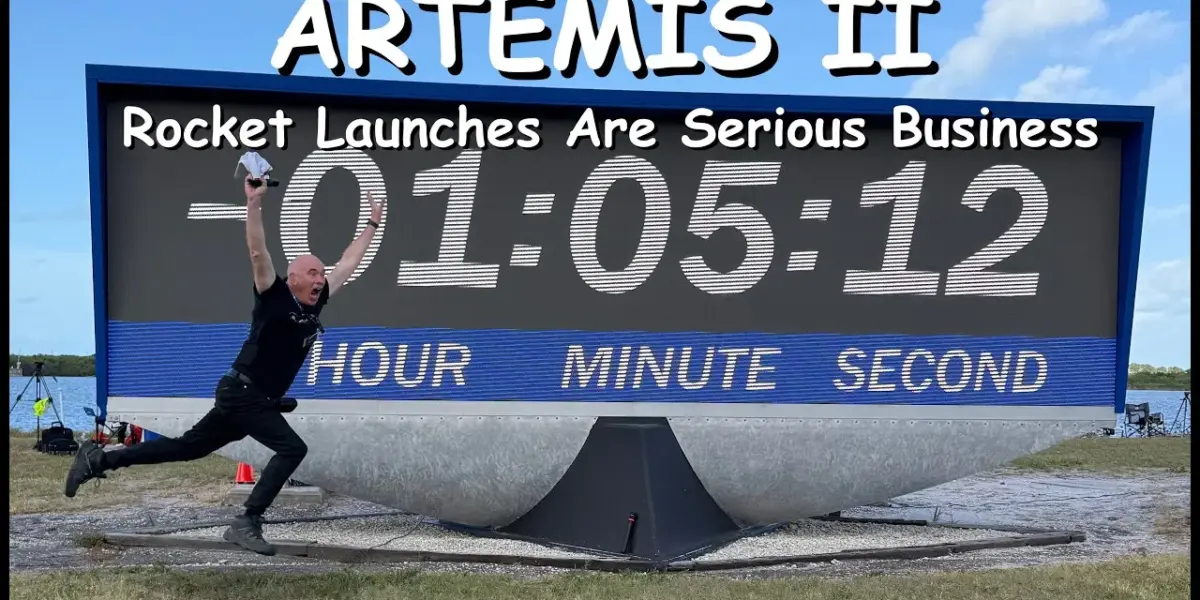
For many observers, including a group of YouTube creators invited to witness the launch, the experience was a whirlwind of activities. From attending pre-launch events and visiting visitor centers to watching other rocket launches, the days leading up to Artemis II were packed. The journey to the launch site involved multiple bus transfers, security checks, and even movie screenings, creating a unique, if sometimes lengthy, experience. Being on NASA premises offered a close-up view of the Vehicle Assembly Building and a chance to interact with engineers working on critical hardware, such as the custom-tailored spacesuits designed for each astronaut.
Astronauts and Their Journey
The Artemis II crew consists of Commander Reid Wiseman, Pilot Victor Glover, Mission Specialist Christina Koch, and Mission Specialist Jeremy Hansen. Notably, Hansen is a rookie astronaut, marking his first spaceflight after a 17-year journey since his selection in 2009, embodying the spirit of perseverance. The crew’s suits, designed for their specific needs, are a testament to the advanced engineering involved. Even the mission’s donuts, a traditional offering, couldn’t reach the astronauts due to quarantine protocols, a small but telling detail of space mission preparation.
A Prime Viewing Location and Technical Details
The social media viewing site, positioned closer to the launchpad than the traditional media site, offered a unique vantage point. Situated near the turning basin, observers had views of the Vehicle Assembly Building and the launch control center. The SLS rocket itself, approximately 3.3 miles away, commanded the horizon. Despite concerns about weather, including high winds and cumulus clouds, the launch proceeded, delayed by only about 10 minutes.
Inside the Ascent: Booster Dynamics and Aerodynamics
Onboard footage from the SLS booster revealed fascinating details about the rocket’s ascent. The solid rocket motors were seen flexing under immense pressure, and the entire booster structure showed signs of movement. Compared to the Space Shuttle, the Artemis II launch exhibited significantly less foam shedding, attributed to better-understood aerodynamics and a design not constrained by 1970s limitations. New additions, like wedge-shaped strakes near the booster’s forward attachment points, helped manage airflow and reduce problematic vortex oscillations, contributing to a smoother ride for the crew, who reported the ascent felt surprisingly smooth.
The majority of the initial thrust came from the modified Space Shuttle boosters, now with an added segment for increased power. After burning their solid propellant, these boosters detached and fell back into the Atlantic Ocean, a dramatic process that was, unfortunately, missed by some ground-based launch footage due to an accidental cutaway.
Reaching Space: Fairing Deployment and Escape Tower Jettison
As the rocket ascended beyond the densest part of the atmosphere, the protective fairings covering the Orion spacecraft’s solar panels and service module structures were jettisoned. The launch abort system’s escape tower was also discarded, clearing the path for the spacecraft to continue its journey. These maneuvers are critical to ensure the sensitive external components are not damaged by aerodynamic forces.
Lunar Trajectory and Mission Constraints
The Artemis II mission launched near a full moon, a choice driven by orbital mechanics rather than lunar phase preference for landing. Unlike the Apollo missions, which launched near a new moon to land during a favorable waxing phase, Artemis II’s trajectory required the Moon to be in the southern hemisphere. This constraint, due to the performance limitations of the Interim Cryogenic Propulsion Stage (ICPS), dictated the launch window and resulted in a near-full moon observation for the crew as they approached their destination.
Upper Stage Maneuvers and Proximity Operations
About 50 minutes after launch, the ICPS fired its RL10 engine in a critical perigee-raise maneuver. This burn lifted the spacecraft’s lowest point (perigee) out of Earth’s atmosphere, ensuring it could remain in orbit. Later, a more extended apogee-raise maneuver propelled Orion toward the Moon. During this phase, the crew began preparing for proximity operations, including configuring the cockpit and preparing cameras for potential docking simulations.
A key test involved Commander Wiseman, an experienced F-18 pilot, flying the spacecraft in a series of controlled maneuvers near a docking target. This demonstrated the spacecraft’s six-degrees-of-freedom control and tested the reaction control thrusters. The system performed exceptionally well, reportedly flying better than the simulators and producing a distinct sound compared to other spacecraft like Dragon.
Life Support and System Checks
Beyond the dynamic flight maneuvers, the crew also conducted essential tests of the spacecraft’s life support systems. The issue with the water system, involving isolated tanks and isolation valves, was successfully troubleshooted by Koch and mission control. This proactive approach, extracting water as a precaution, exemplifies the mission’s focus on safety and redundancy. The initial orbit injection was designed to re-intersect the atmosphere, providing a built-in return path if a catastrophic propulsion failure occurred.
A Milestone for Deep Space Exploration
The Artemis II mission represents a significant step for humanity’s presence in deep space. It is the first time a crew has traveled this far from Earth in decades and marks the first time a woman has ventured into this region of space. The mission’s success, culminating in the authorization for Trans-Lunar Injection (TLI), paved the way for the crew’s journey to the Moon and their eventual return, pushing the boundaries of human exploration once again.
The mission also saw the astronauts utilizing iPhones for personal use and documentation, a subtle nod to technological advancement and the anniversary of Apple’s founding on the launch day. This mission, while a test flight, carries the weight of past achievements and the promise of future discoveries as humanity once again sets its sights on the Moon and beyond.
Source: Artemis II: Was it Everything I Expected? (YouTube)

Related Articles

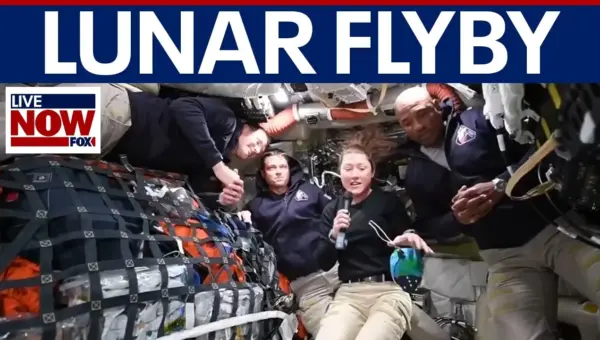
Artemis Astronauts Reach Midpoint to Moon, Send Back Stunning Views
NASA's Artemis II astronauts are halfway to the Moon on a 10-day mission, sending back stunning images of Earth and the Moon. The journey is a critical step towards landing humans on the lunar surface for the first time in over 50 years, with a focus on sustainability and scientific discovery.


Space Race Reignites: Artemis II Fuels Global Ambition
Astronaut Barry "Butch" Wilmore shares insights from his space missions as the Artemis II crew embarks on a historic lunar journey. The mission reignites global interest in space exploration, highlighting both the thrill and the challenges of venturing beyond Earth.

Artemis Crew Reports Moon Growing Larger as Expedition Progresses
The Artemis I mission crew is over halfway to the moon, reporting extraordinary views of Earth and the lunar surface. Astronauts described the moon appearing to grow larger as they approach, and observed the Oriental Basin, a feature not fully visible from Earth. This mission is a key step in NASA's plan to return humans to the moon.