Artemis II Crew Captures Stunning Lunar Views
The Artemis II crew has begun its historic lunar flyby, capturing stunning images and making crucial observations about the Moon's surface. Experts highlight the enduring value of human insight in space exploration, complementing robotic data. The mission is gathering vital information for future lunar bases and advanced space travel technologies.

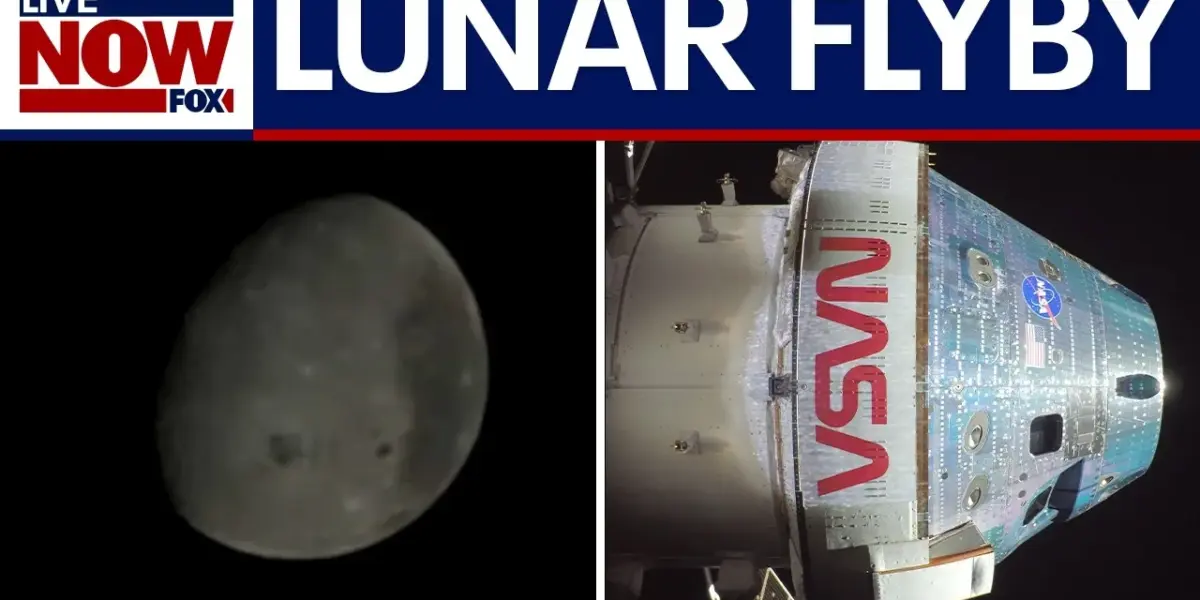
Artemis II Astronauts Begin Historic Lunar Flyby
The four astronauts aboard NASA’s Artemis II mission have begun their journey around the Moon, marking a significant step in humanity’s return to deep space. During a planned seven-hour observation period, the crew is capturing detailed photographs and making real-time descriptions of the lunar surface. This historic flyby is providing valuable data, combining the power of advanced technology with the irreplaceable insight of human observation.
Human Eyes on the Prize: Why Astronauts Still Matter
In an era of sophisticated sensors and cameras, the question of sending humans versus robots into space has been debated since the dawn of the space age. However, experts like Les Johnson, a former NASA technologist, emphasize that human observation remains vital. Johnson points to the Apollo missions, where astronaut Harrison Schmitt, a trained geologist, went off-script to collect specific rocks that proved crucial for understanding the Moon’s history. Machines can gather data, but the human mind can process nuances and make connections that might otherwise be missed.
“There’s no substitute for the human mind and processing, giving simultaneous observations to find nuances that may not be visible just in the data,” Johnson explained. This mission is designed to harness that capability, allowing the astronauts to provide immediate feedback and observations that can complement the information gathered by instruments.
What the Artemis II Crew is Seeing and Why It Matters
The Artemis II astronauts are currently observing features like the Grimaldi crater, noting its topography, blues, and greens. Their observations, combined with data from onboard instruments, will give scientists a clearer picture of the Moon’s surface composition and geological history under specific lighting conditions. This detailed understanding is crucial for future lunar exploration and potential resource utilization.
The mission aims to identify potential landing sites and resources for future human settlements. Areas like the Moon’s South Pole are of particular interest. This region offers continuous sunlight, ideal for solar power, and contains deep craters that may hold frozen water ice. Water is essential for human survival and can be broken down into hydrogen and oxygen to create rocket fuel, a key element for traveling to Mars and beyond.
Preparing for Future Bases: Landing Pads and Resources
Beyond scientific discovery, Artemis II is laying the groundwork for future lunar bases. The astronauts are scouting locations that are relatively flat and free of large boulders, which could pose challenges for future landers. Companies are developing technologies to create stable landing pads by hardening the dusty lunar soil using heat. This will prevent the dust kicked up by landing engines from damaging sensitive equipment on nearby spacecraft.
The selection of landing sites is not just about scientific exploration or establishing a base; it’s also about finding locations that can be accessed and utilized repeatedly without disturbing the delicate lunar environment. This forward-thinking approach ensures that future missions can build upon the groundwork laid by Artemis II.
The Future of Space Travel: Advanced Propulsion and Life Support
NASA is continuously investing in technologies that will enable longer and more ambitious space missions. Significant advancements are being made in life support systems, aiming for near-perfect recycling of water and oxygen to reduce dependence on Earth resupply. The goal is to create closed-loop systems where astronauts can breathe yesterday’s air and drink yesterday’s water, a concept currently joked about on the International Space Station.
In propulsion, the focus is shifting towards more efficient methods than traditional chemical rockets. Concepts like nuclear thermal rockets, which could double fuel efficiency, and electric propulsion systems are being developed. These technologies are crucial for making journeys to Mars and other distant destinations more feasible and less time-consuming. While some of these technologies may not be utilized for another 15 years or more, the observations and data collected today are vital steps toward realizing these future endeavors.
A Milestone for Humanity
The Artemis II mission represents more than just a technological achievement; it’s an emotional milestone for humanity. The four astronauts are currently the farthest humans have ever traveled from Earth, a humbling perspective that underscores our species’ drive to explore. As they continue their lunar flyby, their experiences and observations are not just data points but profound contributions to our ongoing journey beyond our home planet.
Source: NASA's Artemis II crew begins lunar flyby (YouTube)

Related Articles


Artemis II Crew Faces Perilous Re-entry After Historic Lunar Flyby
The Artemis II crew is preparing for a dangerous re-entry into Earth's atmosphere after completing a historic journey around the Moon. Concerns linger over the spacecraft's heat shield, identical to one that failed in a previous test. This mission marks humanity's return to lunar vicinity after 50 years and carries significant geopolitical weight in the burgeoning space race.


Trump Warns Iran, Faces Criticism Amid Escalating Tensions
President Trump issued a series of strong warnings to Iran, setting a deadline for the reopening of the Strait of Hormuz and threatening severe consequences. Meanwhile, the U.S. military successfully rescued a second airman downed in Iran. Democrats criticized the President's rhetoric, calling it dangerous, while economic impacts of the conflict, including rising gas prices, are being felt at home. In space news, NASA's Artemis II crew is set to make history with a lunar flyby, and Pope Francis called for peace on Easter amidst global conflicts.


Trump Tackles Iran Crisis; Artemis II Prepares Lunar Leap
President Trump will address the ongoing U.S. operations in Iran, while NASA's Artemis II mission prepares for a historic lunar flyby. The White House also hosts its annual Easter Egg Roll with a patriotic theme.