Artemis II Crew Captures Stunning Earthrise from Moon’s Far Side
The Artemis II crew has captured a historic, high-quality image of Earth setting over the Moon's horizon. This stunning 'Earthset' view, never before seen by humans, was taken from the far side of the Moon and showcases the phenomenon of earthshine illuminating the lunar surface.

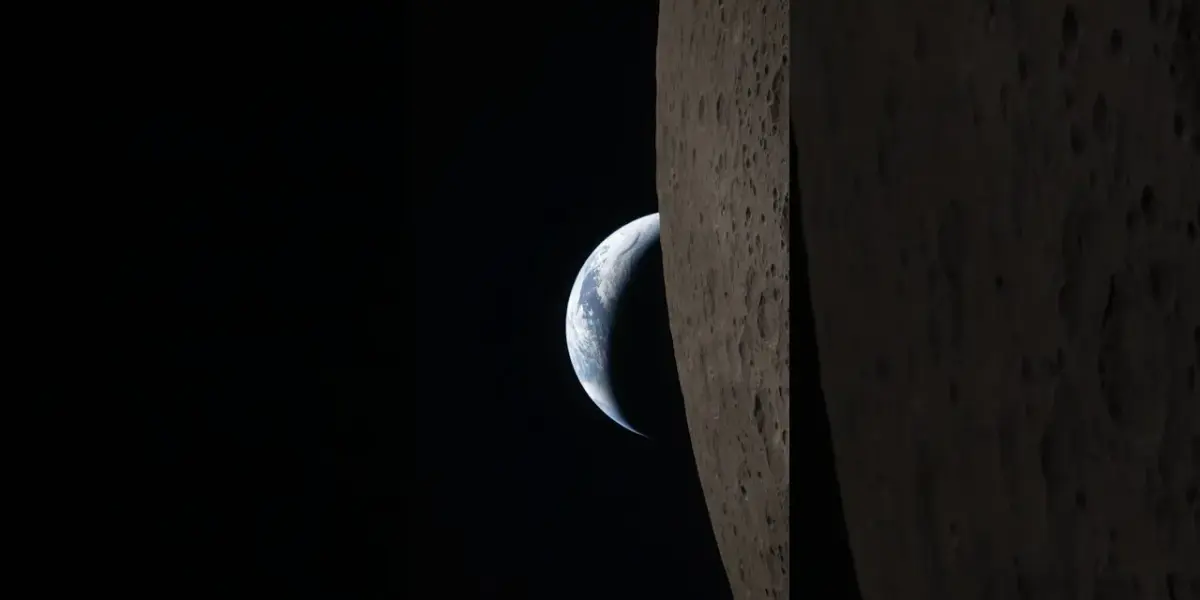
Artemis II Captures Historic Earthrise Image
The crew of the Artemis II mission has sent back a breathtaking, high-quality image of Earth setting against the lunar horizon, a view never before captured by humans. This stunning photograph, taken with Nikon cameras, marks a significant moment in space exploration, offering a unique perspective on our home planet from the far side of the Moon.
A New View of Earth
For the first time in over 50 years, humans have seen the far side of the Moon with their own eyes. During this historic journey, the Artemis II astronauts witnessed an Earthset – our planet dipping below the Moon’s edge. Unlike the iconic Earthrise photos from the Apollo missions, which showed Earth rising over the lunar landscape, this new image captures Earth setting against the dark expanse of space. The Earth appears larger in this frame because the Moon was farther away during this part of the mission, making it appear smaller in the sky.
Record-Breaking Distance and a Personal Tribute
The Artemis II mission set a new record for the farthest humans have traveled from Earth. The crew is now on their journey home after completing their lunar flyby. During their orbit, the astronauts took a moment for a deeply personal act: naming a crater. They christened it ‘Carol’ in honor of Carol Taylor Wisman, the late wife of mission specialist Reid Wiseman, who passed away in 2020. This poignant tribute added a layer of human emotion to the scientific endeavor.
Navigating Communication Blackouts and Lunar Eclipses
When the spacecraft swung around the far side of the Moon, communication with Earth was temporarily lost. This ‘blackout’ period, where the Moon physically blocked signals, lasted for about 40 minutes. After this, as Earth rose again, communications were restored. Following the Earthset, the Sun also set behind the Moon, plunging the spacecraft into a unique type of eclipse. This celestial alignment created a special observation opportunity.
Earthshine Illuminates the Moon
The most remarkable aspect of this new image is the illumination of the Moon itself. With the Sun behind it, the Moon should have appeared dark. However, one side of the lunar surface is clearly lit. This glow, known as ‘earthshine,’ is caused by sunlight reflecting off Earth’s oceans and atmosphere and then bouncing back to illuminate the Moon. It’s a beautiful reminder of our planet’s influence, even from millions of miles away. The image also clearly shows the stars in the background, along with the faint glow of the Sun’s extended atmosphere, called the corona.
Looking Back at Apollo
The Apollo program, which ran from 1961 to 1972, saw twelve astronauts walk on the Moon. Iconic images like ‘Earthrise’ from Apollo 8 and ‘Blue Marble’ from Apollo 17 have profoundly shaped humanity’s perception of Earth. The Artemis II mission builds upon this legacy, pushing the boundaries of human spaceflight and offering new perspectives. While Apollo missions focused on reaching the Moon, Artemis aims to establish a sustainable presence and eventually send humans to Mars.
What’s Next for Artemis?
The Artemis II mission, which launched on November 16, 2024, serves as a crucial test flight for the Orion spacecraft and its powerful Space Launch System (SLS) rocket. The successful completion of this lunar flyby paves the way for Artemis III, which aims to land the first woman and the next man on the Moon, likely in the mid-2020s. Future Artemis missions will explore the lunar south pole, a region believed to hold water ice, and test technologies needed for eventual human missions to Mars. These endeavors not only expand our scientific knowledge but also inspire future generations and foster international cooperation in space exploration.
Source: First High Quality Earthset Image From Artemis II Stuns! (YouTube)

Related Articles

Artemis II Astronauts View Moon’s Far Side, War Tensions Rise
The Artemis II mission made history as astronauts viewed the Moon's far side for the first time, traveling farther than any humans before. Meanwhile, escalating tensions with Iran loom as President Trump set an 8 p.m. deadline for a deal or face strikes on critical infrastructure. Congressional reactions are divided, with Republicans supporting the President and Democrats voicing strong concerns.


US Moon Mission Ignites New Space Race Era
The Artemis II mission has successfully completed a historic lunar flyby, pushing the boundaries of human space travel. This mission marks a new era in lunar exploration, with the crew witnessing unique celestial events and setting new records. Its success signals renewed US commitment and potential shifts in the global space race.


NASA Faces UAP Questions After Witness Account
A witness at NASA's Marshall Space Flight Center reported seeing unidentified egg-shaped objects on an ISS live feed. The feed was quickly cut when questioned, raising concerns about NASA's transparency. This incident echoes historical suspicions of government secrecy surrounding unexplained phenomena.