Artemis II Crew Blasts Off for Lunar Orbit
Humans are heading back to the Moon with the Artemis II mission, marking the first crewed lunar journey since 1972. The mission will test the Orion spacecraft and the powerful SLS rocket in deep space.


Artemis II Crew Blasts Off for Lunar Orbit
Humans are once again venturing towards the Moon. The Artemis II mission, launched from Kennedy Space Center, marks a monumental step. It’s the first crewed lunar journey since the Apollo era ended in 1972. This historic flight carries four astronauts on a daring ~10-day voyage around the Moon.
A New Era of Lunar Exploration Begins
The Artemis program aims to establish a long-term human presence on the Moon. It’s paving the way for future missions to Mars. Artemis II is a critical test flight. It will validate the Orion spacecraft’s life support systems and the Space Launch System (SLS) rocket’s capabilities with a crew aboard.
The crew consists of Commander Reid Wiseman, Pilot Victor Glover, and Mission Specialists Christina Koch and Jeremy Hansen. They are set to travel farther into space than any humans before them. Their journey will take them beyond the far side of the Moon, pushing the boundaries of human spaceflight.
The Mighty SLS Rocket Powers the Mission
At the heart of Artemis II is the Space Launch System (SLS). This is the most powerful rocket NASA has ever built. It stands taller than the Statue of Liberty, reaching 322 feet. Its five engines, along with two solid rocket boosters, generate an astonishing 8.8 million pounds of thrust at liftoff. This immense power is necessary to escape Earth’s gravity and send the Orion capsule on its lunar trajectory.
The SLS rocket is designed to carry heavy payloads, including the Orion spacecraft and components for future lunar landers. Its development represents a significant leap in rocket technology. It builds upon decades of experience from previous NASA launch vehicles.
Orion: A State-of-the-Art Deep Space Vehicle
The Orion spacecraft is the crew’s home for the Artemis II mission. It’s designed for deep space travel, capable of supporting astronauts for extended periods. Orion features advanced life support systems, radiation shielding, and navigation capabilities. During the mission, it will orbit the Moon at distances of up to 240,000 miles from Earth.
The spacecraft’s heat shield is also crucial. It’s designed to withstand the extreme temperatures of re-entry into Earth’s atmosphere, reaching up to 5,000 degrees Fahrenheit. This testing is vital for ensuring the safety of future crews on longer missions.
A Journey Through Lunar Space
Artemis II will not land on the Moon. Instead, the crew will perform a lunar flyby. They will orbit the Moon, testing Orion’s systems in the harsh environment of deep space. This includes navigating the Van Allen radiation belts, regions of energetic charged particles trapped by Earth’s magnetic field.
The mission will take approximately 10 days to complete. The astronauts will experience conditions far different from those on the International Space Station. They will face greater radiation exposure and the psychological challenges of being so far from home. Their experiences will provide invaluable data for future missions.
Looking Back at Apollo’s Legacy
The Artemis program is directly inspired by the Apollo missions. From 1969 to 1972, twelve astronauts walked on the Moon. Apollo 11 marked humanity’s first steps onto another celestial body. These missions were technological marvels of their time, using the Saturn V rocket.
Artemis builds on that legacy, but with new goals. It aims for sustainable lunar exploration and eventual human missions to Mars. The lessons learned from Apollo, both successes and challenges, are informing the design and execution of the Artemis missions.
What’s Next for Artemis?
Artemis II is a stepping stone. The next mission, Artemis III, is planned to land astronauts on the Moon’s south pole. This region is believed to hold water ice, a crucial resource for future exploration. Future Artemis missions will continue to expand humanity’s reach into the solar system.
This endeavor represents a global effort. International partners are contributing to the Artemis program, underscoring the collaborative nature of space exploration. The return to the Moon is not just an American achievement, but a milestone for all humankind, driving scientific discovery and inspiring future generations.
Source: Artemis II Pre-launch PARTY!!! (YouTube)

Related Articles
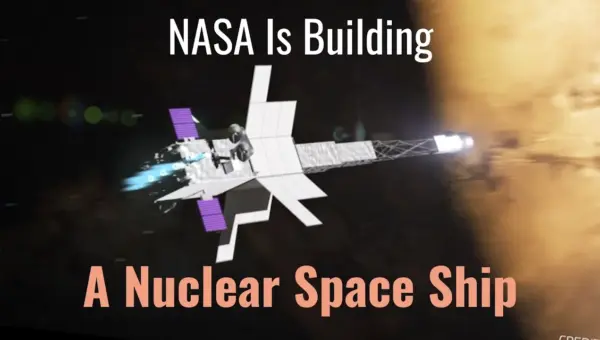
NASA Charts Bold Lunar Future, Ditches Space Station Plans
NASA is shifting its focus from the lunar Gateway to a permanent Moon base, outlining a phased approach for settlement. This strategy change impacts international partnerships and commercial LEO plans. Meanwhile, Artemis II crew prepares for launch amidst a busy launch schedule and new lunar impact discoveries.

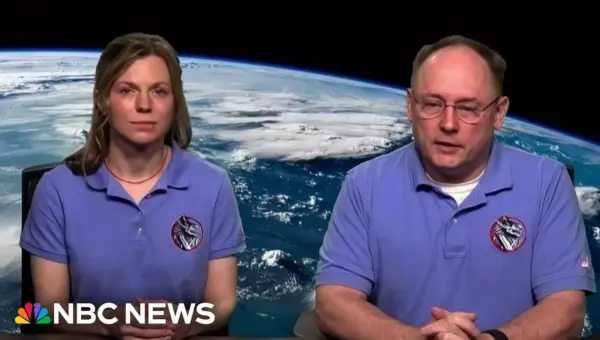
Astronaut Recounts Space Medical Scare, Informs Future Missions
Astronaut Mike Fincke detailed a recent medical emergency aboard the ISS that led to his return to Earth. While doctors ruled out serious conditions like stroke, the exact cause is still being studied, with theories pointing to a space-related anomaly. The experience is providing crucial data for future long-duration missions, including NASA's Artemis program.


Astronaut Recovers From Mystery Space Illness, Inspires Future Missions
Astronaut Mike Fincke has shared details about a mysterious medical emergency he experienced aboard the International Space Station, which led to his early return to Earth. While the exact cause is still under investigation, doctors believe it was space-related, providing crucial data for future deep space missions.