Artemis II Blasts Off: Humanity’s Lunar Return Nears
NASA's Artemis II mission is set to launch, marking humanity's first journey around the moon in over 50 years. This 10-day test flight will carry four astronauts, potentially setting a new record for the farthest distance from Earth ever reached. The mission signifies a major step in renewed space exploration ambitions.

Artemis II Blasts Off: Humanity’s Lunar Return Nears
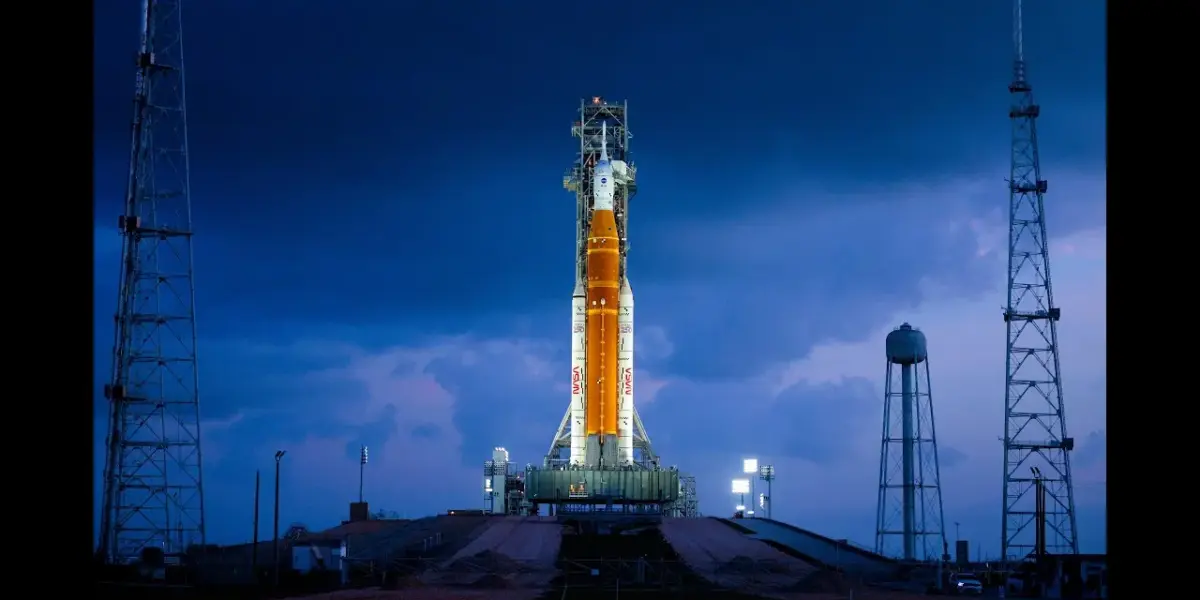
NASA is counting down to a historic moment. The Artemis II mission is set to launch, marking humanity’s first journey around the moon in over 50 years. If everything goes as planned, this mission will carry four astronauts on a 10-day test flight, orbiting the moon before returning to Earth.
This launch is especially significant as it occurs during the United States’ 250th year. NASA Administrator Jared Isaacman has expressed his honor in celebrating this milestone with the “Freedom 250” initiative. The mission is scheduled to lift off from the Kennedy Space Center at 6:24 p.m. Eastern time.
People in parts of the Southeast may even be able to catch a glimpse of the massive rocket shortly after it leaves the launchpad. The crew members are expressing their readiness and excitement. Astronaut Reed Wiseman shared on X, formerly Twitter, his profound gratitude for the nation’s support, stating, “Nothing but gratitude for the men and women of this great nation. It is time to fly.”
A Leap Beyond Previous Records
The Artemis II mission is not just about returning to the moon; it’s about pushing the boundaries of human spaceflight. The planned trajectory will see the astronauts travel farther from Earth than any humans have ever gone before. This record-breaking distance adds another layer of excitement to an already significant undertaking.
The anticipation for this mission is palpable. The idea of humans once again venturing so far into space, especially to our closest celestial neighbor, captures the imagination. It represents a continuation of our drive to explore and understand the universe around us.
Why This Matters
The Artemis II mission is more than just a space flight; it’s a symbol of renewed ambition in space exploration. After decades where human missions focused primarily on low Earth orbit, returning to the moon signals a major shift. This renewed focus is crucial for several reasons:
- Scientific Advancement: Each mission provides invaluable data about the lunar environment, which can help us understand planetary formation and prepare for even more distant journeys.
- Technological Innovation: Pushing the limits of space travel drives the development of new technologies that often find applications back on Earth, from medical devices to advanced materials.
- Inspiration and Education: Seeing humans explore the cosmos inspires future generations of scientists, engineers, and explorers. It reminds us of what we can achieve when we work towards ambitious goals.
- International Cooperation: While this is a NASA mission, space exploration often fosters collaboration between nations, promoting peace and shared progress.
Historical Context and Future Outlook
The last time humans journeyed to the moon was during the Apollo program, which concluded in 1972. For over half a century, only robotic probes have explored its surface. The Artemis program, named after the twin sister of Apollo and goddess of the moon in Greek mythology, aims to change that.
Artemis II is the second major flight test of NASA’s Orion spacecraft and Space Launch System (SLS) rocket. The first, Artemis I, was an uncrewed test flight of the Orion spacecraft around the moon in late 2022. Artemis II will be the first mission to carry astronauts, paving the way for future missions that aim to land humans on the moon, possibly for extended stays.
The long-term goal of the Artemis program is to establish a sustainable human presence on the moon. This could serve as a stepping stone for even more ambitious missions, including sending astronauts to Mars. The success of Artemis II will be a critical indicator of progress towards these future endeavors.
The journey back to the moon represents a significant chapter in the ongoing story of space exploration. It’s a testament to human curiosity, ingenuity, and our unyielding desire to reach for the stars. The world will be watching with great interest and excitement as Artemis II embarks on its historic flight.
Source: NASA Counts Down for First Crewed Lunar Mission in Half a Century (YouTube)

Related Articles


Artemis II Blasts Off: Humans Return to Lunar Orbit After 50 Years
Humans have returned to lunar orbit for the first time in over 50 years as NASA's Artemis II mission successfully executed its Trans Lunar Injection burn. The four-person crew is now en route to the Moon, marking a significant milestone in space exploration. This mission serves as a critical test flight, pushing spacecraft systems and gathering vital data for future lunar landings.


Artemis II Crew Heads to Moon After Flawless Burn
NASA's Artemis II mission has successfully propelled its four-person crew toward the Moon following a flawless translunar injection burn. The Orion spacecraft is now on its planned trajectory, marking a significant step in humanity's return to lunar exploration. This test flight continues to gather crucial data on the spacecraft's performance in deep space.

Artemis II Astronauts Begin Moon Journey, Face Water Glitch
The Artemis II astronauts have begun their historic journey to the Moon aboard the Orion spacecraft. The crew successfully executed a critical engine burn to leave Earth's orbit, traveling at 24,000 mph. A minor issue with the spacecraft's water system prompted precautionary measures, but NASA believes it is resolved.