Artemis II Astronauts Set Lunar Flyby Record
The Artemis II mission achieves a historic lunar flyby, with astronauts experiencing a communication blackout as they travel farther from Earth than ever before. The mission captures unseen parts of the Moon and gathers data crucial for future lunar bases, particularly at the resource-rich south pole. This endeavor highlights a national commitment to space exploration, with ambitions extending to Mars.


Artemis II Crew Makes History with Lunar Flyby
The Artemis II mission is making waves as its four astronauts are set to achieve a historic milestone: a lunar flyby. This mission marks a significant step in human space exploration, pushing the boundaries of how far humans have traveled from Earth. The crew will experience a period of communication blackout as they pass behind the Moon, a planned event that highlights the vast distances involved in space travel.
Behind the Moon: A Communication Blackout
For about 40 minutes, the Artemis II astronauts will be on the far side of the Moon, where direct communication with Earth is impossible. This happens because there are no satellites orbiting the Moon’s far side to relay signals. During this time, all cameras on board will be focused on capturing images and video of the lunar surface. This unique perspective offers a chance to see parts of the Moon never before viewed by human eyes. The astronauts are specifically tasked with photographing areas that have remained unseen.
Seeing Earth Rise: A New Perspective
Former NASA astronaut Captain Butch Wilmore explained the significance of this maneuver. He recalled his own experiences on the International Space Station, watching Earth rise 16 times a day. Now, the Artemis II crew will witness an Earth rise as they come around the far side of the Moon. This view is expected to be breathtaking and deeply moving for the astronauts. It offers a profound perspective on our home planet from an unprecedented distance.
Documenting the Unknown Lunar Landscape
Unlike previous missions, such as the Apollo program, the Artemis II astronauts are positioned further from the Moon, about 4,000 miles away. This greater distance allows them to capture wide-angle views of the entire lunar disk. Previous missions, being much closer, only provided close-up images of specific areas. The detailed tasking for camera use ensures that valuable scientific data is collected, focusing on areas that have not been seen by humans before. This documentation is crucial for future lunar exploration and understanding.
The Path to a Lunar Base
The Artemis II mission is not just about a flyby; it’s a stepping stone toward establishing a permanent human presence on the Moon. The astronauts are taking pictures, particularly of the lunar south pole. This region is of great interest because it is believed to hold resources like water ice and Helium-3. These resources are vital for building and sustaining a Moon base, as they can be used to create rocket propellant. The mission’s focus on the south pole is strategic, aiming to gather information needed for future settlements.
A National Effort in Space Exploration
Captain Wilmore emphasized that the achievements in space are the result of a massive national effort. It involves thousands of dedicated engineers, scientists, and technicians. The success of missions like Artemis II is built on a deep understanding of physics and complex engineering. The astronauts on board are carrying the hopes and efforts of countless individuals. This collective endeavor highlights America’s ongoing commitment to human spaceflight and exploration.
Looking Ahead: Mars and Beyond
The ambition for space exploration extends beyond the Moon. Legendary astronaut Buzz Aldrin has called for NASA to aim for Mars, suggesting the goal should be to “occupy Mars.” Captain Wilmore expressed strong support for such ambitious goals, recognizing the challenges involved. Sustaining human life and accomplishing round trips to Mars are incredibly difficult due to physics. However, with continued innovation and engineering, Wilmore believes these goals are achievable in the future. The Artemis II mission is a crucial part of building the capabilities needed for these longer-term objectives.
What Investors Should Know
The Artemis II mission underscores the significant and growing investment in space exploration. Companies involved in aerospace, technology, and materials science may see long-term benefits as these programs progress. The focus on lunar resources, like water ice for propellant, points to potential future industries on the Moon. This could involve resource extraction and in-space manufacturing. While direct investment in NASA is not possible, companies supporting its missions are key players in this expanding sector. The long-term vision includes not only lunar bases but also eventual missions to Mars, suggesting sustained growth opportunities in the space economy.
Source: ‘THRILLING’: Artemis II astronauts to set record with lunar flyby (YouTube)

Related Articles


Trump’s Iran Threat Looms as Artemis II Reaches New Space Heights
Former President Trump issued a stern warning to Iran regarding a potential deal, while the Artemis II mission achieved a new distance record in space. The Education Department also announced it is rescinding Title IX agreements related to gender identity policies.

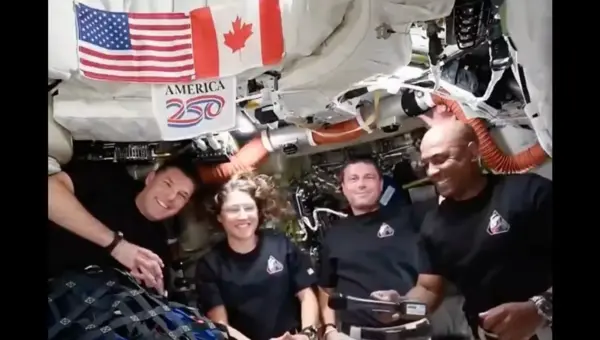
Astronauts Shatter Space Record, Trump Hails New Lunar Era
NASA's Artemis 2 astronauts have achieved a historic milestone, flying farther from Earth than any humans before. The record-breaking mission around the moon also included a touching tribute and a renewed vision for lunar and Martian exploration.

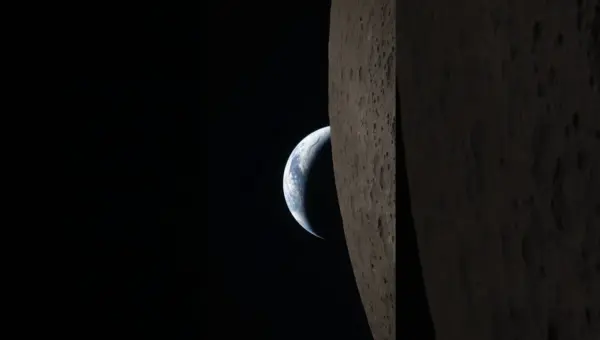
Artemis II Crew Captures Stunning Earthrise from Moon’s Far Side
The Artemis II crew has captured a historic, high-quality image of Earth setting over the Moon's horizon. This stunning 'Earthset' view, never before seen by humans, was taken from the far side of the Moon and showcases the phenomenon of earthshine illuminating the lunar surface.