Artemis II Astronauts Return to Earth After Lunar Flyby
The Artemis II astronauts are heading back to Earth for an April 10th splashdown after completing a historic lunar flyby. The crew set a new distance record from Earth and witnessed the Moon's far side. This mission marks a significant step for NASA's Artemis program and the future of human space exploration.


Artemis II Crew Nears Earth After Historic Lunar Journey
The Artemis II mission is nearing its conclusion as the four astronauts on board make their way back to Earth. The crew is expected to splash down in the Pacific Ocean on April 10th, marking the end of a significant journey. This mission successfully completed two major goals: a powerful launch and a historic flyby of the Moon. During the mission, the astronauts experienced a blackout period of about 40 minutes while on the far side of the Moon. They witnessed a view of the lunar far side that no human has ever seen before.
Setting New Distance Records
The Artemis II mission has already achieved remarkable feats. NASA Administrator Bill Nelson stated that the crew reached their furthest point from Earth, an astonishing 252,756 miles away, while on the far side of the Moon. Astronauts Reid Wiseman, Victor Glover, Christina Koch, and Jeremy Hansen have now traveled farther from Earth than any humans in history. They are now beginning their journey home.
“Artemis II astronauts have reached their maximum distance from Earth on the far side of the Moon… Reed Wiseman, Victor Glover, Christina Koch, and Jeremy Hansen have traveled further from Earth than any humans in history and now begin their journey home.” – NASA Administrator Bill Nelson
A Leap Forward for Human Spaceflight
The astronauts expressed hope that their mission would be remembered. They believe it marks a moment when people began to believe that America could once again achieve the nearly impossible and change the world. This success is a crucial step for the entire Artemis program. The mission is considered a pivotal moment, inspiring national pride and demonstrating technological progress.
Expert Insights on Artemis Momentum
Jack Carreri, from The Planetary Society, shared his perspective on the mission’s significance. He noted that in his lifetime, humans had not traveled beyond low Earth orbit until now. The Artemis II crew are the only humans to travel to the Moon in the 21st century so far. Carreri emphasized that the mission underscores the historic momentum behind the Artemis program and the U.S. space program’s leading role globally.
Ambitious Timelines and Funding Challenges
Carreri discussed the ambitious timeline for returning humans to the Moon, with potential crewed landings by 2028. He mentioned an accelerated schedule for the Artemis program, including in-orbit testing of human landing systems. Achieving these goals requires not only dedicated NASA staff but also strong support from commercial partners. A key challenge identified is ensuring consistent funding, as NASA’s budget has seen a significant decrease in recent years.
Budgetary Hurdles Versus Technical Challenges
Carreri stressed that the biggest hurdle facing NASA and the Artemis program is funding. Ideally, all challenges should be technical, allowing brilliant minds at NASA and its partners to solve complex problems. However, budgetary and political issues can hinder progress. He highlighted that investing in space programs spurs economic prosperity and technological competitiveness.
Economic Returns of Space Exploration
Carreri pointed out that space programs are proven economic generators. NASA alone provides a three-to-one return on investment, meaning every dollar of taxpayer money invested yields three dollars back into the economy. This makes space exploration a win-win situation for both national progress and economic growth.
The Importance of International and Commercial Partnerships
The Artemis program relies heavily on collaboration. The crew itself is diverse, including Canadian astronaut Jeremy Hansen. The unofficial mantra of the program, “If you want to go fast, go alone. If you want to go far, go together,” rings true. International partners are vital contributors to NASA’s ambitious mission portfolio, including missions to Mars and the outer solar system.
Commercial Collaboration Fuels Progress
The commercial sector plays a critical role, with companies like Lockheed Martin building essential components like the Orion capsule. The rapid launch cadence of private companies like SpaceX is also influential. Carreri described the relationship as more of a collaboration than a competition. The growth of a strong launch industry and satellite manufacturing sector, supported by companies like SpaceX, Blue Origin, and Rocket Lab, brings new ideas and potentially lowers costs for taxpayers.
A New Era of Space Competition
While not a direct repeat of the Cold War space race, the current era sees significant international investment in space programs. Other nations view space exploration as a driver of economic prosperity and technological innovation. The competition signals a strong international presence in space exploration, with countries investing heavily in their own space ambitions.
What’s Next for Artemis
As the Artemis II crew completes their return journey, the focus remains on their safe splashdown. Scientists will also be eager to analyze any data and images collected during the lunar flyby. The experience of the astronauts upon returning, particularly the profound emotional and spiritual impact of seeing Earth from afar, known as the overview effect, will be eagerly anticipated. This mission is just the beginning, paving the way for future Artemis missions and humanity’s continued exploration of the Moon and beyond.
Source: Artemis II astronauts swing around moon, begin journey home (YouTube)

Related Articles

NASA’s Moon Return: Rockets Blaze, Shields Glow, Risks Loom
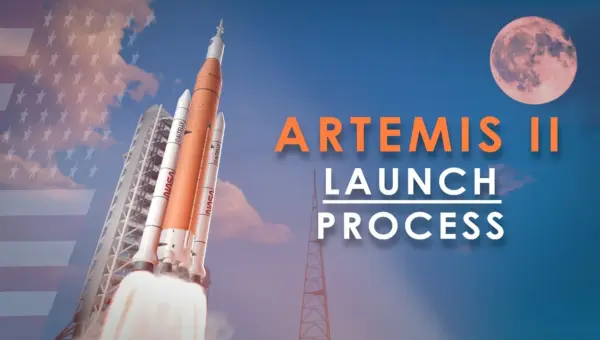
NASA's Artemis 2 mission prepares to launch the most powerful rocket ever built, the Space Launch System (SLS), sending astronauts back to the Moon after 50 years. This complex journey involves a powerful liftoff, a critical lunar injection burn, a gravitational slingshot maneuver around the Moon, and a dangerous re-entry through Earth's atmosphere. The mission highlights both incredible engineering achievements and the inherent risks of space travel.


Moon Mission Sparks New Space Race Era
The Artemis II mission's return from the Moon marks a new era in space exploration, potentially sparking a modern space race. The mission provided new scientific data and breathtaking views, while also highlighting the inherent risks of deep space travel. This renewed focus on lunar exploration has significant geopolitical and economic implications for global powers.

Astronauts’ Silent Treatment Exposes Trump’s Space Rift
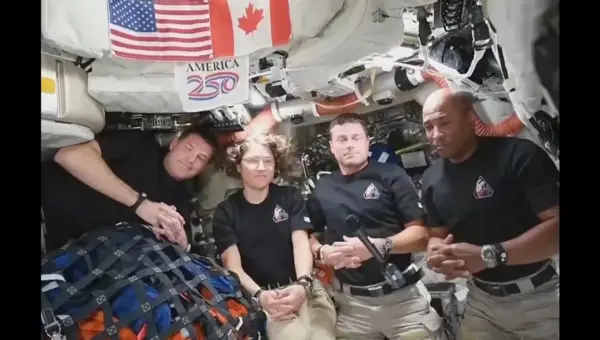
An awkward call between Donald Trump and the Artemis 2 astronauts, marked by prolonged silence from the crew, highlights a perceived disconnect in values and leadership. The incident contrasts with past presidential interactions and raises questions about Trump's stance on space exploration versus his proposed budget cuts.