Artemis II Astronauts Face Isolation on Moon’s Far Side
The Artemis II mission will see four astronauts travel to the far side of the Moon, experiencing a 40-minute communication blackout. This historic test flight aims to gather crucial data on the lunar south pole and push the boundaries of human space exploration.


Artemis II Crew to Experience Unprecedented Lunar Isolation
Four astronauts aboard the Artemis II mission are set to embark on a historic journey around the Moon, venturing further into space than any humans in over five decades. A key aspect of their mission involves a period of complete communication blackout as they travel to the far side of the Moon, a region perpetually hidden from Earth.
A Test Flight for Deep Space Exploration
Libby Jackson, a leading British space exploration expert and Head of Space at the Science Museum in London, explained the primary purpose of the Artemis II flight. “This is predominantly a test flight,” Jackson stated. “This is the first time that astronauts have been in this Orion spacecraft. The first time they were on the giant rocket that took them into space and the first time in more than 50 years that humans have flown to the moon and seen that far side.”
The astronauts will spend approximately seven hours observing the lunar surface. During their closest approach, they will be about 4,500 miles from the Moon, allowing them to see it as if it were the size of a basketball held at arm’s length. They are tasked with taking photographs and relaying observations to scientists back at Mission Control.
Focus on the Lunar South Pole
Unlike previous Apollo missions that landed near the Moon’s equator, Artemis II is focusing on the lunar south pole. This region is of particular interest for future missions like Artemis 4 and 5, planned for 2028. “We are now wanting to explore the south pole of the moon because we found that there are water deposits there,” Jackson noted. These water deposits could be crucial for creating oxygen, drinking water, and rocket fuel, making them vital for sustained human presence on the Moon.
While satellites have previously imaged the south pole, this mission marks the first time human eyes will study the area in such detail. The astronauts’ firsthand accounts are expected to provide invaluable insights.
The Psychological Challenge of Isolation
A significant aspect of the mission is the planned loss of contact with Earth. For about 40 minutes, the Moon will physically block all communication signals between the spacecraft and Mission Control. “They won’t be able to see us. They will be completely on their own,” Jackson explained. This period of isolation is a considerable psychological challenge, requiring extensive training and preparation.
Jackson drew parallels to historical human endeavors, stating, “If you think back in human history, people used to set sail and there was absolutely no way of them staying in touch with people back home.” She also mentioned astronaut examples from Antarctica, where extreme isolation is a reality. However, she acknowledged the unique nature of space travel: “The environment out there is not a human friendly environment.”
Why Space Exploration Still Matters
The immense cost and effort involved in space missions often raise questions about their value. Jackson addressed this by comparing it to other human pursuits. “You could ask that about absolutely anything that humans do. Is it worth it?” she pondered. She highlighted the inherent human drive to explore and overcome challenges, referencing John F. Kennedy’s famous words: “There is something glorious about that about saying this is a huge challenge.”
Jackson expressed disappointment that 50 years have passed since humans last journeyed to the Moon, calling it a missed opportunity for progress. She believes that space exploration represents a fundamental aspect of human achievement and curiosity, even if the immediate benefits aren’t always apparent.
Looking Ahead: The Future of Lunar Exploration
The Artemis II mission is a crucial stepping stone for NASA’s broader Artemis program. The data and experiences gained from this flight will inform future missions aimed at establishing a long-term human presence on the Moon. The insights gathered from observing the lunar south pole could pave the way for resource utilization and further exploration deeper into the solar system.
Source: Artemis II Astronauts Will Lose Human Contact On Far Side Of The Moon | Libby Jackson OBE (YouTube)

Related Articles

Artemis II Crew Makes History, Sees Full Far Side of Moon
The Artemis II astronauts have made history by becoming the first humans to see the entire far side of the Moon. The crew is now returning to Earth after a record-breaking journey. Meanwhile, Middle East tensions are high as President Trump issued a deadline to Iran, threatening military action.

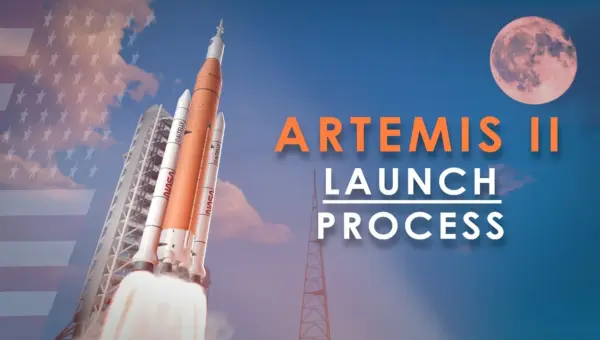
NASA’s Moon Return: Rockets Blaze, Shields Glow, Risks Loom
NASA's Artemis 2 mission prepares to launch the most powerful rocket ever built, the Space Launch System (SLS), sending astronauts back to the Moon after 50 years. This complex journey involves a powerful liftoff, a critical lunar injection burn, a gravitational slingshot maneuver around the Moon, and a dangerous re-entry through Earth's atmosphere. The mission highlights both incredible engineering achievements and the inherent risks of space travel.


Moon Mission Sparks New Space Race Era
The Artemis II mission's return from the Moon marks a new era in space exploration, potentially sparking a modern space race. The mission provided new scientific data and breathtaking views, while also highlighting the inherent risks of deep space travel. This renewed focus on lunar exploration has significant geopolitical and economic implications for global powers.