Artemis II Astronauts Face Fiery Re-entry After Moon Trip
The Artemis II mission is set for a high-stakes splashdown as the Orion capsule, carrying four astronauts, re-enters Earth's atmosphere at nearly 25,000 mph. The crew faces extreme heat and G-forces, while NASA monitors the performance of the capsule's heat shield after unusual findings on the prior uncrewed mission. This historic return follows a successful journey around the moon, marked by significant scientific observations.

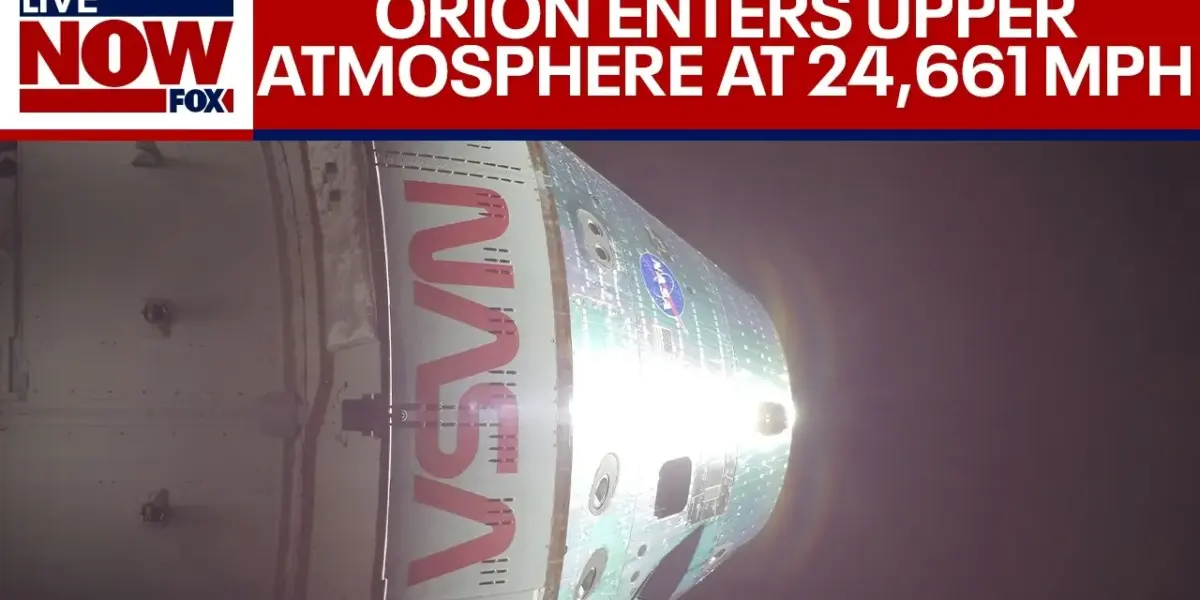
Artemis II Capsule Plunges Toward Earth at Breakneck Speed
The Artemis II mission is nearing its dramatic conclusion as the Orion spacecraft, carrying four astronauts, prepares for splashdown off the coast of San Diego. After a historic journey around the moon, the crew faces one of the most dangerous phases of their mission: re-entry into Earth’s atmosphere. This fiery descent is expected to occur at an astounding 24,661 miles per hour, a speed that dwarfs that of a speeding bullet and allows for a full marathon to be completed in mere seconds.
This high-speed plunge means the astronauts will be the fastest humans in history. As the Orion capsule hits the atmosphere, it will generate immense heat, reaching an estimated 5,000 degrees Fahrenheit on its exterior. This temperature is roughly half that of the sun’s surface, presenting a significant challenge for the spacecraft’s heat shield. The astronauts will also experience intense gravitational forces, a stark contrast to the weightlessness they’ve endured for the past nine days.
Heat Shield Concerns and Skip Re-entry Explained
A primary focus of concern for NASA and space experts has been the performance of the Orion capsule’s heat shield. This shield is designed to char and burn away during re-entry, protecting the spacecraft and its crew. During the uncrewed Artemis I mission, the heat shield showed signs of uneven shedding, losing chunks in a way that did not match simulations.
While NASA analysis indicated that the crew would have been safe even with that performance, further investigation suggested the mission’s trajectory contributed to the issue. For Artemis I, the capsule performed a “skip re-entry,” bouncing off the atmosphere to slow down. This time, with a crew aboard, Artemis II will execute a direct descent, a more direct and faster path through the atmosphere. This approach is expected to subject the heat shield to more typical conditions, and NASA is confident it will perform as intended.
Astronauts Brace for G-Force and Rougher Ride
The change from a skip re-entry to a direct descent means a more intense experience for the Artemis II astronauts. The skip maneuver on Artemis I helped reduce the spacecraft’s speed before its final plunge, resulting in a gentler ride. For this mission, the astronauts will face higher speeds and greater gravitational pressure, estimated at around 3.9 Gs.
However, the crew has undergone extensive training to withstand forces significantly higher than this. As seasoned professionals, they are well-prepared for the physical demands of this phase of the mission. Their training is designed to ensure they can handle the increased G-forces and the overall rougher descent back to Earth.
Recovery Operations: From Splashdown to Shore
Following splashdown in the Pacific Ocean, a specialized U.S. Navy recovery team will spring into action. After the Orion capsule deploys its parachutes and stabilizes, a large inflatable raft, dubbed the “front porch,” will be deployed. This will serve as the initial platform for the astronauts to step onto once the capsule is powered down by NASA, a process expected to take about 15 minutes.
One by one, the astronauts will be carefully assisted out of the capsule. They will likely experience some difficulty standing and walking initially as their bodies readjust to Earth’s gravity. Following their immediate recovery on the raft, they will be transported via helicopter to one of the Navy’s amphibious transport ships for initial medical assessments before heading back to NASA.
San Diego Chosen for Familiarity and Proximity
The choice of San Diego as the splashdown location is strategic. This area was also used for the Artemis I recovery, meaning NASA is familiar with its weather patterns and ocean conditions. It is considered a relatively calm location for crew recovery operations.
A more practical reason for the San Diego location is the presence of a major naval base nearby. This allows the recovery ship to launch from a close proximity, minimizing travel time for the recovery team to reach the capsule and its crew immediately after splashdown.
Mission Successes and Scientific Discoveries
The Artemis II mission has been hailed as a significant success thus far. The launch aboard NASA’s Space Launch System (SLS) rocket proceeded flawlessly. The Orion spacecraft, carrying a crew for the first time, has performed exceptionally well, according to mission commander Reid Wiseman.
The highlight of the mission was the seven-hour journey around the far side of the moon, offering unprecedented views and data. The astronauts captured stunning images and observed phenomena never before seen by humans from this vantage point. These observations are crucial for informing future lunar missions and NASA’s long-term goals for establishing a human presence on the moon.
Unlocking Lunar Secrets: Impact Flashes and New Craters
The astronauts’ unique perspective from behind the moon has led to exciting scientific discoveries. They witnessed “impact flashes” – bright flashes caused by small space rocks hitting the lunar surface. These events, rarely seen from Earth, provide valuable insights into lunar impacts and the safety of building bases on the moon.
Additionally, the crew identified new lunar features, including craters. In a poignant moment, they discovered a new crater and requested permission to name it “Carol Crater” after Commander Wiseman’s late wife. These are the kinds of discoveries that human astronauts, with their scientific training and ability to recognize anomalies, can make, surpassing the capabilities of robotic missions.
Looking Ahead: Data Analysis and Future Ambitions
Scientists are eager to analyze the wealth of data collected during the Artemis II mission. Beyond the visual discoveries, the mission provided crucial information on the spacecraft’s life support systems and the physiological effects on astronauts during deep space travel. The astronauts’ experience of prolonged darkness during a total solar eclipse on the far side of the moon, lasting approximately 40 minutes, is also a key area of interest.
The ongoing analysis of impact flashes and their implications for lunar infrastructure development will be vital for NASA’s future ambitions. Understanding the constant bombardment of space rocks on the moon is essential for planning future human settlements. The Artemis II mission’s findings will undoubtedly shape the path forward as humanity looks to the moon not just as a celestial neighbor, but as a potential home.
As the Orion capsule descends, the world watches, anticipating the safe return of the Artemis II crew and the invaluable knowledge they bring back from their groundbreaking lunar voyage.
Source: Artemis II home stretch: Orion enters upper atmosphere at 24,661 mph (YouTube)

Related Articles


Artemis Astronauts Brace for Fiery Re-entry Splashdown
The Artemis II astronauts are preparing for a critical splashdown off the California coast after a perilous re-entry into Earth's atmosphere. Concerns linger over the Orion capsule's heat shield performance, which showed significant damage on a previous uncrewed mission. The mission's success is vital for NASA's future lunar and Martian exploration goals.

Moon Missions Reignite Space Race Ambitions
The Artemis II mission has shifted focus back to the Moon, revealing new geological insights and boosting confidence in lunar hardware. This renewed emphasis signals a potential new era of sustained lunar presence, moving beyond earlier Mars-focused ambitions and echoing the historical space race.


Artemis 2 Crew Captures Stunning Earth Views from Moon Orbit
The Artemis 2 mission has captivated the world with stunning images of Earth from lunar orbit and record-breaking distances. Meanwhile, proposed NASA budget cuts, new insights from the James Webb Telescope, and novel approaches to exploring Mercury highlight the dynamic nature of space exploration.