Artemis II Astronauts Circle Moon, Reach Farthest Humans Ever
NASA's Artemis II astronauts are currently orbiting the Moon, setting a new record for the farthest humans have ever traveled from Earth. The mission is testing the Orion spacecraft's capabilities and conducting vital lunar observations. This journey is a critical step toward NASA's goal of returning humans to the lunar surface and beyond.


Artemis II Astronauts Orbit Moon, Set New Distance Record
NASA’s Artemis II mission has successfully sent four astronauts on a journey around the Moon, marking a significant milestone in humanity’s return to lunar exploration. The crew is currently orbiting the Moon and conducting important scientific observations, including studying the lunar far side. This mission has already achieved a historic feat, with the astronauts traveling farther from Earth than any humans in history.
Historic Journey and Lunar Observations
The Artemis II mission, which launched recently, is carrying astronauts Reid Wiseman, Victor Glover, Christina Koch, and Jeremy Hansen. Their primary objective is to test the Orion spacecraft’s systems in deep space and perform various lunar observations. The crew is expected to spend about 10 days in space, with a significant portion of that time spent in lunar orbit. They are gathering valuable data that will help prepare for future crewed missions to the Moon.
Keith Cowing, editor of NASAWatch.com, highlighted the importance of this phase of the mission. “They are flying further out than any human has ever flown before,” Cowing noted, emphasizing the sheer scale of the journey. The astronauts are not just traveling; they are actively engaged in scientific work. This includes using Orion’s windows and cameras to observe the lunar surface, gathering imagery and data that could inform future landing sites and research.
Setting the Stage for Future Lunar Exploration
The Artemis II mission serves as a crucial stepping stone for NASA’s broader Artemis program. The program aims to establish a long-term human presence on the Moon and eventually send astronauts to Mars. This mission is specifically designed to validate the life support systems, communication capabilities, and navigation systems of the Orion spacecraft under the extreme conditions of deep space travel.
Namrata Goswami, a Space Security Analyst from Johns Hopkins University, discussed the strategic implications of sustained lunar presence. “The Artemis program is not just about science; it’s also about establishing a strategic foothold in space,” Goswami explained. She pointed out that countries are increasingly viewing the Moon as a critical resource and a potential base for future space activities. Artemis II’s success is vital for building confidence and proving the technologies needed for such ambitious goals.
Technological Advancements and Challenges
The Orion spacecraft is at the heart of the Artemis missions. It is designed to carry astronauts farther into space than any previous human-rated spacecraft. The mission tests everything from the heat shield during re-entry to the complex array of sensors and life support systems. The data collected by the Artemis II crew will be meticulously analyzed to ensure the safety and reliability of Orion for subsequent missions, including Artemis III, which aims to land astronauts on the Moon’s south pole.
Cowing also touched upon the psychological and operational aspects of such a long-duration deep space mission. “The ability to operate and live in that environment for an extended period is something we are learning a lot about with Artemis II,” he said. This includes managing crew health, performing complex maneuvers, and maintaining communication over vast distances.
Global Interest and Future Prospects
The Artemis II mission has captured global attention, underscoring the enduring human fascination with space exploration. The successful flight around the Moon not only fulfills a key objective for NASA but also demonstrates the growing international collaboration in space. The mission includes Canadian astronaut Jeremy Hansen, highlighting the cooperative spirit driving these ambitious endeavors.
Goswami emphasized that the data gathered is invaluable for understanding the Moon’s environment and its potential. “What we learn from these missions will shape our approach to lunar resources, potential habitats, and even planetary defense,” she stated. The long-term vision involves not just visiting the Moon but living and working there, which requires a deep understanding of its geology, resources, and operational challenges.
What Comes Next
As the Artemis II astronauts continue their journey around the Moon and prepare for their return to Earth, the focus will shift to analyzing the vast amount of data collected. The success of this mission will pave the way for Artemis III, which is planned to land the first woman and the next man on the lunar surface. The world will be watching closely as NASA builds on this momentum, pushing the boundaries of human exploration further into the solar system.
Source: Live: NASA's Artemis II flies around the moon | DW News (YouTube)

Related Articles
Artemis II Crew Captures Stunning Lunar Views
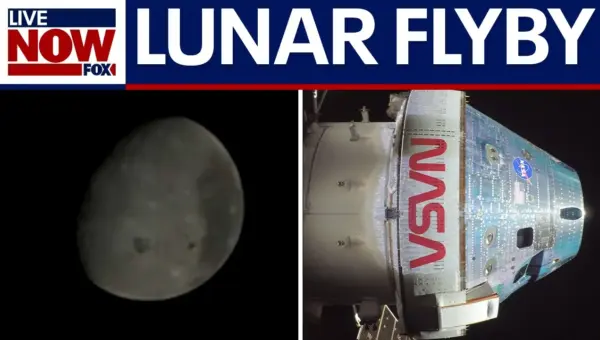
The Artemis II crew has begun its historic lunar flyby, capturing stunning images and making crucial observations about the Moon's surface. Experts highlight the enduring value of human insight in space exploration, complementing robotic data. The mission is gathering vital information for future lunar bases and advanced space travel technologies.


Artemis II Crew Faces Perilous Re-entry After Historic Lunar Flyby
The Artemis II crew is preparing for a dangerous re-entry into Earth's atmosphere after completing a historic journey around the Moon. Concerns linger over the spacecraft's heat shield, identical to one that failed in a previous test. This mission marks humanity's return to lunar vicinity after 50 years and carries significant geopolitical weight in the burgeoning space race.


Trump Warns Iran, Faces Criticism Amid Escalating Tensions
President Trump issued a series of strong warnings to Iran, setting a deadline for the reopening of the Strait of Hormuz and threatening severe consequences. Meanwhile, the U.S. military successfully rescued a second airman downed in Iran. Democrats criticized the President's rhetoric, calling it dangerous, while economic impacts of the conflict, including rising gas prices, are being felt at home. In space news, NASA's Artemis II crew is set to make history with a lunar flyby, and Pope Francis called for peace on Easter amidst global conflicts.