Artemis II: A Giant Leap Inspiring Unity and a New Space Age
The Artemis II mission successfully returned astronauts to Earth, marking a new era of space exploration. Experts discuss the challenges of re-entry, lessons learned, and the mission's potential to inspire unity and secure American leadership in space.


Artemis II: A Giant Leap Inspiring Unity and a New Space Age
The recent splashdown of the Artemis II capsule marked a monumental moment for space exploration. After a journey that took astronauts farther from Earth than ever before, their safe return to the Pacific Ocean echoed the triumphs of the Apollo missions. This mission wasn’t just about reaching new distances; it was about proving that humanity can once again venture beyond low Earth orbit, paving the way for future bases on the Moon and journeys to Mars.
The Thrill and Danger of Re-Entry
The final moments of the Artemis II mission, as the capsule re-entered Earth’s atmosphere, were described as incredibly tense. Douglas Lo, former NASA associate administrator for human exploration, explained that during re-entry, astronauts become passengers on what is essentially an unguided missile. The capsule endures extreme heat, reaching temperatures of 3,000 to 5,000 degrees Fahrenheit, and intense G-forces. These forces can make a person feel like they weigh four times their normal weight. While the astronauts are trained for these conditions, the heat shield’s performance and the capsule’s trajectory are critical to a safe landing. This phase tests the limits of engineering and human endurance.
Lessons Learned and Improvements Made
The Artemis II mission benefited from lessons learned during Artemis I. Art Harmon, founder of the Coalition to Save Man Space Exploration, noted that while there were concerns about some burn marks on the heat shield from the previous mission, adjustments were made. For Artemis II, the trajectory was slightly altered to help bleed off speed before hitting the atmosphere at full force. While engineering changes to the heat shield itself weren’t possible in time for Artemis II, they are planned for future missions, like Artemis III and beyond. These improvements aim to make future landings even more reliable and smoother.
A Historic Return and Future Ambitions
The successful splashdown of Artemis II is significant because it’s the first crewed U.S. mission to travel beyond low Earth orbit since the Apollo program ended in 1972. This achievement, along with setting a new distance record from Earth, has reignited excitement for space exploration. Harmon believes this success will encourage Congress to provide necessary funding and support for future missions. The plan is ambitious: test rendezvous with lunar landers from companies like Blue Origin and SpaceX next year, land on the Moon again within two years, and eventually build a base on the Moon. This base will help us learn to live on another world and prepare us for the journey to Mars.
“This proves we’ve done it. We can do it again. … Next year we’re going to be testing rendevousing with the landers… and then in just two years from now we’re going to be landing on the moon again for the first time since 1972.”
Art Harmon
Scientific Potential and Human Habitation
While the primary goal of Artemis II was to test the spacecraft systems, the scientific discoveries and benefits are expected to be vast in the long run. Lo highlighted that future missions to the Moon will focus on finding resources like Helium-3, which could be crucial for future quantum computing. They also aim to unlock water in the polar ice caps, which will be essential for sustaining human life on the Moon. Learning to live on another planet is seen as the most important step, preparing us for even greater scientific discoveries on Mars.
A Unifying Force in Divided Times
In an era often marked by political divisions, space exploration has a unique ability to unite people. Harmon pointed out that the Apollo missions unified America, and he believes Artemis II can do the same. Looking up at the Moon together can remind people of shared goals and aspirations. The idea of commercial space travel, including tourism to orbit and even the Moon, is becoming a real possibility within the next 10 to 20 years. This vision offers a chance for people to experience space firsthand, fostering a sense of shared humanity and adventure.
Post-Splashdown Procedures and Astronaut Health
Even after a successful splashdown, critical procedures follow. Divers must safely approach the capsule, checking for any leaks of toxic propellants like hypergolic fuel. The astronauts are then brought out and undergo immediate medical checks. For the Artemis II crew, this return to Earth’s gravity after nine days in weightlessness, and the high G-forces of re-entry, requires careful monitoring. They will be under long-term observation to study the effects of deep space radiation, which is more intense outside Earth’s protective magnetic field. These brave astronauts are essentially pioneers, providing vital data for future long-duration space missions.
Securing American Leadership in Space
The Artemis program is also seen as crucial for maintaining American leadership in space. In a competitive global arena, especially with rivals like China, demonstrating technological prowess and exploration capabilities is vital. Lo emphasized that this is a long-term competition focused on science and technology, not just a one-time event. Just as President Kennedy spoke about the world watching in the 1960s, the world is watching again today to see who will lead in the future. The success of Artemis II is a powerful signal that the United States intends to remain at the forefront of space exploration, influencing global geopolitics and scientific advancement.
The Beginning of a New Journey
The Artemis II mission represents more than just a return to the Moon; it symbolizes the start of a new era of human exploration. It inspires a new generation of scientists, engineers, and explorers, just as Apollo did decades ago. The journey ahead is long and challenging, but the successful completion of Artemis II has laid a strong foundation. It’s a testament to human ingenuity, collaboration, and the enduring desire to explore the unknown, promising a future where humanity not only visits but lives and thrives beyond Earth.
Source: Artemis II Will Bring Humanity Together Like Apollo Did: Panel (YouTube)

Related Articles


Artemis II Astronauts Share Moon Journey; NYC Machete Attack; Iran Peace Talks
Astronauts from the Artemis II mission shared their experiences after returning from their historic journey around the moon. Meanwhile, New York City is investigating a shocking machete attack on a subway platform. High-stakes peace talks are also underway between U.S. and Iranian officials aimed at ending a major regional conflict.

Astronaut Warns: Moon Return Dangers Threaten NASA’s Future
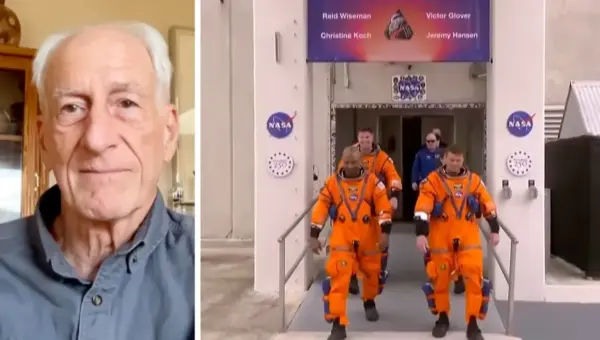
Former astronaut Jeffrey A. Hoffman highlights the extreme dangers of the Artemis II reentry. This critical phase is vital for NASA's future plans to return humans to the Moon and beyond.


US Space Leadership: Artemis Mission Fuels Future Dominance
The Artemis 2 crew's historic return from the moon highlights the critical importance of U.S. leadership in space. Congressman Jay Obernolte discusses how space technology impacts geopolitics, economics, and inspires future generations, emphasizing the necessity of continued investment and public-private partnerships.