Artemis Blasts Off: NASA’s Moon Return Begins
NASA's Artemis mission has launched a crewed test flight around the Moon, marking a significant return to deep space exploration. This program aims to establish a long-term lunar presence and eventually pave the way for Mars missions. The journey builds on the legacy of Apollo while forging a new path for scientific discovery and technological advancement.

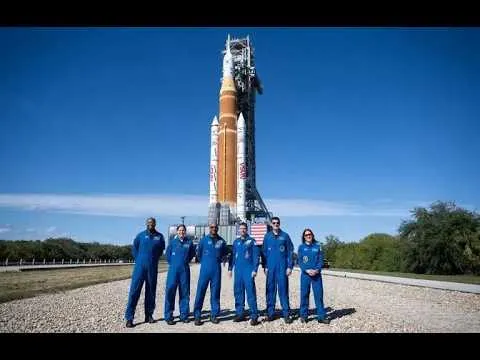
Artemis Blasts Off: NASA’s Moon Return Begins
NASA’s ambitious Artemis mission has officially started its journey. The rocket launched at 12:50 p.m. ET on April 1. This marks the beginning of a crewed test flight around the Moon.
This launch is a significant step for NASA and humanity’s return to space exploration. The Artemis program aims to land humans back on the Moon for the first time since the Apollo missions ended in the 1970s. It’s not just about planting a flag again; it’s about establishing a long-term presence there.
A New Era of Space Exploration
The Artemis mission is more than just a single launch. It’s a multi-part program designed to build a sustainable presence on the Moon. Future missions will involve building a lunar base and eventually using the Moon as a stepping stone for journeys to Mars. This goal requires advanced technology and international cooperation.
The crewed test flight is crucial for testing all the systems needed for these longer and more complex missions. Astronauts will travel around the Moon, testing the Orion spacecraft’s capabilities. This includes its life support systems, navigation, and ability to withstand the harsh environment of deep space. Their journey is a vital check before more demanding flights.
Historical Context: The Shadow of Apollo
To understand the importance of Artemis, we need to look back at the Apollo program. NASA’s Apollo missions, which ran from 1961 to 1972, put 12 astronauts on the Moon. These were incredible achievements, driven by the Cold War space race. However, after Apollo 17, human lunar exploration largely stopped.
For decades, space exploration focused more on low Earth orbit, like the International Space Station. While important, it didn’t push the boundaries of human reach as the Moon did. Artemis aims to pick up where Apollo left off, but with a different purpose. Instead of a sprint to the finish line, it’s a marathon to build lasting infrastructure.
Why This Matters
The Artemis program matters for several reasons. Firstly, it represents a renewed commitment to pushing the frontiers of human knowledge and capability. Exploring the Moon can lead to scientific discoveries, such as understanding the Moon’s geology and searching for resources like water ice. This ice could be crucial for future space missions, providing fuel and drinking water.
Secondly, Artemis is expected to drive technological innovation. Developing the systems needed for lunar missions can lead to new inventions and industries here on Earth. Think of the advancements that came from the Apollo era, from improved computing to medical technologies. Artemis has the potential to spark similar progress.
Finally, it inspires future generations. Seeing humans venture back to the Moon can ignite a passion for science, technology, engineering, and mathematics (STEM) in young people. It shows them that seemingly impossible goals can be achieved through hard work and dedication.
Challenges and the Road Ahead
However, the path to the Moon is not without its challenges. The Artemis program is incredibly complex and expensive. Ensuring the safety of astronauts on these long missions is NASA’s top priority. There are also political and economic considerations. Funding for such large-scale projects can fluctuate, and international partnerships require careful management.
The success of this initial crewed test flight is a major hurdle cleared. But many more lie ahead. Future missions will involve lunar landings, establishing habitats, and conducting extensive research. Each step needs to be carefully planned and executed to ensure the program’s overall success.
Future Outlook
The Artemis program is setting the stage for a new chapter in space exploration. If successful, it could lead to a permanent human presence on the Moon within the next decade. This would not only be a scientific and engineering triumph but also a geopolitical one, showcasing national capabilities and fostering global collaboration.
Beyond the Moon, Artemis is the critical first step towards sending humans to Mars. The technologies and experience gained from lunar missions will be essential for the much longer and more perilous journey to the Red Planet. NASA’s return to the Moon is not just about revisiting an old destination; it’s about preparing for the future of human exploration beyond Earth.
Source: LIVE: NASA Launches Artemis Mission (YouTube)

Related Articles

Artemis II Crew Faces Space Weather Threats to Moon Mission
NASA's Artemis II mission is underway, with astronauts embarking on the first lunar trip in over 50 years. The crew faces potential space weather threats, including solar flares and radiation, but NASA has implemented advanced shielding and monitoring systems for their protection. This mission marks a significant leap in safety and knowledge compared to the Apollo era, paving the way for future endeavors like Mars exploration.


Artemis II Mission: Humans Loop Moon After 50 Years
The Artemis II mission has launched four astronauts on a historic 10-day journey around the Moon, the first crewed lunar mission in over 50 years. This flight tests NASA's powerful SLS rocket and Orion spacecraft, paving the way for future lunar landings and deeper space exploration.


Artemis II Astronauts Fly Past Moon on Historic Deep Space Test
Artemis II has launched, sending four astronauts on a historic 10-day mission around the moon, marking humanity's first crewed journey beyond Earth orbit in over half a century. The mission tests the Orion spacecraft and life support systems, paving the way for future lunar landings.