Artemis Astronauts Brace for Fiery Re-entry Splashdown
The Artemis II astronauts are preparing for a critical splashdown off the California coast after a perilous re-entry into Earth's atmosphere. Concerns linger over the Orion capsule's heat shield performance, which showed significant damage on a previous uncrewed mission. The mission's success is vital for NASA's future lunar and Martian exploration goals.

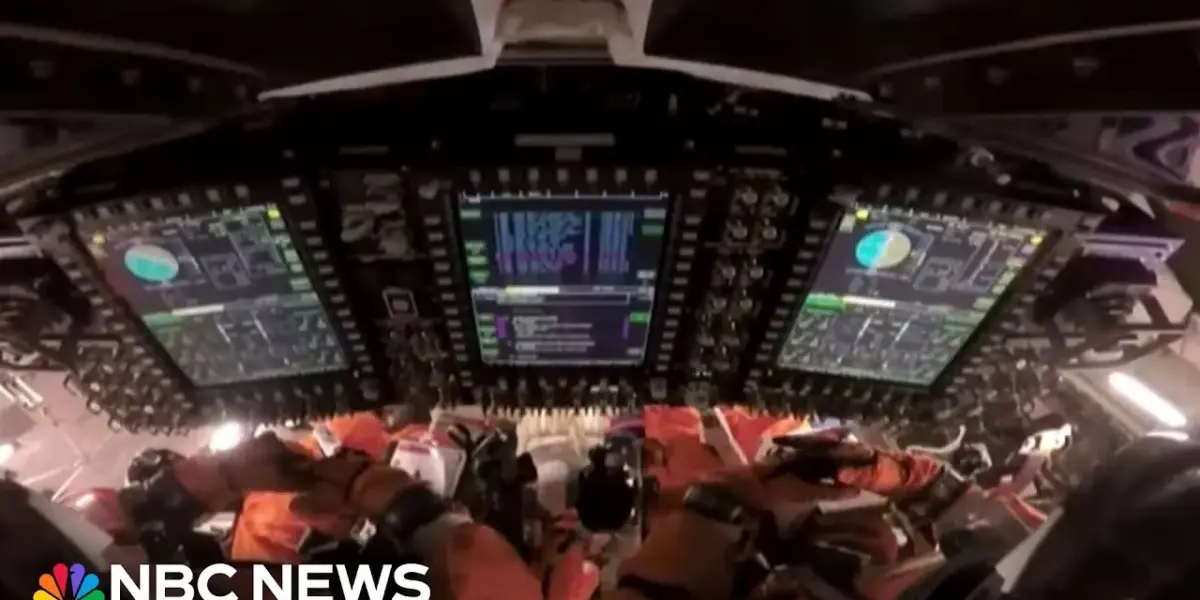
Artemis Astronauts Prepare for Fiery Return to Earth
In a nail-biting moment for NASA and space enthusiasts worldwide, the Artemis II astronauts are on track for a critical splashdown off the coast of California, expected shortly after 8:00 PM Eastern time. The Orion spacecraft, carrying its human crew, is in the final stretch of its journey home, but the most dangerous phase of the mission lies ahead: atmospheric re-entry.
Concerns Over Heat Shield Performance
The Orion capsule’s heat shield faces extreme conditions, reaching temperatures nearly half as hot as the surface of the sun. During the uncrewed Artemis I mission, the heat shield showed significant charring and burn marks, more than NASA was comfortable with. To address this, engineers have adjusted the spacecraft’s angle of attack, opting for a faster, more direct descent. The theory is that a quicker entry will reduce the duration of intense heat exposure, thus mitigating damage to the shield.
“We are going to come screaming into the atmosphere,” explained one reporter, highlighting the immense speed of 25,000 mph, or Mach 33, the spacecraft will reach upon hitting the atmosphere.
Adding to the tension, communication with the spacecraft will be lost for approximately six minutes during re-entry. This blackout period, while expected, always heightens anxiety. The memory of the Columbia disaster, where a heat shield failure led to tragedy, looms large. Former NASA astronaut Steve Robinson, who was part of the first mission after Columbia, emphasized the risks, though he expressed confidence in NASA’s current preparations.
Astronauts’ Experience During Re-entry
Inside the Orion capsule, the astronauts are preparing for a dramatic shift in their environment. For the last moments in space, they are experiencing zero gravity. This will soon change as the spacecraft endures 4 to 5 G’s of force during re-entry, a sensation comparable to fighter pilots but less intense. The crew will witness a spectacular, yet intense, visual phenomenon: a plasma sheath surrounding the capsule. This glowing, superheated air will turn from yellow to orange and red, illuminating the cabin through the windows.
Before re-entry, the crew module will separate from the service module, exposing the heat shield. A short burn will then orient the capsule correctly, ensuring the heat shield faces the brunt of the atmospheric friction. Once re-oriented, the astronauts will begin to feel a sense of ‘up’ and ‘down’ again as they approach Earth.
Broader Implications for Space Exploration
The Artemis II mission is a crucial stepping stone toward NASA’s ambitious goals of returning humans to the Moon and eventually venturing to Mars. This mission has reaffirmed humanity’s capability to undertake such complex journeys, especially after a long hiatus since the Apollo era. The overlap between the Apollo and Artemis generations of astronauts is a testament to this enduring spirit of exploration.
Furthermore, Artemis II highlights the importance of international collaboration in space. The European Space Agency contributed the service module, and Canadian astronauts are playing key roles, underscoring a global effort in pushing the boundaries of human spaceflight. The ultimate goal of landing astronauts on the Moon by 2028 remains on track, with subsequent missions like Artemis III and IV planned to test crucial technologies for lunar exploration and habitation.
Recovery Operations Underway
The U.S. Navy is poised to execute a meticulous recovery operation off the coast of San Diego. Highly experienced Navy divers, trained extensively with NASA for over a year, will be the first to make contact with the astronauts. Their immediate priorities include checking for any trauma, assessing the crew’s coherence, and ensuring their overall well-being before transport via helicopter to the USS Murphy recovery ship. Surgeons are on standby aboard the ship, prepared for any medical contingencies.
The return journey is largely automated, with computers controlling the spacecraft’s re-entry at 25,000 mph. This level of automation is critical, as manual control at such speeds would be incredibly risky. The mission’s trajectory was set by an earlier engine burn, meaning physics itself is guiding the Orion capsule home, a testament to precise orbital mechanics and planning.
Looking Ahead: A New Era of Space Travel
With the splashdown imminent, the success of Artemis II will pave the way for future missions. The focus is already shifting to Artemis III, which will test docking procedures in Earth orbit, and Artemis IV, targeting a return to the lunar surface. The coming years promise a rapid acceleration in space exploration, with multiple spacecraft launches, the development of lunar landers, and the eventual construction of a moon base. Artemis II is not just a mission; it’s the beginning of a new, exciting chapter in humanity’s journey to the stars.
Source: Artemis astronauts prepare for splashdown (YouTube)

Related Articles

Moon Missions Reignite Space Race Ambitions
The Artemis II mission has shifted focus back to the Moon, revealing new geological insights and boosting confidence in lunar hardware. This renewed emphasis signals a potential new era of sustained lunar presence, moving beyond earlier Mars-focused ambitions and echoing the historical space race.


Artemis 2 Crew Captures Stunning Earth Views from Moon Orbit
The Artemis 2 mission has captivated the world with stunning images of Earth from lunar orbit and record-breaking distances. Meanwhile, proposed NASA budget cuts, new insights from the James Webb Telescope, and novel approaches to exploring Mercury highlight the dynamic nature of space exploration.


Artemis II Crew Nears Earth for Historic Moon Mission Splashdown
The Artemis II crew is set to splashdown off the San Diego coast today, marking the historic return of astronauts who traveled further than any humans before. The Orion capsule will re-enter Earth's atmosphere at high speeds, with a specialized Navy and NASA team ready for recovery operations.