Arctic Tensions Rise: Russia’s Arctic Ambitions Grow
Rising Arctic tensions are focusing on Norway's Svalbard archipelago, a territory with a unique international treaty. Russia's strategic interests and a growing NATO presence are creating a complex geopolitical standoff in the region.

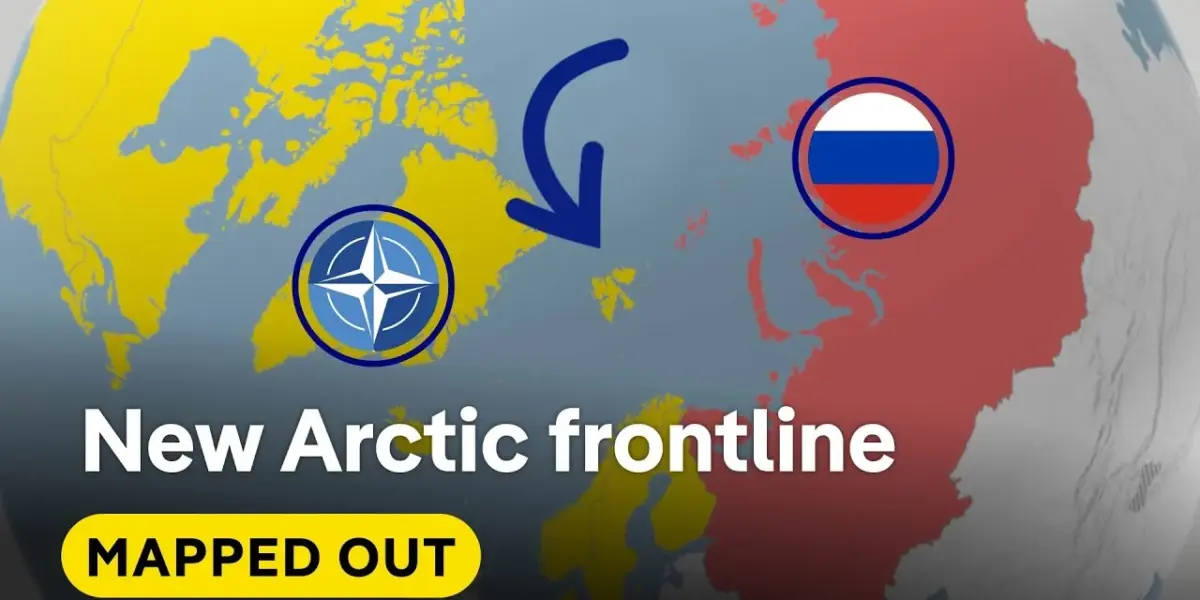
Arctic’s Svalbard Becomes Flashpoint in Russia-NATO Standoff
Strange events are unfolding in the Arctic around Svalbard, an island group in Norway’s territory. This remote archipelago, located midway between mainland Norway and the North Pole, is home to the only Russian town on NATO land. While roughly 3,000 people from around the globe live here alongside 300 polar bears, a unique international agreement has historically kept Svalbard peaceful. However, as tensions between Russia and NATO escalate, this once-quiet region is emerging as a critical geopolitical hotspot.
Svalbard: A Unique Arctic Outpost
Svalbard, meaning “Cold Shore” in Old Norse, was once considered a no man’s land. Today, 60 percent of its landmass is covered by ice, creating a harsh but beautiful environment. Jennifer Spence, an Arctic researcher with decades of experience, describes Svalbard as a challenging place to live, marked by extreme cold, darkness, and the constant threat of polar bears. Residents often leave doors and cars unlocked for quick escapes. During the summer, however, the islands experience 24 hours of daylight.
The main settlement, Longyearbyen, is one of the world’s northernmost towns. Alongside it sits Barentsburg, a Russian coal mining town that has become a focal point of current tensions. Svalbard lies strategically between Greenland to its west and Russia’s Arctic coast to its east. Its largest island, Spitsbergen, has long attracted explorers and researchers.
The Svalbard Treaty: A Foundation for Peace
For centuries, Svalbard was a territory open to all. As mining became more prominent, land distribution and access rights became crucial. Following World War I, the Svalbard Treaty was established in 1920 to govern the archipelago’s status. This treaty made Svalbard Norwegian territory but kept it open to citizens of signatory nations, aiming to ensure peace. Currently, over 40 countries have signed the treaty, including the United States, China, France, North Korea, Afghanistan, and Russia.
Crucially, the Svalbard Treaty forbids military activity on the islands, stating that Svalbard “may never be used for ‘warlike purposes.'” While the exact meaning of this clause is debated today, no country maintains a military base there. Citizens of signatory nations can reside on Svalbard without a visa, contributing to its international character. Beyond tourism and mining, Svalbard is a vital center for climate research and marine biology, boasting a Norwegian satellite station, SvalSat, which is a key piece of global communications infrastructure.
Russia’s Foothold: Barentsburg and Strategic Goals
Barentsburg, a Soviet-era coal mining settlement, remains a significant Russian presence. Today, it is run by a Russian state-owned company and employs most of its roughly 350 residents, predominantly Russians. Katarzyna Zysk, a specialist in Russian hybrid warfare and the Arctic, notes that Russia subsidizes Barentsburg’s presence, suggesting economic profitability is not the primary goal. Instead, maintaining a foothold is key.
This foothold is not military, as the treaty prohibits it. However, Russia’s strategic interests in the Arctic are vast. To the south of Svalbard lies Russia’s Kola Peninsula, a major hub for its military infrastructure, including nuclear submarines and a significant portion of its strategic nuclear weapons. To the east, Franz Josef Land hosts the reactivated Nagurskoye air base, capable of handling heavy bombers. These facilities are part of Russia’s “bastion defense” strategy, designed to protect its strategic assets.
Escalating Tensions and Hybrid Warfare
Svalbard’s location places it within the operational area of Russia’s bastion defense perimeter. Russia has accused Norway of militarizing Svalbard, calling Norwegian navy and coastguard ship visits treaty violations. This narrative fuels Russia’s portrayal of itself as a victim, a tactic also used to justify its actions in Ukraine. The conflict in Ukraine has demonstrably spilled over into the Arctic, with increased airspace restrictions near Svalbard since 2022, indicating heightened military activity.
Despite the war in Ukraine, Russia maintains a strong focus on the Arctic, showcasing its capabilities through Arctic expeditions and testing new equipment in extreme conditions. The growing importance of the Arctic is also driven by climate change. Svalbard is the fastest-warming place on Earth, leading to receding sea ice and increased interest in the region’s economic potential, including new shipping routes like the Northern Sea Route along Russia’s coast.
Climate Change and Geopolitical Competition
The melting ice is not only opening economic opportunities but also intensifying geopolitical competition. The Arctic Ocean is surrounded by nations, with Russia and the United States facing each other across it. During the Cold War, submarines played a key role in this strategic area, particularly in the GIUK gap (Greenland-Iceland-UK gap), a crucial waterway for Russian submarines entering the Atlantic. This strategic positioning mirrors the importance of Greenland for NATO and U.S. defense.
Russia is investing heavily in its Arctic capabilities, including a large fleet of icebreakers, both conventional and nuclear-powered. These are essential for navigating the still-icy Arctic waters. Russia currently possesses around 40 icebreakers, while the U.S. has only three. NATO is now working to catch up, launching exercises and missions in the Arctic. The recent accession of Finland and Sweden to NATO has transformed the Arctic security landscape, with all Arctic nations except Russia now being NATO members.
NATO’s Response and Future Outlook
NATO recognizes the need to increase its understanding and capacity to operate in the Arctic. It relies heavily on countries like Norway, which has positioned itself as NATO’s eyes and ears in the North, and Finland, an expert in icebreaker technology. Norway maintains that Svalbard is Norwegian territory, and any attack on it could trigger NATO’s collective defense clause. However, Russia’s actions, including exercises mimicking potential takeovers, have created unease.
Concerns are rising that traditional respect for sovereignty and the rule of law may be at risk, especially following Russia’s invasion of Ukraine and recent discussions about the U.S. potentially acquiring Greenland. While Russia may not currently intend to seize Svalbard, its primary interest is monitoring the area and preventing its use for military purposes by NATO. The future of Svalbard hinges on de-escalating tensions and preserving its status as a unique place for scientific cooperation, as emphasized by researchers who fear geopolitical conflicts could undermine vital scientific endeavors.
Source: Putin's trump card in the Arctic? | Mapped Out (YouTube)

Related Articles

Iran Escalates Global Conflict, Threatens World Economy
Yemen's Houthi rebels have officially joined the conflict, launching ballistic missiles at Israel and escalating regional tensions. This move threatens vital shipping lanes like the Red Sea's Bab al-Mandab strait, potentially causing catastrophic economic consequences. Meanwhile, US soldiers have been injured in Iranian missile strikes, adding to the mounting human and financial costs of the escalating war.


Trump’s Iran Claims: Shocked or Deluded by War Games?
Donald Trump claimed surprise over Iran's actions in the Strait of Hormuz, but experts suggest retaliation was inevitable. Military war games likely predicted such a scenario, raising questions about the advice given to the President.


Israel’s Strategy Against Iran Revealed
Israel's strategy to counter Iran's nuclear ambitions and regional influence centers on containment, utilizing a mix of covert military actions, intelligence operations, and diplomatic pressure. Analysts highlight the growing urgency due to Iran's nuclear advancements, while also noting the persistent risk of escalation in the volatile Middle East.