Apple’s M5 Chip Arrives Quietly, But Is It Enough?
Apple quietly launched its M5 chip across the MacBook Pro, iPad Pro, and Vision Pro, touting significant performance gains, especially in AI. However, the lack of a major announcement and the focus on base chips raise questions about upgrade urgency for existing users.

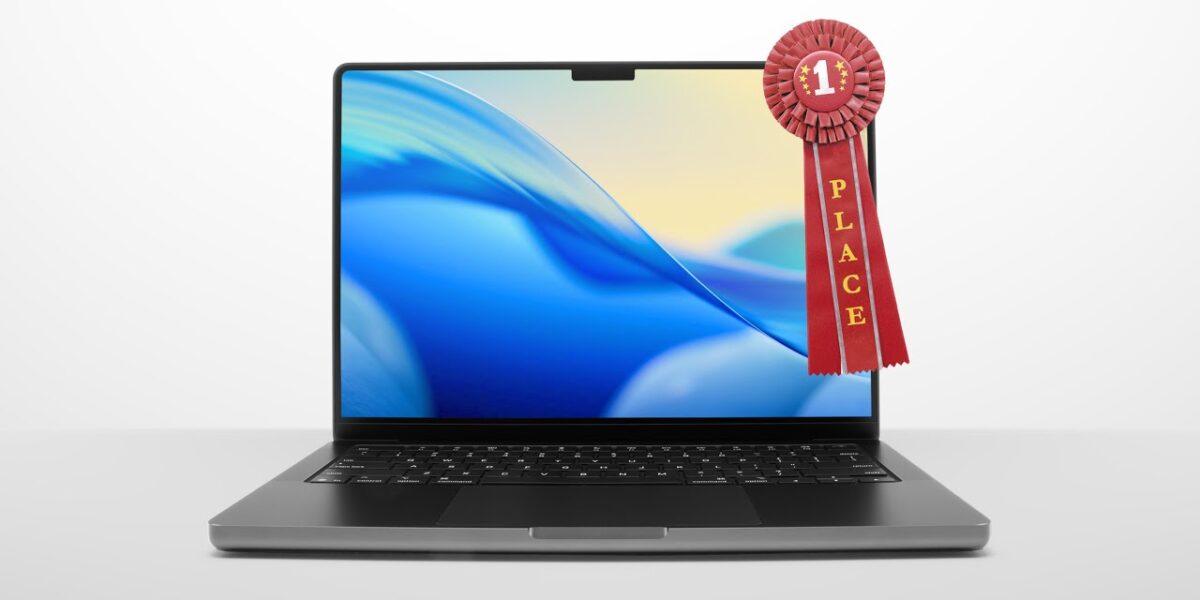
Apple’s M5 Chip Debut: A Silent Revolution?
Apple has once again updated its product line with a new generation of its custom silicon, the M5 chip. However, in a move that has left some observers scratching their heads, there was no fanfare, no keynote, and no flashy announcement video. Instead, Apple opted for a subtle website update, quietly introducing the M5 chip into three of its existing products: the 14-inch MacBook Pro, the iPad Pro, and the second-generation Vision Pro headset. Notably, this initial drop features only the base M5 chip, with M5 Pro and M5 Max variants expected to surface in the coming year.
M5 Chip: Performance Leaps and Uncharacteristic Restraint
According to Apple, the M5 chip represents a significant generational leap in performance. The company claims it offers more than double the performance of the original M1 chip and boasts the fastest single-core performance currently available in the industry, all while maintaining the same power envelope. This is a remarkable achievement, especially when contrasted with the industry’s past practices. Imagine if Intel or Qualcomm announced such gains; the marketing blitz would be deafening. Remember the days of Intel’s yearly ‘new’ chips like Skylake, Kaby Lake, and Coffee Lake, each offering a modest 5-7% improvement that was trumpeted as revolutionary? Apple, by contrast, has delivered a reported 15% CPU bump and a 30% GPU increase with a mere website update. It’s almost as if Apple is bored of winning.
This subdued launch strategy hints at a potential shift in Apple’s approach. While they undoubtedly want to sell millions of these devices, they seem to recognize that the sheer prowess of previous Apple Silicon generations, starting with the M1, has significantly slowed the upgrade cycle. Many users simply don’t *need* to upgrade from their M2 or M3 machines. Nonetheless, the M5 is undeniably a potent chip, outperforming the M4 in various scenarios, with gains particularly noticeable in memory bandwidth (a 25% increase over the base M4) and GPU-intensive tasks like gaming and 3D applications. However, the extent of these gains is program-specific, and not every application will see a dramatic improvement.
AI Workflows and the RAM Dilemma
Where the M5 truly shines is in local AI workflows. Macs have gained popularity for their energy and cost efficiency, and the M5 chip further enhances their appeal for on-device AI processing. However, a key limitation for power users is the M5’s maximum RAM capacity of 32GB. Those requiring more substantial AI capabilities will likely need to look at future M5 Pro or Max variants, or perhaps different hardware altogether. Faster SSDs also contribute to the overall performance boost, a welcome addition for any user.
Connectivity and Upgrade Advice
On the connectivity front, the new MacBook Pros stick with Wi-Fi 6E rather than the latest Wi-Fi 7, and retain three Thunderbolt 4 USB-C ports. While the M4 Pro and Max chips supported Thunderbolt 5, Apple seems to believe most users won’t require that level of bandwidth. For potential buyers, the advice remains consistent: upgrading MacBooks annually is ill-advised. The real sweet spot for value, according to current analysis, lies with M2 and M3 models, which often see significant discounts. For those on the fence about configuration choices, prioritizing RAM over CPU or GPU upgrades is generally the wiser long-term investment, as being CPU or GPU-bound is a rarer scenario than being limited by insufficient RAM.
iPad Pro: A Tablet Powerhouse
The 13.3-inch iPad Pro also receives the M5 treatment, promising faster app and game performance, more consistent frame rates in gaming, and higher memory bandwidth. It now offers up to 16GB of RAM (12GB on lower storage tiers) and faster internal storage. The display can output at 120Hz via Thunderbolt, and the device now supports Wi-Fi 7 and faster charging, which is a noticeable improvement over the M4 model. Despite these enhancements, the sentiment remains that modern iPads, since the M1 chip, have been so performant that most users rarely, if ever, push them to their limits. However, for dedicated power users engaged in video editing or music production on their tablets, the M5 iPad Pro represents the pinnacle of mobile performance.
Vision Pro Gen 2: Enhanced Immersion and Comfort
The Vision Pro headset enters its second generation, also powered by the M5 chip. Despite the significant silicon upgrade, the weight remains unchanged. The M5 brings higher memory bandwidth and a more capable GPU, leading to higher refresh rates, increased pixel density, and a demonstrably improved visual experience. Battery life for video playback is also extended thanks to the M5’s efficiency. While the reviewer isn’t a regular Vision Pro user due to limitations in video editing capabilities and the perceived solitary nature of the experience for shared entertainment, the spatial photo rendering is highlighted as a particularly impressive feature, now executed slightly faster by the M5.
A significant and welcome upgrade is the new dual-knit strap, which is substantially more comfortable and better fitting than the original solo-knit strap. This heavier strap features a counterweight and an optional top strap, though the latter can flatten hair. Crucially, this new strap is backward compatible with first-generation Vision Pro units, offering a tangible comfort improvement for existing users.
The Verdict: Powerful, But Is It Compelling?
Apple’s M5 chip lineup delivers impressive performance gains, particularly in AI and graphics. However, the subdued launch and the fact that these updates are confined to base chips in existing form factors raise questions. For users on older Intel Macs or those with very early Apple Silicon models, the M5 MacBook Pro or iPad Pro will feel like a revelation. But for the majority of current Apple Silicon users, the upgrade path from M1, M2, or even M3 devices may not offer enough compelling reasons to justify the cost, especially given the premium pricing of the latest models. The M5 is undeniably powerful, but Apple’s own past successes with its silicon might be its biggest hurdle to overcome in driving widespread adoption of its latest chip.
Specs & Key Features
- M5 Chip: Faster CPU and GPU performance, enhanced AI capabilities, increased memory bandwidth.
- 14-inch MacBook Pro: Base M5 chip, Wi-Fi 6E, Thunderbolt 4 ports.
- iPad Pro: M5 chip, up to 16GB RAM, faster storage, Wi-Fi 7, 120Hz display output via Thunderbolt, fast charging.
- Vision Pro Gen 2: M5 chip, improved display refresh rates and pixel density, longer battery life for video playback, new dual-knit strap (backward compatible).
Source: Is Apple Bored of Winning? – M5 MacBook Pro (YouTube)

Related Articles


Apple Taps Google for AI Power Amidst Internal Struggles
Apple is reportedly set to pay Google $1 billion annually to integrate a custom version of its Gemini AI into Siri, signaling a significant shift amidst internal AI development struggles. This move raises questions about the AI arms race and consumer demand for smartphone AI.

iPhone Air: Thinness Comes With Compromises
Apple's new iPhone Air prioritizes extreme thinness, but this design choice comes with notable compromises in battery life, speaker volume, and sustained performance. While it excels for light users, power users may find its limitations a dealbreaker.

iPhone 17 Pro Max: A Bold New Design, Major Upgrades
Apple's iPhone 17 lineup introduces a radical unibody design for Pro models, alongside 120Hz ProMotion displays across all devices and a significant camera upgrade with 48MP sensors on all rear lenses. Enhanced performance powered by the A19 Pro chip and new vapor chamber cooling highlight this year's flagship.