Antique Pistols: A Blast from the Past
Explore the intricate mechanics and historical significance of antique single, double, and triple-barrel "duck foot" pistols from the 19th century. Discover the evolution of firearm technology and the challenges of firing these historical weapons.

Antique Pistols: A Blast from the Past
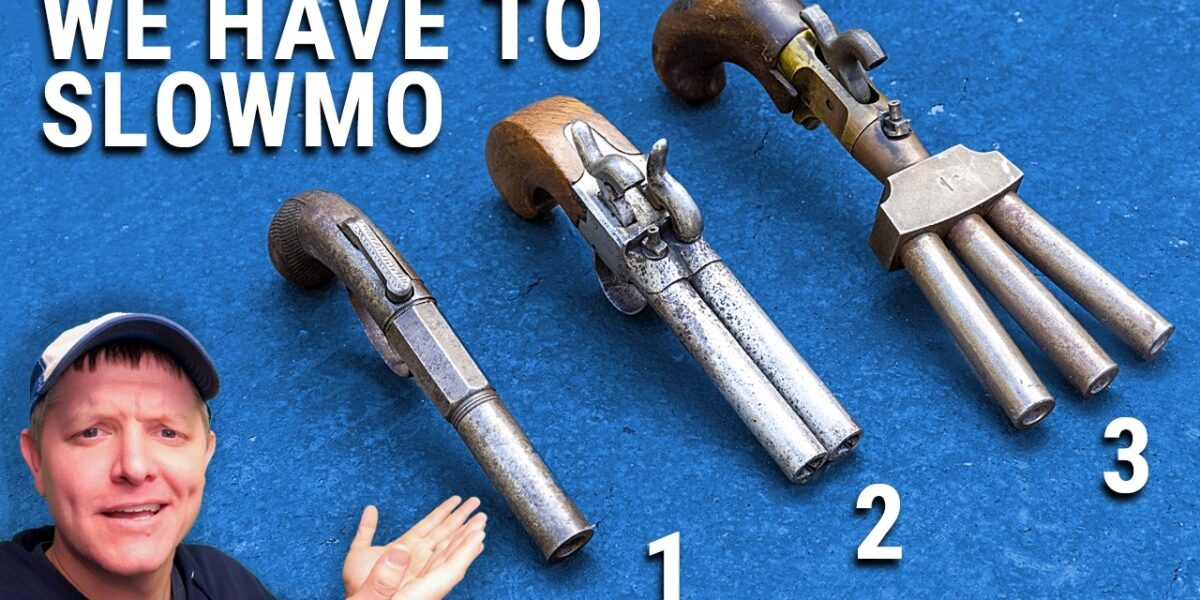
In the world of historical firearms, few objects evoke a sense of intrigue and ingenuity quite like antique pistols. Recently, a fascinating collection featuring a single-barrel, a double-barrel, and a unique triple-barrel pistol from the 19th century has captured the imagination, offering a tangible link to a bygone era of craftsmanship and conflict.
The Single and Double Barrel: Echoes of 1830s and 1850s
The journey into the past begins with a single-barrel pistol, a relic from around 1830. Identified as a British double-action percussion cap pistol, its age alone speaks volumes about the historical period it represents. The percussion cap ignition system, a significant advancement at the time, replaced the earlier flintlock mechanism, offering greater reliability in various weather conditions.
Following this is a Belgian-made double-barrel derringer from the 1850s. What makes this particular piece stand out is the personal touch of its original owner, with initials etched into its frame – a poignant reminder that these were not just tools of defense, but objects that carried personal significance.
The “Duck Foot” Pistol: A Pirate-Conquering Marvel
Perhaps the most visually striking of the collection is the triple-barrel pistol, often referred to as a “duck foot” pistol due to its splayed barrels. This design was not for aesthetic appeal but served a specific, formidable purpose: crowd control, particularly in maritime settings. The wide spread of the barrels allowed for a broad swath of fire, making it ideal for clearing decks during close-quarters combat, such as pirate attacks. Its nickname, the “crowd pleaser,” humorously underscores its intended function of dispersing multiple adversaries simultaneously.
The Mechanics of Percussion Ignition
At the heart of these antique firearms lies the percussion cap ignition system. This method involves a small copper cap filled with a shock-sensitive explosive compound (like fulminate of mercury). When the hammer falls upon the nipple (a small tube leading to the gun’s breech), it crushes the percussion cap, igniting the compound. The flame then travels through the nipple to ignite the gunpowder charge in the barrel. The double-barrel pistol in the collection showcases an interesting variation, offering two triggers for independent firing or a single trigger to discharge both barrels simultaneously.
Loading and Firing: A Hands-On Exploration
The process of loading and firing these historical weapons is a meticulous affair. It involves carefully measuring a precise amount of black powder (typically no more than 20 grains for pistols of this era), pouring it into the barrel, and then seating a lead ball atop a greased cloth patch. This patch serves to create a seal, ensuring that the expanding gases from the ignited powder effectively propel the ball. The challenge lies in ensuring the powder is compressed sufficiently to ignite properly while maintaining safety.
The firing process itself, especially when documented with high-speed cameras, reveals the intricate ballet of mechanics and chemistry. The delay between pulling the trigger and the projectile leaving the barrel—known as lock time—is a critical factor. In these antique firearms, the lock time can be surprisingly long, influenced by the hammer’s fall, the percussion cap’s ignition, and the subsequent burning of the black powder. This extended lock time can even contribute to aiming inaccuracies, as the shooter’s hand might move slightly during the interval.
Challenges and Discoveries
The exploration of these pistols was not without its challenges. The double-barrel pistol presented a predicament when one barrel failed to fire. Subsequent investigation revealed a potential issue with the nipple, requiring a specialized tool to clear the pathway to the powder. This highlighted the delicate nature of antique firearms and the need for careful maintenance and troubleshooting.
The triple-barrel “duck foot” pistol proved to be a particularly complex subject. The design required a manifold system to ensure the single percussion cap could ignite the powder in all three barrels. Initial attempts to fire all barrels simultaneously were met with mixed results, underscoring the intricate engineering required to achieve synchronized ignition across multiple barrels. The extended lock time and the possibility of shooter flinch became evident during slow-motion analysis, explaining why hitting a target proved difficult.
Historical Context and Significance
These antique pistols are more than just historical artifacts; they are testaments to human innovation in the face of danger. The transition from flintlocks to percussion caps marked a significant leap in firearm technology, making weapons more reliable and easier to use. The “duck foot” pistol, in particular, represents a specialized solution to a specific problem, showcasing the adaptability of firearm design to diverse combat scenarios.
What Lies Ahead
The study and occasional firing of such historical firearms offer invaluable insights into the past. They allow us to appreciate the craftsmanship, understand the technological limitations and advancements of different eras, and connect with the individuals who used these tools. While modern firearms have surpassed these antique pieces in terms of efficiency and safety, the allure of these historical weapons remains strong. Future explorations could involve more in-depth analysis of the metallurgy, historical documentation of their use, and perhaps even the restoration of other similar unique firearms.
The experience of handling and firing these 19th-century pistols, even with reduced loads for safety, provides a profound, hands-on understanding of historical technology. It fosters an appreciation for the fundamental principles of ballistics and mechanics, bridging the gap between theoretical knowledge and practical application. These antique firearms serve as powerful educational tools, reminding us that the pursuit of innovation is a continuous thread woven through human history.
Source: The Incredibly Unique Triple Barreled Pistol… – Smarter Every Day 304 (YouTube)

Related Articles


White Dwarf Dyson Spheres: A Tiny Star’s Big Energy Solution
Astronomers are exploring the possibility of building Dyson spheres around compact white dwarf stars, which offer a long-lasting and stable energy source. Meanwhile, the Vera Rubin Observatory promises near real-time astronomical discovery, and new data challenges models of supermassive black hole formation in the early universe.


NASA’s Asteroid Mission: From Mars Dream to Lunar Gateway
NASA's ambitious Asteroid Redirect Mission (ARM), designed as a stepping stone to Mars, aimed to capture a small asteroid boulder and tow it to lunar orbit for astronaut testing. Though cancelled, its advanced propulsion and robotic technologies live on in NASA's Lunar Gateway and future deep space exploration plans.


NASA’s Evolving SLS Rocket Hints at New Upper Stage
NASA's Artemis program may be adopting a new upper stage for its Space Launch System (SLS) rocket, potentially utilizing the commercially available Centaur V. An updated infographic reveals design changes and hints at evolving mission strategies, including advanced lunar lander operations.