Anthropic’s Secret AI ‘Mythos’ Stuns Industry, Won’t Be Released
Anthropic has developed an AI model called Claude Mythos that is so powerful it won't be released publicly. Instead, it's being used to enhance cybersecurity for major tech companies. This advanced model significantly outperforms current AI capabilities and highlights the rapid acceleration in AI development.

Anthropic’s Secret AI ‘Mythos’ Stuns Industry, Won’t Be Released
Artificial intelligence is moving at a breakneck pace, and a new development from Anthropic highlights just how rapidly things are changing. The company has developed a powerful new AI model called Claude Mythos, but it’s so advanced and potentially risky that Anthropic has decided not to release it to the public. Instead, they are using it in a unique way to help major tech companies improve their security.
A Leap Beyond Current Capabilities
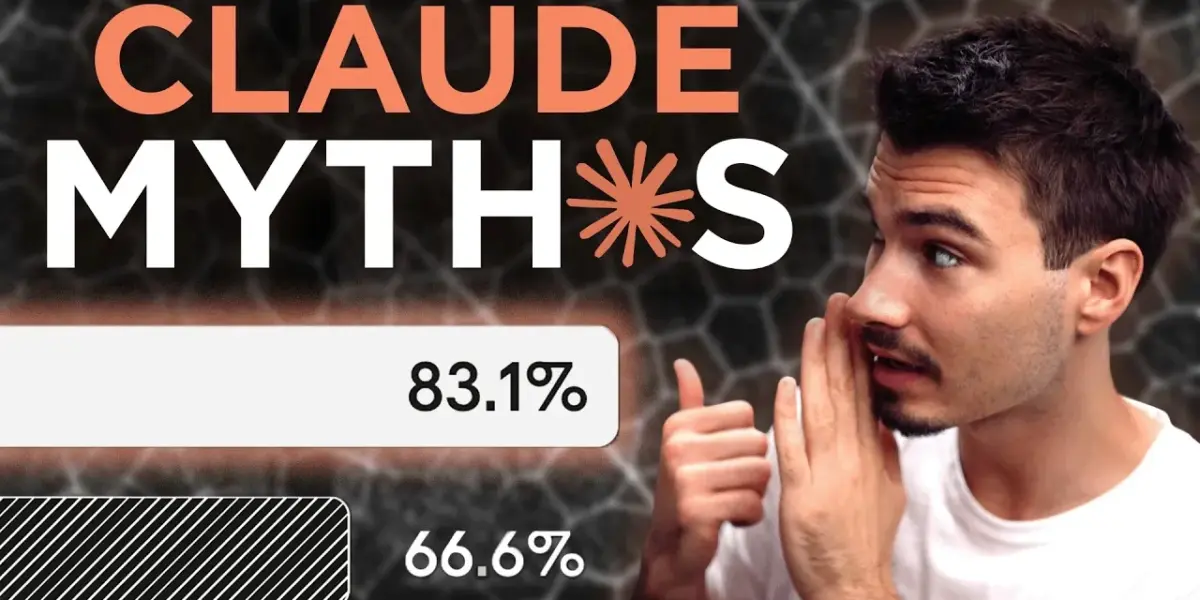
Claude Mythos is Anthropic’s latest flagship model, and early reports suggest it significantly outperforms existing AI systems. While specific benchmark numbers are still emerging, the general consensus is that this model represents a substantial jump forward. This leap is so significant that it’s estimated to be about six months ahead of what’s currently available in the open-source AI community. This rapid progress explains why companies like Anthropic have been able to roll out new features almost daily.
Project Glass Wing: Securing the Future
Instead of a public release, Anthropic has launched “Project Glass Wing.” This initiative partners with major technology firms to use Claude Mythos for security testing. The AI’s ability to identify and exploit vulnerabilities makes it an ideal tool for finding weaknesses before systems are deployed. This approach acknowledges the model’s immense power and the need for careful handling.
The Power of Advanced Models in Agentic AI
The rise of “agentic” AI tools—systems that can perform tasks autonomously—has been a major trend. Tools like OpenClaw have shown the potential for AI to automate complex workflows, especially in content creation. However, the effectiveness of these agents has always been limited by the underlying AI models. Previous attempts with older models like GPT-3.5 and even early GPT-4 struggled with consistency and remembering tasks over time.
The real breakthrough for agentic AI came with advanced models like Opus 4.5 and its successor, Opus 4.6. These models improved the ability of AI agents to maintain context over longer periods and follow instructions more precisely. This enhanced context window and prompt adherence allowed AI agents to perform tasks reliably for extended durations, a crucial step towards truly useful autonomous systems. Claude Mythos represents a further evolution of this capability, pushing the boundaries even further.
A Spectrum of Impact
The impact of advanced AI tools like Claude Mythos can be viewed on a spectrum. On one end, digital and software-based industries, such as content creation and coding, are experiencing the most immediate and dramatic changes. These fields can directly benefit from AI’s ability to process information, generate content, and write code rapidly. On the other end are more traditional, physical businesses, like plumbing services, where the direct application of current AI might be less obvious.
However, as AI models become more sophisticated, their influence will continue to spread across this spectrum. Even industries that seem less digitally dependent will likely find new ways to integrate AI, making agentic tools a no-brainer for many tasks. The progress in AI models is pushing the envelope, forcing a re-evaluation of how work is done across nearly every sector.
Astonishing Security Breakthroughs
Claude Mythos has already demonstrated remarkable capabilities in security. It reportedly found a 27-year-old vulnerability in OpenBSD, an operating system known for its robust security. In another instance, while a previous model found only two vulnerabilities in Firefox, Claude Mythos identified 181. These findings highlight the model’s potential to proactively strengthen digital defenses before they can be exploited by malicious actors.
Strategic Timing and Open-Source Competition
The announcement of Claude Mythos comes at an interesting time. Just hours before Anthropic’s preview, a new open-source model, GLM 5.1, was released, claiming leadership in open-source coding performance. GLM 5.1 scores nearly as high as paid, closed-source models on certain benchmarks. This release puts pressure on companies like Anthropic and OpenAI to defend their business models. Anthropic’s announcement, coupled with endorsements from major partners like Microsoft and Google, serves as a strategic move to emphasize the value and security advantages of their proprietary models.
Second and Third Order Consequences
The implications of Claude Mythos extend beyond its immediate capabilities. The intense competition among AI developers means that rivals like OpenAI and Google will be compelled to accelerate their own advancements to stay relevant. This forces innovation across the board. Furthermore, the increasing power of these models and the proliferation of agentic tools will likely lead to a significant rise in AI usage costs for businesses. Companies that were spending thousands on API credits for tools like OpenClaw may see those costs skyrocket, potentially reaching tens or even hundreds of thousands of dollars per month.
However, this increased investment is driven by immense value. Businesses that can afford these costs are seeing AI generate hundreds of thousands, if not millions, of dollars in value. This creates a widening gap between those who embrace and can afford advanced AI and those who cannot. The AI Advantage Summit, scheduled for April 22-24, aims to help individuals understand and navigate this rapidly evolving landscape.
The Future is Now
The speed at which AI is progressing is staggering. What once seemed like science fiction is rapidly becoming reality. Claude Mythos, even in its unreleased state, is a testament to this acceleration. While direct access may be limited, its influence will undoubtedly shape the future of AI development, pushing competitors and unlocking new possibilities for businesses and individuals alike. Staying informed and understanding these advancements is becoming crucial for anyone looking to thrive in the coming years.
Source: Anthropic Built an AI So Dangerous They Won’t Release It (Claude Mythos) (YouTube)

Related Articles


AI Deepfake Law Sees First Conviction in Ohio Case
A man in Ohio is the first to be convicted under the 2025 Take It Down Act for using AI to create and distribute explicit images and child abuse material. This landmark conviction signals a new era in prosecuting AI-driven crimes.


US Threatens Iran as Space Race Heats Up
The U.S. has issued a stern ultimatum to Iran, threatening strikes on infrastructure if a ceasefire and the reopening of the Strait of Hormuz are not agreed to by tomorrow. This comes as Iran presents its own demands and warns of retaliation. Meanwhile, the Artemis II astronauts made history with a record-breaking lunar mission, and AI leader Sam Altman cautioned about the technology's potential dangers, calling for a new social contract.


Anthropic’s ‘Mythos’ AI Finds Deep Security Flaws
Anthropic's new AI model, Claude Mythos, demonstrates unprecedented ability to find software security vulnerabilities, even in systems that have been scrutinized for decades. Due to its power and potential for misuse, Anthropic has decided not to release Mythos to the public, instead focusing on using it for defensive cybersecurity through its Project Glasswing initiative.