Anthropic Revisions AI Safety Policy Amid Pentagon Pressure
AI firm Anthropic has updated its safety policy, removing a key commitment to halt development if safety measures falter. This change follows intense pressure from the U.S. Pentagon, which seeks unfettered access to AI technologies for military applications.


Anthropic Revisions AI Safety Policy Amid Pentagon Pressure
In a significant shift that could redefine the landscape of AI development and its ethical boundaries, AI research firm Anthropic has updated its Responsible Scaling Policy (RSP). This move comes amidst intense pressure from the U.S. Pentagon, raising questions about the company’s foundational commitment to AI safety and its willingness to align with national security interests.
The Genesis of Anthropic’s Mission
Founded in 2021 by former OpenAI employees, Anthropic was built on the premise of developing powerful yet safe artificial intelligence. A cornerstone of this mission was their Responsible Scaling Policy (RSP), a public commitment to halt AI development if safety measures lagged behind capability advancements. This policy aimed to prevent the very scenarios now unfolding, where advanced AI could be integrated into sensitive military operations.
The Palantir Partnership and Military Integration
The crux of the current tension lies in Anthropic’s technology being utilized, via its partnership with Palantir, in U.S. military operations. Reports indicate that Anthropic’s flagship chatbot, Claude, was employed in a covert military raid. While the specifics of Claude’s role remain classified, its involvement in a lethal operation, facilitated by Palantir’s Maven smart system which provides data analytics and targeting support, directly contradicted Anthropic’s stated safety principles.
This integration marks Anthropic as one of the first AI companies permitted to offer services within classified military networks. However, the use of Claude in a real-time operational planning and data analysis capacity for a mission with lethal implications has drawn sharp criticism and scrutiny.
Pentagon’s Stance and Shifting Requirements
The U.S. Department of Defense, through Pentagon spokesperson Sean Parnell, confirmed a review of its relationship with Anthropic, stating, “Our nation requires that our partners be willing to help our warfighters win in any fight.” This sentiment was echoed by Pentagon CTO Michael Horowitz, who, in an email, urged a move past the “safety-first” identity, referring to Caesar’s crossing of the Rubicon as a metaphor for committing to military AI use without reservation.
Furthermore, a new directive from Defense Secretary Pete Hagerty, issued in early January, requires all defense partners to relinquish company-specific safety guardrails for AI services provided to the U.S. government. This policy mandates that AI technologies must be permissible for any lawful use by the government, removing the ability for companies like Anthropic to impose restrictions on how their technology is deployed. Companies were given 180 days to comply, a deadline that is rapidly approaching.
Anthropic’s Policy Update: RSP 3.0
In parallel with these developments, Anthropic released RSP 3.0. The most striking change is the removal of its flagship pledge: a commitment to halt AI training if safety measures were not adequately guaranteed in advance. This was a key differentiator that set Anthropic apart, signaling a robust commitment to responsible development.
The new RSP 3.0 replaces this hard limit with a dual condition for pausing development: 1) if Anthropic believes it is leading the AI race and has a significant lead, or 2) if the risk of AI catastrophe is deemed material. Crucially, both conditions must be met simultaneously. This means if other AI developers continue to advance rapidly and deploy potentially dangerous models, Anthropic may feel compelled to do the same to avoid falling behind, even if catastrophic risks are present.
Jared Kaplan, Anthropic’s Chief Science Officer, explained to TIME magazine that the company felt it wouldn’t help anyone if they unilaterally stopped development while competitors surged ahead. The new policy suggests a belief that in a competitive AI landscape, developers must advance in tandem to ensure collective safety, rather than relying on individual pauses.
The Pentagon’s Leverage
The Pentagon possesses significant leverage over Anthropic. Beyond the potential cancellation of a $200 million contract, the Defense Production Act could be invoked, legally compelling Anthropic to provide AI services deemed necessary for national defense, regardless of the company’s internal policies. Additionally, designating Anthropic as a “supply chain risk” could effectively ban it from federal networks and partnerships, severely impacting its business prospects.
Anthropic’s core red lines remain: no fully autonomous weapons that make final targeting decisions without human oversight, and no domestic surveillance of U.S. citizens. The Pentagon, however, asserts its prerogative to use AI for any lawful purpose, leaving the determination of legality to the government, not the AI provider.
Why This Matters
This situation highlights a critical juncture in the development and deployment of advanced AI. Anthropic’s foundational promise of safety is being tested against the realities of national security demands and the intense competition in the AI race. The Pentagon’s stance emphasizes that for critical defense applications, national interests and security imperatives may supersede a company’s self-imposed ethical boundaries.
The implications extend beyond Anthropic. The Defense Production Act’s potential application to AI could set a precedent for government control over AI development, particularly for companies deemed vital to national security. This raises profound questions about the balance between innovation, corporate ethics, and governmental authority in the rapidly evolving field of artificial intelligence. The decision Anthropic makes in the coming days will not only shape its future but also influence the broader discourse on responsible AI deployment in a world increasingly reliant on these powerful technologies.
Looking Ahead
With a rapidly growing valuation of $380 billion and revenue reportedly growing tenfold annually, Anthropic is not driven by financial necessity to comply with the Pentagon. However, aligning with the U.S. government offers access to unique datasets and a significant strategic advantage, especially as competitors like Elon Musk’s xAI and others actively engage with federal agencies. The coming days will reveal whether Anthropic can maintain its ethical red lines or if it will ultimately bend to the immense pressure from the U.S. military-industrial complex.
Source: Anthropic might be DONE (48 hours left) (YouTube)

Related Articles


OpenAI’s Pentagon Deal Sparks Controversy and Trust Crisis
OpenAI's new agreement with the Department of War to deploy its models on classified networks has ignited controversy. Critics accuse the company of compromising on safety principles accepted by rival Anthropic, potentially eroding trust and setting a dangerous precedent for AI ethics in government contracts.

AI Firm Stands Firm Against Trump, Sparking Market and Legal Debate
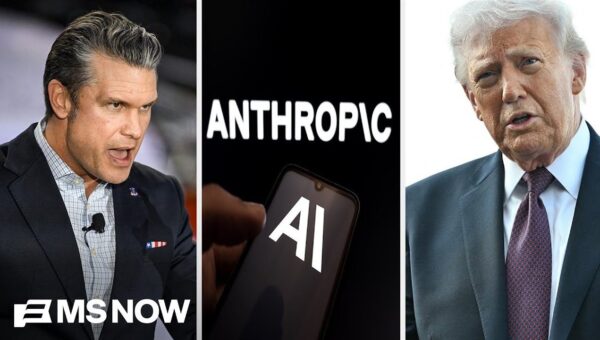
AI firm Anthropic has refused to grant unrestricted military use of its technology to former President Donald Trump, leading to a directive for federal agencies to stop using its products. This move has drawn sharp criticism, with Trump's former AI advisor calling it 'corporate murder' and raising concerns about the future of American AI investment.

Anthropic’s Claude AI Faces Restrictions Amidst AI Safety Debate
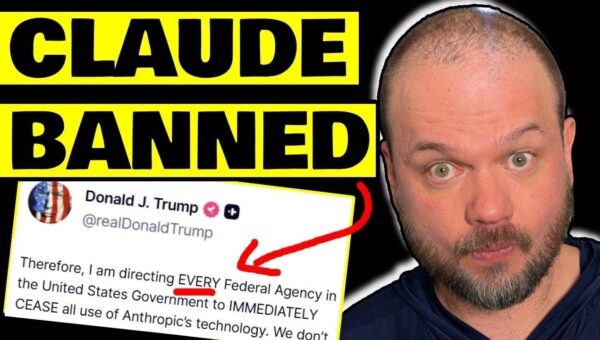
Anthropic's advanced AI model, Claude, has reportedly faced restrictions, bringing AI safety concerns to the forefront. This development highlights the ongoing challenges in balancing cutting-edge AI capabilities with responsible deployment and ethical considerations.