Anthropic Restricts Claude API Use, Shaking AI Ecosystem
Anthropic has restricted the use of its Claude models within third-party AI agent frameworks like Open-Claw, sparking backlash. The move limits developer flexibility and raises questions about the future of open AI ecosystems, potentially driving users towards competitors.

Anthropic’s Stance on Third-Party Tools Sparks Controversy
In a move that has sent ripples of discontent through the AI developer community, Anthropic, a leading AI safety and research company, has significantly altered its terms of service, effectively barring the use of its powerful Claude models within third-party AI agent frameworks like the popular Open-Claw. This decision, which began rolling out in early 2026, has led to broken workflows for many users and ignited a debate about the future of open development in the AI landscape.
The Rise of Agentic Loops and Open-Claw
The past year has seen a surge in the development of AI agents – systems that leverage large language models (LLMs) to perform complex tasks autonomously. These agentic loops often act as frameworks, allowing users to plug in different LLMs as the ‘pilot’ for various operations. Open-Claw emerged as a prominent open-source harness for these agents, gaining considerable traction due to its flexibility and ability to integrate with leading models.
A key factor in Open-Claw’s popularity was its ability to utilize Anthropic’s Claude models, particularly the highly regarded Claude 4.5 Opus and its successor, Claude 4.6. Users could integrate these models through their Claude Max subscriptions. This subscription, priced at $200 per month, offered virtually unlimited access to Claude Code and, crucially, provided authentication tokens (often referred to as ‘OOF’ keys) that were being repurposed by tools like Open-Claw to power their agentic capabilities.
API vs. Subscription: A Costly Divide
The distinction between using Claude models via the API versus a subscription service is critical. Anthropic’s API operates on a per-usage model, with costs based on the number of input and output tokens processed. For instance, Claude Opus API pricing stands at $15 per million input tokens and $75 per million output tokens. Running complex AI agents, especially those with looping functionalities or extensive overnight processing, could quickly rack up significant costs, potentially running into thousands of dollars per month.
In contrast, the Claude Max subscription offered a flat rate, providing a more predictable and cost-effective solution for power users. By leveraging the authentication tokens from these subscriptions, tools like Open-Claw enabled users to access the full power of Claude’s advanced models for a fixed monthly fee, regardless of the computational intensity of their tasks.
Anthropic’s Policy Shift: A “Walled Garden” Approach?
Anthropic’s recent policy changes explicitly state that these authentication tokens are now intended solely for use within Anthropic’s own tools, such as Claude Code. This effectively cuts off the ability for external applications like Open-Claw, Nano-Claw, and Pico-Claw to leverage them. The company’s official documentation, updated in February 2026, formalized this restriction, making its violation a breach of the terms of service.
The company argues that this move is necessary for business viability, preventing the potential for unlimited compute costs associated with flat-rate subscriptions being exploited by continuous agentic loops. Furthermore, Anthropic aims to keep user data and model interactions within its own ecosystem, potentially for improved data collection, model training, and security oversight.
Community Reaction and the OpenAI Gambit
The developer community’s reaction has been largely negative. Many users who relied on Open-Claw and similar tools for their AI projects have found their workflows abruptly terminated. The perceived abruptness of the change, with some users reporting broken systems without prior notice, has fueled frustration.
In a strategic move, OpenAI has reportedly confirmed that its subscription tokens can be used for external API calls, positioning itself as a more open alternative. This has led to speculation of a significant migration wave of developers and users from Anthropic’s ecosystem to OpenAI’s platform.
Why This Matters
Anthropic’s decision to restrict the use of its models in third-party applications has broader implications for the AI ecosystem:
- Developer Ecosystem: The move signals a potential shift towards more controlled, “walled garden” environments for advanced AI models. This could stifle innovation by limiting the ability of developers to build novel applications and integrations on top of powerful LLMs.
- User Choice and Flexibility: Developers and enthusiasts now face a choice: adhere to Anthropic’s restrictions and potentially pay significantly higher API costs, or migrate to alternative platforms like OpenAI, Google, or even open-source models that offer greater flexibility.
- Trust and Loyalty: Many power users and early adopters who championed Claude models feel a sense of betrayal. These users were instrumental in building communities and driving adoption, and their current dissatisfaction could impact Anthropic’s long-term reputation.
- Economic Viability vs. Openness: While Anthropic’s business concerns about managing costs are understandable, the decision highlights the ongoing tension between the economic realities of developing and deploying cutting-edge AI and the desire for an open, collaborative development environment.
The Path Forward
The AI industry is in a constant state of flux. Anthropic’s move, while disruptive, underscores the dynamic nature of the field. The ability for users to switch between different AI models and platforms, especially with the continued development of open-source alternatives, provides a crucial check on any single company’s policies. As the ecosystem evolves, the balance between proprietary control and open innovation will continue to be a central theme.
Source: did Anthropic just END OpenClaw? (YouTube)

Related Articles


OpenAI’s Pentagon Deal Sparks Controversy and Trust Crisis
OpenAI's new agreement with the Department of War to deploy its models on classified networks has ignited controversy. Critics accuse the company of compromising on safety principles accepted by rival Anthropic, potentially eroding trust and setting a dangerous precedent for AI ethics in government contracts.

AI Firm Stands Firm Against Trump, Sparking Market and Legal Debate
AI firm Anthropic has refused to grant unrestricted military use of its technology to former President Donald Trump, leading to a directive for federal agencies to stop using its products. This move has drawn sharp criticism, with Trump's former AI advisor calling it 'corporate murder' and raising concerns about the future of American AI investment.

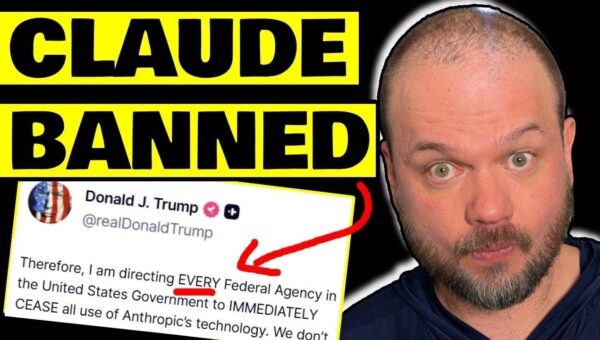
Anthropic’s Claude AI Faces Restrictions Amidst AI Safety Debate
Anthropic's advanced AI model, Claude, has reportedly faced restrictions, bringing AI safety concerns to the forefront. This development highlights the ongoing challenges in balancing cutting-edge AI capabilities with responsible deployment and ethical considerations.