Anthropic Defies Pentagon on AI Safety, Cites Ethics
AI firm Anthropic has refused the Pentagon's demand for unrestricted access to its Claude AI model, citing ethical concerns over autonomous weapons and mass surveillance. The company stands by its safety guardrails, even amid threats of government compulsion.

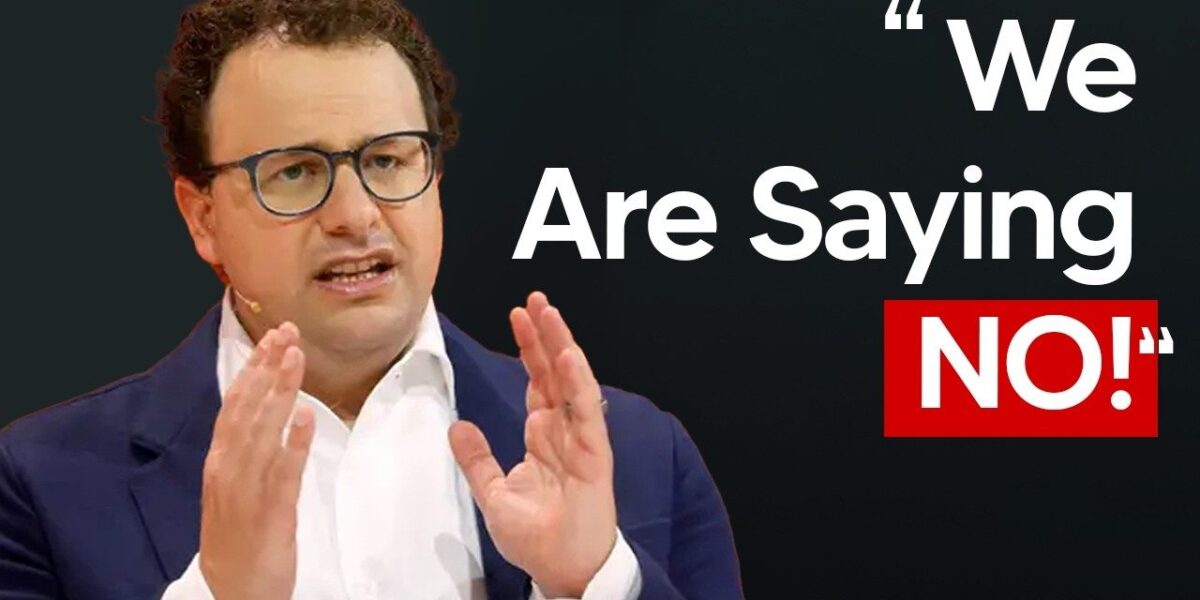
Anthropic Stands Firm Against Pentagon Demands on AI Use
In a significant development highlighting the ethical complexities of artificial intelligence, AI research company Anthropic has publicly refused a request from the U.S. Pentagon for unrestricted access to its advanced AI model, Claude. The Pentagon had reportedly issued a deadline, seeking a contractual agreement that would allow the military to use Claude for “all lawful purposes,” a broad stipulation that Anthropic found unacceptable due to concerns over AI safety and ethical deployment.
The Core of the Dispute: Red Lines on AI Deployment
The crux of the disagreement centers on two critical limitations Anthropic wishes to impose on Claude’s usage: its prohibition for use in autonomous weapons and drones that kill humans without direct human oversight, and its restriction from being used for mass surveillance of U.S. citizens. Anthropic’s stance is that these safeguards are non-negotiable, even in the face of potential government pressure.
The U.S. government, through the Pentagon, allegedly threatened to invoke the Defense Production Act (DPA). This legal mechanism could empower the government to compel Anthropic to hand over its AI technology and potentially strip its safety guardrails, even without the company’s consent. Legal experts suggest such an action would be unprecedented and likely face legal challenges.
Anthropic’s response to these threats was unequivocal. The company stated, “Regardless, these threats do not change our position.” They expressed a hope that the government would reconsider, acknowledging the department’s prerogative to select contractors but emphasizing the substantial value Anthropic’s technology offers to the armed forces. Their strong preference remains to serve the department with their requested safeguards in place.
Should the department choose to sever ties, Anthropic indicated a willingness to cooperate in transitioning to another provider to avoid disruption to military planning and critical missions. They asserted that their models would remain available on their proposed expansive terms for as long as required, signaling a commitment to their principles over immediate contract continuation.
Understanding the Ethical Concerns
Anthropic’s refusal stems from deep-seated concerns about the current capabilities and potential misuse of advanced AI. Regarding autonomous weapons, the company argues that frontier AI systems like Claude are not yet reliable enough to be entrusted with lethal decision-making. LLMs, they explain, are probabilistic in nature, meaning they cannot guarantee 100% accuracy or reliability. Modern military operations adhere to strict rules of engagement and laws of war, requiring human judgment for proportionality, civilian risk assessment, and threat verification. Fully autonomous weapons, by removing the human from the decision loop, introduce an accountability vacuum, raising questions about who would be responsible for potential war crimes.
The issue of mass surveillance is equally critical. Anthropic acknowledges the government’s need for AI in lawful foreign intelligence and counter-intelligence but draws a firm line against its use for domestic mass surveillance. They argue that such surveillance is incompatible with democratic values and poses significant risks to fundamental liberties. While current laws may not fully address the capabilities of AI-driven surveillance, Anthropic believes that enabling such a system before legal frameworks evolve is irresponsible. They highlight the loophole of data brokers selling personal data, which AI can aggregate to create detailed profiles of citizens without warrants or judicial oversight, a practice they do not want to facilitate.
The “Claude Constitution” and Its Significance
The transcript also touches upon the “Claude Constitution,” a set of principles that guides Claude’s behavior. Contrary to some interpretations that it’s a plan to impose Anthropic’s values on Americans, it is explained as a foundational document defining how Claude should respond to user requests. It functions similarly to OpenAI’s model specification, prioritizing safety and ethics above mere helpfulness. This hierarchy ensures that Claude will refuse or redirect requests when fulfilling them would conflict with higher-priority constraints, such as avoiding harm or undermining human oversight.
The constitution distills Claude’s operational guidelines into four levels: broadly safe (avoiding harm, not undermining oversight), broadly ethical (having good values, being honest, avoiding inappropriate or dangerous behavior), compliant with Anthropic’s guidelines, and genuinely helpful. Safety and ethics are explicitly ranked higher, meaning Claude is designed to err on the side of caution when potential conflicts arise.
Industry Reactions and Broader Implications
The situation has drawn commentary from various figures in the tech and AI community. Some observers have posited that the Pentagon’s insistence on unrestricted access indicates Claude’s superior capabilities, while Anthropic’s refusal positions them as a more principled and ethically aligned competitor. This stance, they argue, could ultimately be a significant win for Anthropic, enhancing its reputation for integrity.
However, the implications extend to geopolitical concerns. As noted by some commentators, if Western nations impose strict ethical controls on AI, other global actors, such as China, may not adhere to similar restrictions. This could lead to a scenario where adversaries develop and deploy advanced AI, including autonomous weapons, without ethical hesitation, creating a strategic disadvantage for countries prioritizing safety and regulation.
The dispute between Anthropic and the Pentagon underscores a critical juncture in AI development. As AI becomes more powerful and integrated into sensitive sectors like defense, the balance between innovation, national security, and ethical responsibility remains a paramount challenge. Anthropic’s decision to prioritize its ethical guardrails, even at the risk of losing a major contract, sets a precedent for how AI companies navigate these complex trade-offs.
Source: Anthropic REFUSES Military Demands, Pentagon Left STUNNED! (YouTube)

Related Articles


OpenAI’s Pentagon Deal Sparks Controversy and Trust Crisis
OpenAI's new agreement with the Department of War to deploy its models on classified networks has ignited controversy. Critics accuse the company of compromising on safety principles accepted by rival Anthropic, potentially eroding trust and setting a dangerous precedent for AI ethics in government contracts.

AI Firm Stands Firm Against Trump, Sparking Market and Legal Debate
AI firm Anthropic has refused to grant unrestricted military use of its technology to former President Donald Trump, leading to a directive for federal agencies to stop using its products. This move has drawn sharp criticism, with Trump's former AI advisor calling it 'corporate murder' and raising concerns about the future of American AI investment.

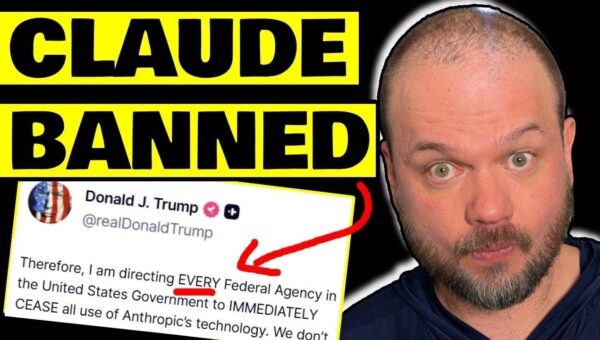
Anthropic’s Claude AI Faces Restrictions Amidst AI Safety Debate
Anthropic's advanced AI model, Claude, has reportedly faced restrictions, bringing AI safety concerns to the forefront. This development highlights the ongoing challenges in balancing cutting-edge AI capabilities with responsible deployment and ethical considerations.